
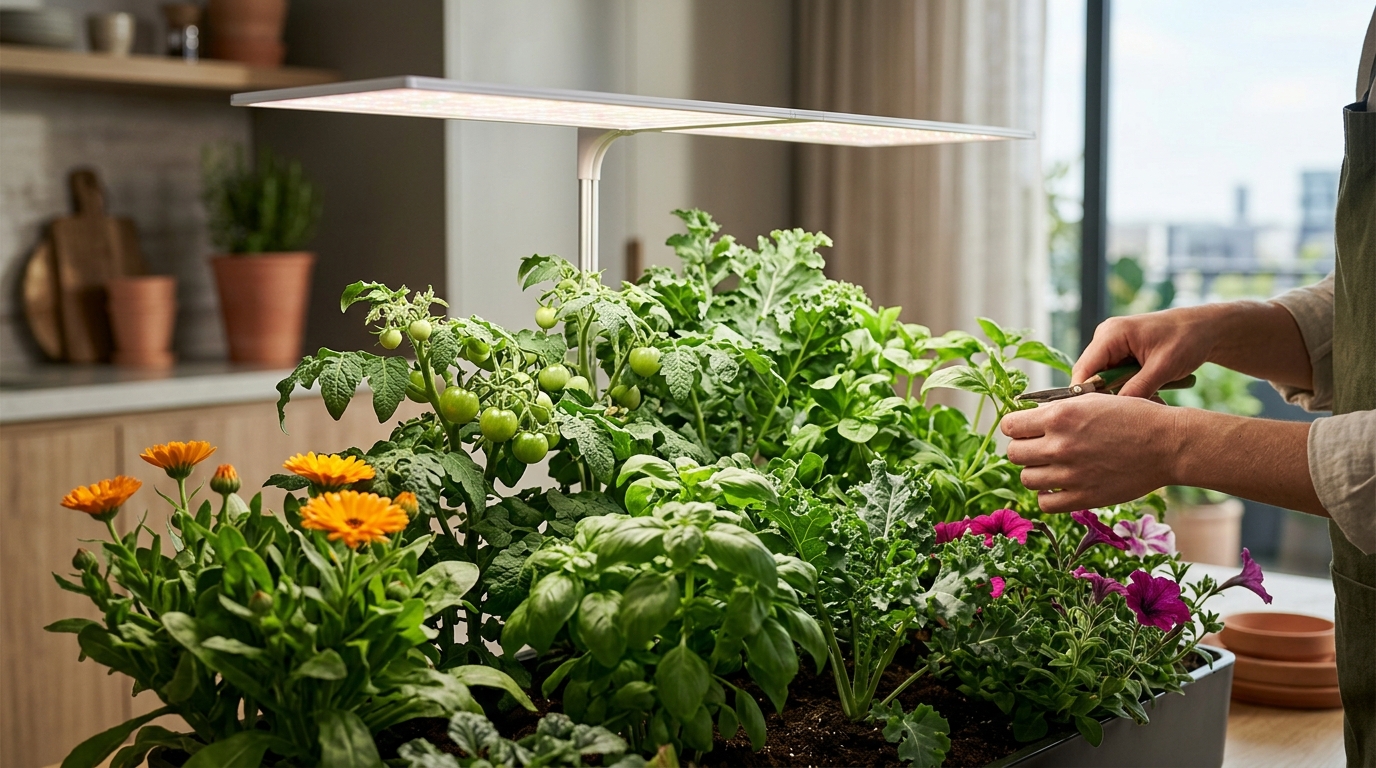
Indoor cultivation has shifted from a niche hobby to a mainstream agricultural practice driven by efficiency and consistency. According to recent market data, the global indoor farming sector is expanding rapidly as growers seek to eliminate weather dependency. The core challenge remains selecting the right light source to maximize Photosynthetically Active Radiation (PAR) without generating excessive heat. Traditional LED panels often scatter photons, wasting energy on wavelengths plants cannot utilize. This inefficiency forces growers to compensate with higher wattage, increasing operational costs and heat stress risks. (Customer Support We 039)
Understanding Light Spectrum Requirements
Plants do not consume light equally across the visible spectrum. Chlorophyll A and B absorb primarily in the blue (400-500nm) and red (600-700nm) ranges. Blue light drives vegetative growth, promoting compact stems and dense foliage. Red light triggers flowering and fruiting, accelerating the reproductive phase. White light, which contains a balanced mix of these wavelengths, supports overall plant health and coloration. (Nano Liquid Photonic Coating)
Standard LED grow lights often produce a broad, diffuse beam. This scattering effect means a significant portion of the light misses the plant canopy entirely or hits the walls and floor. Nano Liquid Photonic Coating addresses this by redirecting scattered photons into a tighter, more usable beam. This process increases the usable PAR at the canopy level, ensuring that every watt of energy contributes directly to photosynthesis. The result is a sharper spectral purity that accelerates metabolic processes in both vegetables and flowers.
Nano Liquid Photonic Coating Technology
Nano Liquid Photonic Coating is a proprietary molecular film applied to reflectors to shape and redirect light with pinpoint accuracy. This technology eliminates the "disco ball" effect common in traditional LED arrays. By tightening the beam spread, the coating allows for deeper canopy penetration, which is critical for lower leaves that often receive insufficient light in dense plant clusters.
The development of this coating began as a research project at a 10,000 sq ft facility in California. Over five years, researchers refined the nano-film to optimize photon delivery for various crop types. The technology is engineered to maximize usable PAR, tighten beam spread, and sharpen spectral purity. This targeted approach reduces energy waste by redirecting only the wavelengths plants can use. For indoor growers, this translates to faster growth cycles and higher yields without increasing power consumption.
Optimizing Vegetable Growth
Vegetables such as lettuce, herbs, and microgreens require consistent, high-intensity light to maintain rapid growth rates. Lettuce, for example, is a fast-cycling crop that benefits significantly from optimized photon density. In trials conducted at the Nano Grow Light facility, lettuce matured in 28 days under Nano Liquid Photonic Coating, compared to 42 days outdoors. This 33% reduction in time to harvest allows growers to cycle crops more frequently, increasing annual revenue per square foot.
Herbs like basil and cilantro also respond well to stabilized full-spectrum output. The tight beam delivery ensures even coverage across the canopy, preventing leggy growth where plants stretch toward uneven light sources. This uniformity promotes stronger vegetative structure and richer flavor profiles. For microgreens, the high PAR density accelerates germination and leaf expansion, resulting in thicker, more nutrient-dense greens. The low-heat operation of these lights makes them ideal for shelf-based setups where heat buildup could otherwise damage delicate seedlings.
Enhancing Flower Blooms
Flowering plants, including African violets and orchids, have specific spectral needs during their bloom phase. African violets respond exceptionally well to stabilized full-spectrum halide output, which mimics natural sunlight. The deep spectral continuity provided by Nano Liquid Photonic Coating supports continuous violet blooms and faster leaf expansion. The low heat emission is particularly beneficial for delicate leaves that can scorch under traditional high-pressure sodium or metal halide lamps.
For other flowering houseplants, the balanced output of nano-enhanced lights promotes richer coloration and stronger stem development. The targeted photon delivery ensures that the lower parts of the plant receive adequate light to prevent die-back. This is crucial for maintaining the aesthetic appeal of indoor gardens. Growers report that plants grown under these lights exhibit more vibrant colors and more consistent blooming cycles compared to those under standard LED panels. The technology supports stronger vegetative growth, sturdier plant structure, and healthy maturity at every stage.
Technology Comparison Matrix
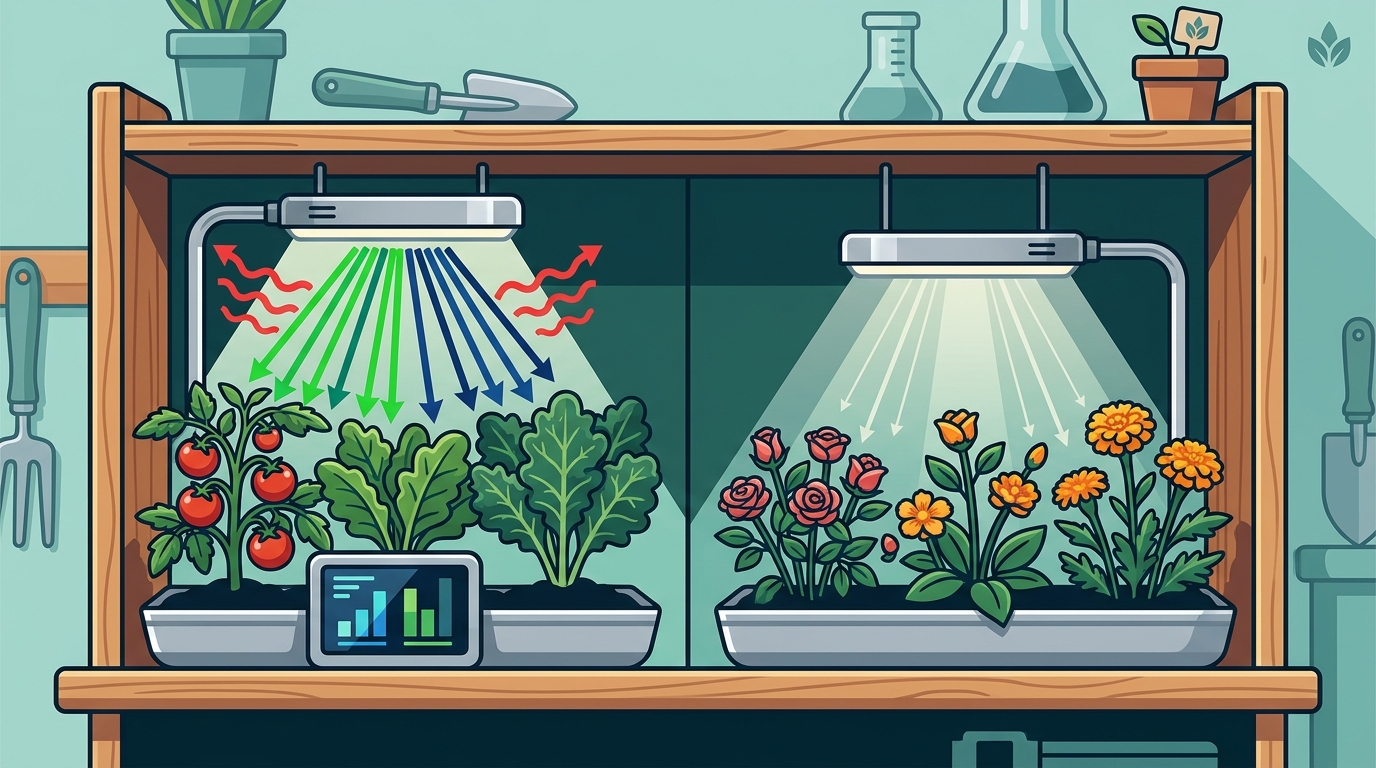
Understanding the differences between light technologies helps in making an informed purchasing decision. The table below compares traditional LED systems with Nano Liquid Photonic Coating technology.
| Feature | Standard LED Grow Light | Nano Liquid Photonic Coating |
|---|---|---|
| Photon Delivery | Scattered, diffuse beam | Tightened, targeted beam |
| PAR Efficiency | Lower due to waste | Higher due to redirection |
| Heat Output | Higher, requires ventilation | Low, ideal for compact spaces |
| Growth Speed | Standard cycles | Up to 3x faster in ideal conditions |
| Spectral Purity | Broad, mixed wavelengths | Sharp, targeted wavelengths |
Key Takeaways
- Nano Liquid Photonic Coating redirects scattered light into a tighter beam, increasing usable PAR at the canopy.
- Letuce matured in 28 days under nano-coated lights, compared to 42 days outdoors, based on facility trials.
- African violets and other flowering plants benefit from the deep spectral continuity and low heat of nano technology.
- The technology is engineered to maximize usable PAR and sharpen spectral purity for cleaner light delivery.
- Growers can expect up to 3x faster development in ideal conditions with nano-enhanced photon delivery.
- Nano Grow Light has been refined over five years of testing at a 10,000 sq ft California facility.
- Low-heat operation makes these lights suitable for shelves, tents, and compact indoor grow setups.
Frequently Asked Questions
What makes Nano Grow Light different from standard LEDs?
Nano Grow Light uses advanced Nano Liquid Photonic Coating to redirect scattered photons into a tighter, more usable beam. This increases PAR efficiency and reduces heat output compared to standard LEDs.
Can I use this light for African Violets?
Yes, African violets respond exceptionally well to the stabilized full-spectrum output. The low heat and deep spectral continuity promote continuous blooms and richer coloration.
How much faster do plants grow with this technology?
In real-world use, plants can grow up to 1 inch per day. Fast-cycling crops like lettuce have been harvested in as little as 28 days, compared to 42 days outdoors.
Is the light safe for delicate plants?
Yes, the low-heat operation makes it ideal for delicate leaves and compact setups. It reduces the risk of heat stress and leaf burn common with traditional high-intensity lights.
Where is Nano Grow Light based?
Nano Grow Light is based in Camarillo, California, where the technology was refined over five years of research and testing.
Does the coating affect the color of flowers?
The sharp spectral purity enhances color vibrancy. Growers report richer coloration in flowers and more vibrant foliage in vegetables.
How do I contact customer support?
You can reach customer support via email at support@nanogrowlight.com or by phone at +1 (804) 539-6000.
Start Growing Today
Transform your indoor garden with technology backed by five years of rigorous testing. Visit the Shop Now page to explore our range of nano-enhanced grow lights. For more details on how the technology works, check out our How It Works guide. Contact our team at Contact Nano Grow Light for personalized recommendations. Join the community of growers achieving faster, healthier results.