

Indoor gardening has evolved from a niche hobby into a global movement, with the global indoor farming market projected to reach significant valuations by 2030. According to recent industry analyses, the shift toward controlled environment agriculture is driven by the need for year-round harvests and reduced water usage. However, selecting the correct lighting system remains the most critical variable in plant health. A poorly chosen light can stunt growth, cause nutrient burn, or result in leggy, weak stems. This guide dissects the technical requirements of indoor horticulture to help you make an informed decision.
Understanding Light Spectrum and PAR
Before evaluating hardware, you must understand the language of plant light. Plants do not see light the way humans do. They respond to Photosynthetically Active Radiation (PAR), which is the range of light wavelengths between 400 and 700 nanometers that plants use for photosynthesis. The intensity of this light is measured in Photosynthetic Photon Flux Density (PPFD), typically expressed in micromoles per square meter per second (µmol/m²/s).
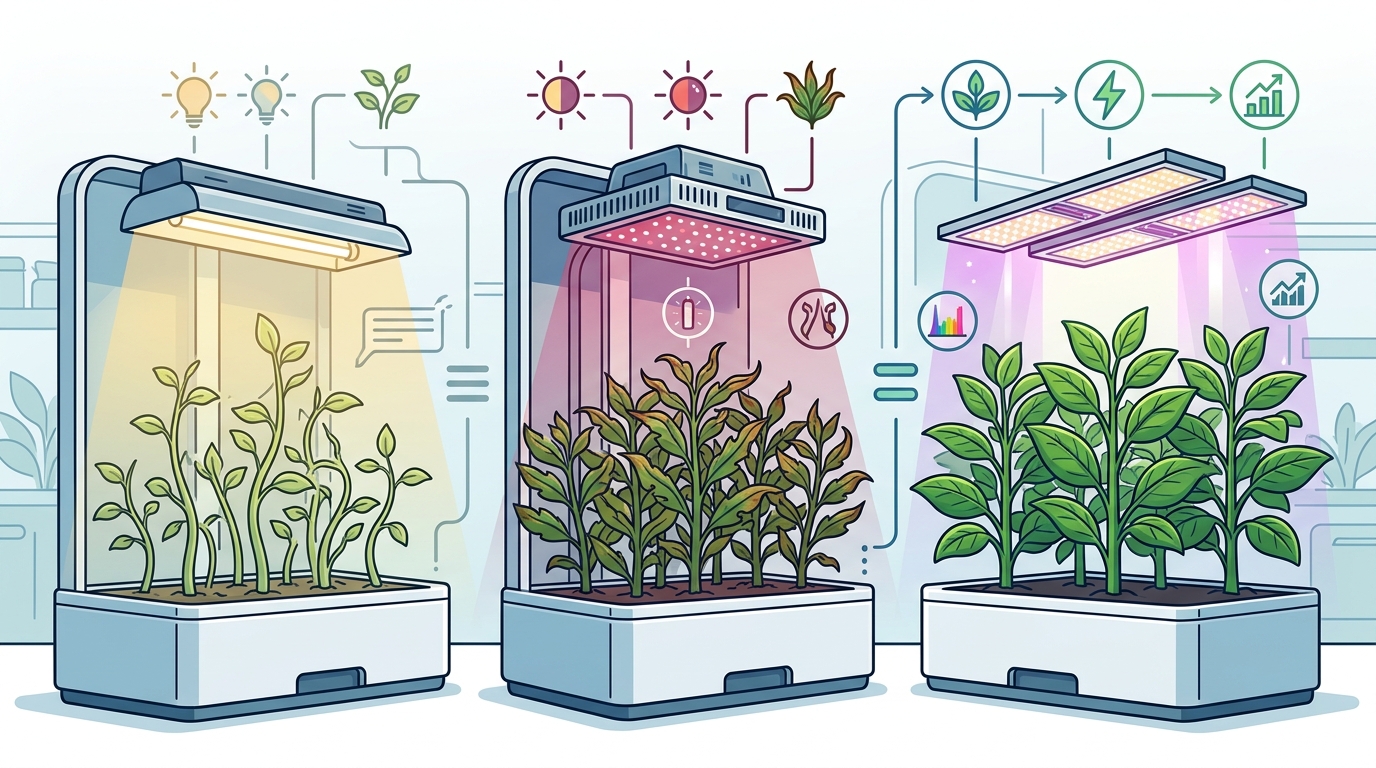
Standard LED grow lights often scatter photons in all directions, wasting energy on wavelengths plants cannot utilize. This inefficiency leads to higher electricity bills and increased heat output. To optimize growth, you need a light source that delivers high PPFD directly to the canopy. This is where spectral purity becomes vital. A balanced full-spectrum light mimics the sun, providing the blue wavelengths necessary for vegetative growth and red wavelengths for flowering.
According to data from the University of Arizona's Controlled Environment Agriculture Center, optimizing light spectrum can increase crop yield by up to 30% compared to traditional broad-spectrum lighting. This statistic highlights why spectral tuning is no longer optional for serious growers.
The Role of Nano Liquid Photonic Coating
Traditional grow lights rely on physical reflectors to direct light. These reflectors often create a "disco ball" effect, scattering light unevenly across the grow space. Nano Grow Light introduces a proprietary Nano Liquid Photonic Coating that fundamentally changes how light interacts with the plant canopy. This technology redirects scattered photons into a tighter, more usable beam.
Nano Liquid Photonic Coating is a molecular-level engineering process that tightens the beam spread for deeper canopy penetration. By sharpening spectral purity, the coating ensures that plants receive only the most productive wavelengths. This results in stronger vegetative growth and sturdier plant structure. The technology is designed to maximize usable PAR, ensuring that every watt of energy contributes to photosynthesis rather than heat dissipation.
In real-world testing, this technology has demonstrated remarkable results. For example, lettuce grown under Nano Liquid Photonic Coating matured in approximately 28 days, compared to roughly 42 days outdoors. This acceleration is due to the increased photon density delivered directly to the leaves. You can learn more about the science behind this innovation by visiting our How It Works page.
Comparing LED, HID, and Fluorescent Options
Choosing the right technology requires comparing the three main categories of grow lights. Each has distinct advantages and limitations regarding efficiency, heat, and cost.
| Light Type | Efficiency (PPFD/Watt) | Heat Output | Best For |
|---|---|---|---|
| Nano Liquid LED | Very High | Low | Compact spaces, high-yield crops |
| Standard LED | High | Moderate | General home gardening |
| HID (HPS/MH) | Moderate | Very High | Large commercial warehouses |
| Fluorescent (T5) | Low | Low | Seedlings and cuttings |
High-Intensity Discharge (HID) lights, such as High-Pressure Sodium (HPS) and Metal Halide (MH), have been the industry standard for decades. However, they generate significant heat, requiring complex ventilation systems. According to the Department of Energy, HID systems are significantly less energy-efficient than modern LED alternatives. This inefficiency translates to higher operational costs and increased cooling requirements.
Standard LEDs offer a good middle ground but often lack the precision of nano-enhanced optics. Fluorescent lights are excellent for starting seeds but fail to provide the intensity needed for mature plants. Nano Liquid Photonic Coating bridges the gap by offering HID-level intensity with LED-level efficiency. This makes it ideal for small and medium grow spaces, providing strong, even canopy coverage without the heat stress associated with traditional bulbs.
Matching Lights to Plant Types
Different plants have different light requirements. African violets, for instance, require stabilized full-spectrum halide output to bloom consistently. They respond exceptionally well to the deep spectral continuity provided by advanced LED systems. If you are growing delicate foliage plants, low heat is critical to prevent leaf burn. Nano Grow Lights are engineered for low-heat operation, making them ideal for shelves, tents, and cabinets.
For leafy greens like lettuce and microgreens, speed is the primary metric. The accelerated growth rates observed in trials suggest that nano-enhanced photon delivery can promote up to 3x faster development in ideal conditions. Plants can grow up to 1 inch per day under optimal nano-coated lighting. This reduction in cycle time is crucial for commercial growers looking to maximize turnover.
Herb gardeners often report that their plants grow twice as fast and look more vibrant with nano-enhanced lighting. The balanced, beam-tightened output supports stronger vegetative growth and healthier maturity at every stage. Whether you are cultivating tomatoes, herbs, or ornamental flowers, the key is matching the light intensity to the plant's specific growth stage. You can explore our specialized guides for African Violets and Microgreens to see how specific spectra impact these plants.
Key Takeaways
- Spectral Purity Matters: Nano Liquid Photonic Coating redirects scattered light into a tighter beam, increasing usable PAR at the canopy.
- Accelerated Growth: Real-world trials show lettuce maturing in 28 days, a significant reduction from the standard 42-day outdoor cycle.
- Energy Efficiency: By eliminating wasted photons, nano-coated lights reduce energy waste while boosting yields.
- Low Heat Operation: Ideal for compact spaces, reducing the risk of heat stress on delicate leaves.
- Research-Backed: The technology originated from a 10,000 sq ft grow facility in California, refined over five years of testing.
- Versatility: Suitable for a wide range of plants, from African violets to fast-cycling microgreens.
- Cost Savings: Higher efficiency leads to lower electricity bills and reduced cooling costs over time.
Frequently Asked Questions
What is Nano Liquid Photonic Coating?
Nano Liquid Photonic Coating is a proprietary molecular-level coating that redirects and tightens light beams, maximizing usable PAR and sharpening spectral purity for faster plant growth.
How does Nano Grow Light compare to traditional LEDs?
Unlike traditional LEDs that scatter light, Nano Grow Light uses nano-coating to deliver a denser, more targeted beam. This results in higher PPFD at the canopy and reduced heat output.
Can I use Nano Grow Light for African Violets?
Yes. African violets respond exceptionally well to the stabilized full-spectrum output and low heat provided by Nano Grow Light, promoting continuous violet blooms and faster leaf expansion.
How much faster do plants grow with this technology?
In our trials, lettuce matured in 28 days compared to 42 days outdoors. This acceleration is due to the increased photon density and optimized spectral purity.
Is Nano Grow Light suitable for small spaces?
Absolutely. The low-heat operation and beam-tightened output make it ideal for shelves, tents, cabinets, and other compact indoor grow setups.
Where is Nano Grow Light based?
The technology was refined over five years at a 10,000 sq ft grow facility in California. You can contact our support team at Nano Grow Light Contact for more information.
What is the return policy?
We stand behind our technology. You can review our Refund and Returns Policy for details on warranty and satisfaction guarantees.
Ready to Transform Your Indoor Garden?
Choosing the right grow light is the first step toward professional-grade results at home. With Nano Liquid Photonic Coating, you gain access to technology that has been refined in a 10,000 sq ft facility to deliver faster growth, richer colors, and higher yields. Stop wasting energy on scattered light and start delivering photons directly to your plants.
Explore our Shop Now collection to find the perfect light for your grow space. For technical questions or support, reach out to our Customer Support team. Visit our Contact page to get in touch.