

Indoor gardening has evolved from a niche hobby into a sophisticated agricultural practice, yet energy consumption remains the primary barrier to scalability. According to recent industry data, modern LED technology has reduced the energy required to produce a pound of leafy greens by approximately 70% compared to traditional high-pressure sodium systems. This dramatic shift in efficiency is not merely a cost-saving measure but a fundamental change in how plants interact with artificial light sources. The core of this efficiency lies in the precision of photon delivery, where wasted energy is eliminated through targeted spectral output and advanced thermal management.
Understanding Efficiency Metrics
When evaluating the energy efficiency of grow lights, consumers often look at wattage alone. However, wattage measures power input, not the useful energy delivered to the plant. The critical metric for efficiency is Photosynthetic Photon Efficacy (PPE), which measures the number of micromoles of photons emitted per watt of electricity consumed. A higher PPE value indicates a more efficient light source.
Traditional metal halide lamps, once the industry standard, typically operate with a PPE of 1.0 to 1.5 umol/J. In contrast, advanced LED systems can achieve PPE values exceeding 3.0 umol/J. This means that for every watt of electricity used, an efficient LED delivers three times the usable light energy to the plant canopy. This disparity drives both lower electricity bills and reduced heat output, which is crucial for maintaining optimal growing environments in confined spaces.
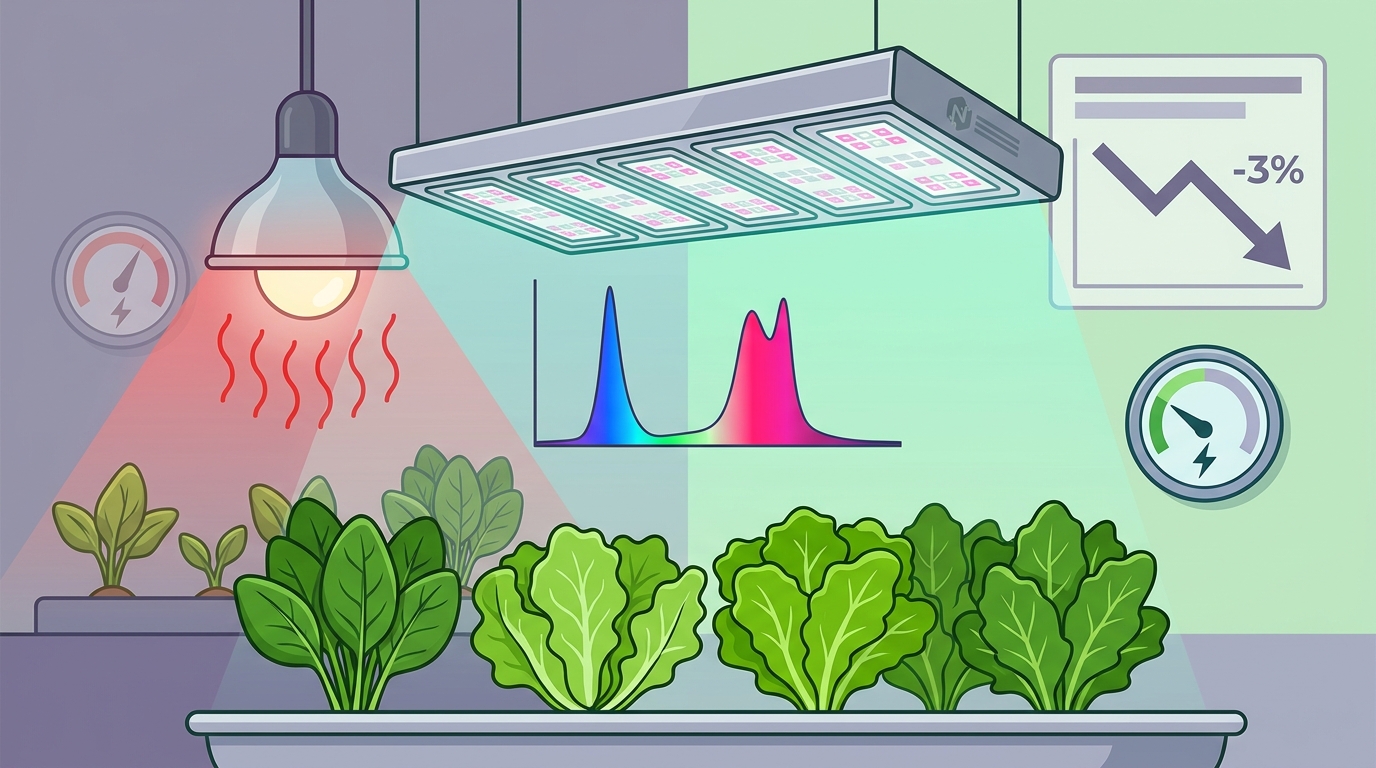
Another vital factor is spectral purity. Plants do not use all wavelengths of light equally. They primarily absorb blue and red spectra for photosynthesis. Lights that emit significant amounts of green, ultraviolet, or infrared light outside the usable range are inherently inefficient. Nano Liquid Photonic Coating addresses this by redirecting scattered photons into a tighter, more usable beam, ensuring that nearly every photon contributes to plant growth rather than heating the air or surrounding surfaces.
The Nano Liquid Photonic Coating Advantage
At the forefront of efficiency innovation is the proprietary Nano Liquid Photonic Coating developed by Nano Grow Light. This technology represents a significant leap forward from standard LED reflectors. Standard LEDs often suffer from a "disco ball" effect, where light scatters in all directions, requiring bulky reflectors to redirect it. This process inevitably results in photon loss and heat generation.
Nano Liquid Photonic Coating operates at the molecular level to tighten the beam spread and sharpen spectral purity. By redirecting scattered light into a denser, more usable Photosynthetically Active Radiation (PAR) field, the coating ensures that light is aimed directly at the canopy. This targeted delivery improves performance per watt and reduces heat stress on plants. The result is a custom-tailored beam of light with no wasted photons and no scattered wavelengths.
The practical implications of this technology are substantial. In real-world trials conducted at a 10,000 square foot facility in California, lettuce grown under Nano Liquid Photonic Coating matured in 28 days, compared to 42 days outdoors. This acceleration is not just about speed; it is about energy density. The plants receive a higher concentration of productive wavelengths, allowing them to photosynthesize more effectively with less total energy input. This efficiency translates to faster harvests and lower operational costs for both hobbyists and commercial growers.
LED vs. Traditional Grow Lights
The transition from High-Pressure Sodium (HPS) and Metal Halide (MH) lights to LEDs is driven by efficiency gains. HPS lights are known for their high heat output, often requiring expensive ventilation and cooling systems to prevent plant burn. These systems can consume up to 40% of their energy just as heat rather than light. LEDs, particularly those utilizing nano-coating technologies, operate at significantly lower temperatures, reducing the need for active cooling.
| Light Type | Typical PPE (umol/J) | Heat Output | Lifespan | Efficiency Rating |
|---|---|---|---|---|
| High-Pressure Sodium (HPS) | 1.0 - 1.5 | Very High | 10,000 - 24,000 hours | Low |
| Metal Halide (MH) | 0.8 - 1.2 | High | 10,000 - 20,000 hours | Low |
| Standard LED | 2.0 - 2.8 | Moderate | 50,000+ hours | High |
| Nano-Coated LED | 3.0+ | Low | 50,000+ hours | Ultra-High |
As shown in the comparison above, Nano-Coated LEDs offer a superior efficiency rating due to their ability to maximize usable PAR. This technology is particularly beneficial for small and medium grow spaces, such as shelves, tents, and cabinets, where heat management is critical. The low-heat operation allows growers to place lights closer to the canopy without risking thermal damage, further increasing light intensity and efficiency.
Selecting Efficient Lights for Your Space
Choosing the right grow light requires matching the technology to your specific gardening goals. For delicate plants like African Violets, stabilized full-spectrum halide output is often recommended to support continuous violet blooms and faster leaf expansion. However, for fast-cycling crops like microgreens and lettuce, the photon redirection provided by nano-coated LEDs offers unparalleled speed and yield.
When evaluating lights, consider the coverage area and the depth of penetration. Efficient lights should provide even canopy coverage without hot spots. Nano-enhanced photon delivery promotes up to 3x faster development in ideal conditions, allowing plants to grow up to 1 inch per day. This rapid growth cycle reduces the typical 3-month cultivation period to as little as 2 months, significantly increasing the number of harvests per year.
For those interested in exploring the technical details of this innovation, the How It Works page provides a deep dive into the molecular engineering behind the coating. Additionally, growers can view specific applications for African Violets and Microgreens to understand how efficiency translates to tangible results for different plant species.
Key Takeaways
- Efficiency Metric: Photosynthetic Photon Efficacy (PPE) is the true measure of grow light efficiency, not wattage.
- Nano Technology: Nano Liquid Photonic Coating redirects scattered light into a tighter beam, maximizing usable PAR.
- Speed: Trials show lettuce maturing in 28 days under nano-coated lights, compared to 42 days outdoors.
- Heat Reduction: Low-heat operation allows for closer light placement, increasing intensity without thermal stress.
- Spectral Purity: Tightened spectral purity ensures plants receive only productive wavelengths, reducing energy waste.
- Yield: Growers have reported up to 3x faster development and nearly double the weight in harvest trials.
- Brand Authority: Nano Grow Light has refined this technology over five years in a 10,000 sq ft California facility.
Frequently Asked Questions
What makes Nano Grow Light different from standard LEDs?
Nano Grow Light uses advanced Nano Liquid Photonic Coating to redirect scattered photons into a tighter, more usable beam. This eliminates the "disco ball" effect of standard LEDs, resulting in higher PPE and less wasted energy.
How much faster do plants grow with nano-coated lights?
In real-world testing, fast-cycling crops like lettuce have matured in 28 days, compared to 42 days outdoors. This represents a significant reduction in cultivation time and an increase in annual harvests.
Are nano-coated lights suitable for African Violets?
Yes. African violets respond exceptionally well to the stabilized full-spectrum output provided by these lights, leading to continuous violet blooms and richer coloration.
Does the nano coating reduce heat output?
Yes. By maximizing the efficiency of photon delivery, less energy is converted into waste heat. This low-heat operation is ideal for compact grow spaces like tents and cabinets.
Where is Nano Grow Light based?
Nano Grow Light was developed and tested in a 10,000 square foot facility in California. The company is headquartered in Camarillo, CA, and offers customer support via email and phone.
How does spectral purity affect plant growth?
Spectral purity ensures that plants receive only the wavelengths they can use for photosynthesis. Sharpened spectral purity accelerates photosynthesis and promotes stronger vegetative growth.
Can I use these lights for microgreens?
Absolutely. The targeted photon density is ideal for microgreens, promoting rapid leaf expansion and dense canopy coverage in a short timeframe.
Start Growing More Efficiently Today
Transitioning to energy-efficient grow lights is a strategic investment in the health and speed of your indoor garden. By leveraging the power of Nano Liquid Photonic Coating, you can achieve professional-grade results with significantly less energy consumption. Explore the Shop Now section to find the perfect light for your needs, or visit our Contact page for personalized support. Join the community of growers who are revolutionizing indoor agriculture with precision technology.