
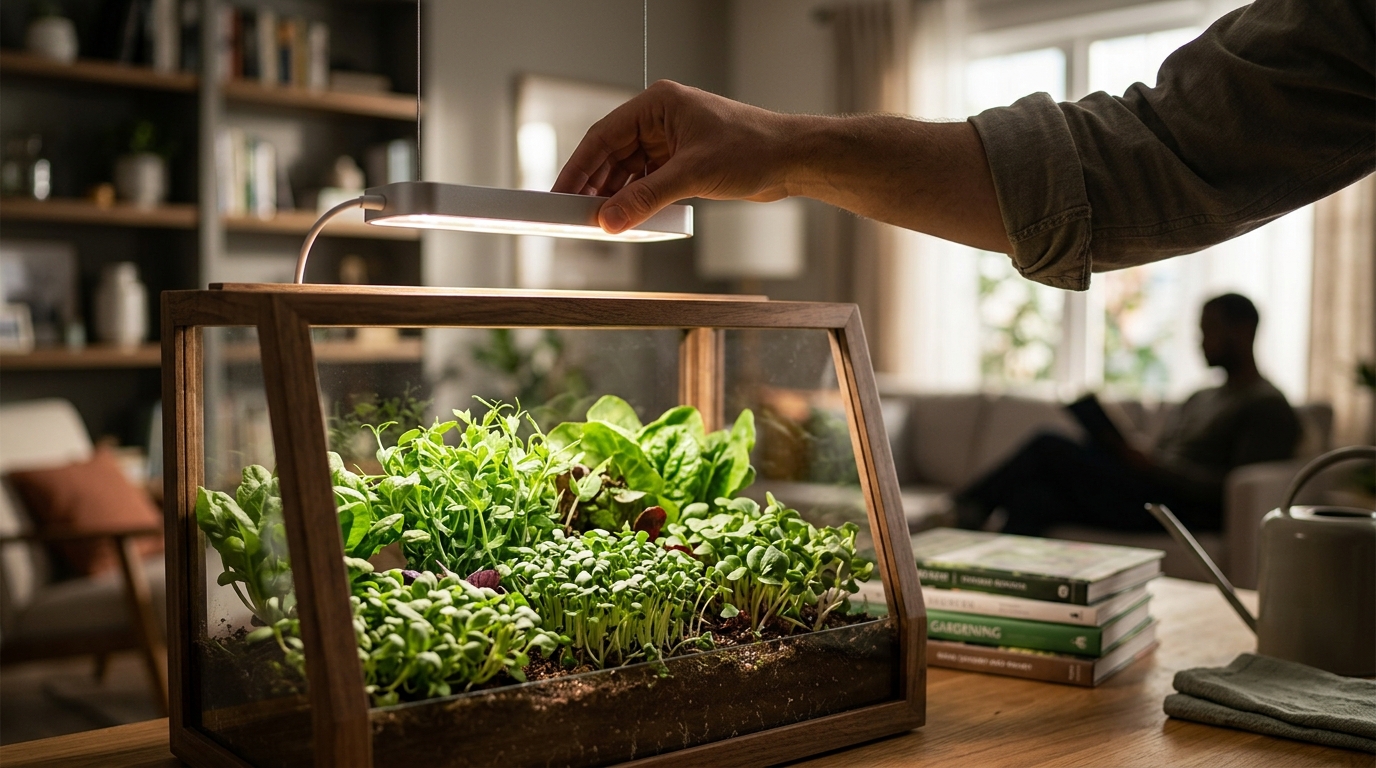
Indoor gardening has evolved from a niche hobby into a mainstream lifestyle, driven by the need for fresh produce and year-round greenery regardless of climate. According to recent market analysis, the global indoor farming market is projected to expand significantly, with a compound annual growth rate exceeding 25% through 2030. This surge is fueled by consumers seeking control over their food sources and aesthetic environments. However, the proliferation of cheap, ineffective fixtures has created confusion. Selecting the right equipment is not merely about brightness; it is about spectral precision and energy efficiency. This guide dissects the critical factors that separate professional-grade illumination from consumer-grade gimmicks.
Understanding PAR and PPFD Metrics
Most consumers focus on lumens, a metric designed for human vision. Plants do not see light the same way humans do. They respond to Photosynthetically Active Radiation (PAR), which measures the quantum flux of photons in the 400 to 700 nanometer range. PAR is the total amount of usable light emitted by a fixture. However, PAR alone is insufficient for precise cultivation.
PAR is the total quantity of light available for photosynthesis. To understand how that light reaches your plants, you must look at PPFD, or Photosynthetic Photon Flux Density. PPFD measures the intensity of PAR hitting a specific square meter of canopy. A high-wattage bulb with poor optics may have high PAR but low PPFD at the plant level due to light scatter. Effective grow lights must deliver high PPFD values directly to the foliage to maximize photosynthetic rates without wasting energy on the walls or ceiling.
When evaluating fixtures, always request PPFD maps from the manufacturer. These maps show the uniformity of light distribution. Uneven distribution forces you to rotate plants or adjust heights frequently, leading to inconsistent growth. A uniform map ensures that every leaf receives the same energy dose, promoting balanced development.
Spectral Purity and Wavelength Control
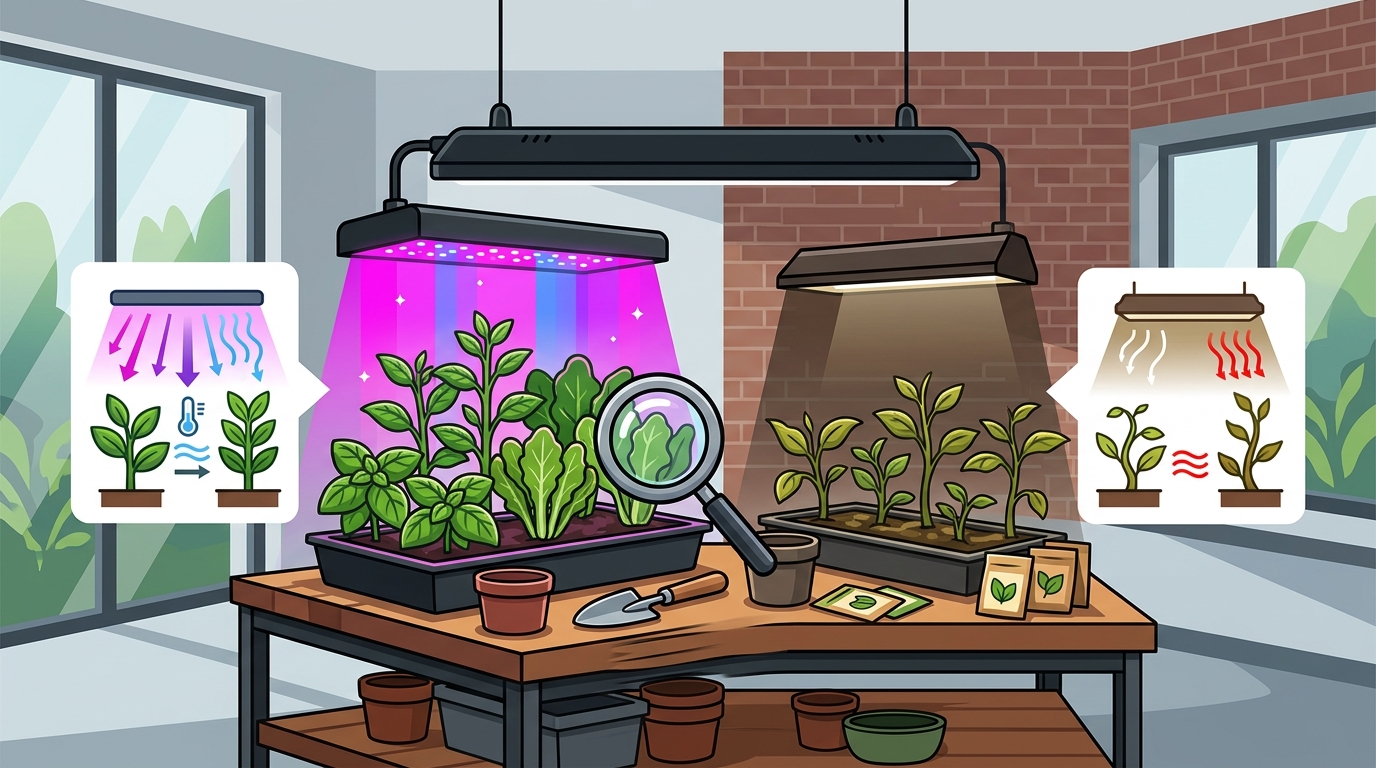
Not all photons are created equal. The spectrum of light dictates the physiological response of the plant. Traditional high-intensity discharge (HID) lamps, such as metal halide and high-pressure sodium bulbs, emit broad spectra but waste significant energy as heat and infrared radiation. Modern LED technology allows for precise spectral tuning.
Spectral purity refers to the concentration of specific wavelengths that drive photosynthesis. A high-purity spectrum minimizes wasted energy in the green and far-red ranges that plants utilize less efficiently. Instead, it concentrates energy in the blue (400-500nm) and red (600-700nm) bands. Blue light promotes vegetative growth, compact structure, and chlorophyll production. Red light drives flowering, fruiting, and stem elongation.
Advanced fixtures now offer full-spectrum outputs that mimic natural sunlight. This continuity ensures that plants receive the complete range of wavelengths needed for healthy development. A stabilized full-spectrum halide output, for instance, is known to support robust vegetative stages. However, the true innovation lies in how that light is delivered to the canopy.
The Role of Nano Liquid Photonic Coating
Standard LED grow lights often suffer from photon scatter. Even with reflectors, some light escapes the target area or hits the plant at inefficient angles. This is where Nano Liquid Photonic Coating changes the paradigm. This proprietary technology applies a microscopic layer to the light source that redirects scattered photons.
Nano Liquid Photonic Coating redirects scattered light into a tighter, more usable beam for faster indoor plant growth. By tightening the beam, the fixture increases usable PAR at the canopy. This results in sharper spectral purity and denser photon delivery. The technology ensures that every photon generated by the LED is directed toward the plant, rather than being lost to the environment.
Real-world testing validates these claims. Trials involving fast-cycling crops like lettuce have demonstrated accelerated development cycles. In controlled environments, growers have reported bringing crops to harvest in as little as two months, compared to the typical three-month cycle. This efficiency is not just about speed; it is about resource optimization. Less energy is required to achieve higher yields, reducing operational costs significantly.
The application of this coating also enhances the structural integrity of the light output. It supports stronger vegetative growth and sturdier plant structure. For delicate plants, this means reduced risk of photobleaching or uneven stretching. The technology is engineered specifically for small and medium grow spaces, providing strong, even canopy coverage without the hot spots common in traditional fixtures.
Heat Management and Operational Safety
Heat is the silent killer of indoor gardens. Excessive heat can scorch leaves, dry out soil rapidly, and stress plants, halting growth. Traditional HID lights emit up to 80% of their energy as heat. LED fixtures are cooler, but poor thermal management can still lead to component failure and reduced lifespan.
Low-heat operation is a critical feature for modern grow lights. It makes the fixture ideal for shelves, tents, cabinets, and compact indoor grow setups where ventilation is limited. A fixture that runs cool allows you to place lights closer to the canopy, increasing PPFD without risking thermal damage. This proximity is essential for maximizing yield in vertical farming configurations.
Effective heat sinks and passive cooling designs are standard in premium fixtures. These components draw heat away from the LED drivers and diodes, ensuring consistent performance over time. When buying, check the thermal rating and the materials used in the housing. Aluminum heat sinks are superior to plastic for dissipating heat. Additionally, consider the noise level of any active cooling fans. Quiet operation is vital for home environments.
Matching Lights to Plant Types
Different plants have different light requirements. A one-size-fits-all approach rarely works for serious growers. Understanding the specific needs of your plants will help you select the right fixture.
African Violets
African violets are sensitive to light intensity and spectrum. They require consistent, gentle illumination to bloom continuously. They respond exceptionally well to stabilized full-spectrum halide output or high-quality LED equivalents. The key benefits include strong blue-white vegetative spectrum, deep spectral continuity, and low heat for delicate leaves. Results include continuous violet blooms, faster leaf expansion, and richer coloration. A fixture with Nano Liquid Photonic Coating can enhance these benefits by ensuring even coverage without hot spots.
Microgreens and Leafy Greens
Microgreens have a short growth cycle, typically 7 to 14 days. They require high light intensity to develop thick stems and vibrant leaves. The balanced, beam-tightened output of advanced LED fixtures supports rapid vegetative growth. Plants can grow up to 1 inch per day under optimal conditions. This acceleration reduces the time from seed to harvest, allowing for multiple harvests per month.
Flowering and Fruiting Plants
Tomatoes, peppers, and orchids require a specific red-to-blue ratio during the flowering stage. The spectral purity from the nano coating sharpens targeted wavelengths, accelerating photosynthesis during these critical phases. Ensure the fixture you choose has a dimmable option to adjust intensity as the plant transitions from vegetative to flowering stages.
Fixture Comparison Matrix
The following table compares standard LED fixtures with advanced Nano-enhanced options to highlight the differences in performance and efficiency.
| Feature | Standard LED Grow Light | Nano Liquid Photonic Coating Light |
|---|---|---|
| Photon Delivery | Scattered, lower canopy PPFD | Tightened beam, denser PAR delivery |
| Spectral Purity | Broad spectrum with waste | Sharp, targeted wavelengths |
| Heat Output | Moderate to High | Low-heat operation |
| Growth Speed | Standard cycle times | Up to 3x faster development |
| Ideal Use Case | Large, ventilated spaces | Shelves, tents, compact setups |
Key Takeaways
- PAR vs. Lumens: Ignore lumens. Focus on PAR for total light output and PPFD for canopy intensity.
- Spectral Precision: High spectral purity minimizes energy waste and maximizes photosynthetic efficiency.
- Nano Technology: Nano Liquid Photonic Coating redirects scattered photons, increasing usable PAR at the canopy.
- Heat Management: Low-heat fixtures allow closer placement to plants, boosting yield in small spaces.
- Plant Specificity: African violets need gentle, continuous spectrum; microgreens need high intensity for speed.
- Efficiency Gains: Advanced coatings can reduce growth cycles from three months to two months for fast-cycling crops.
- Uniformity: Always check PPFD maps to ensure even light distribution across your grow area.
Frequently Asked Questions
What is the difference between PAR and PPFD?
PAR is the total amount of light emitted by the fixture that plants can use. PPFD is the amount of that light that actually reaches the plant's surface per square meter. Both are critical for accurate measurement.
Do I need a full-spectrum light for all plants?
Yes, full-spectrum lights mimic natural sunlight and support all stages of plant growth, from seedling to harvest. They provide the balanced wavelengths needed for healthy development.
How does Nano Liquid Photonic Coating work?
Nano Liquid Photonic Coating is a microscopic layer that redirects scattered light into a tighter beam. This increases the density of photons hitting the canopy, boosting yields and growth speed.
Can I use grow lights for African Violets?
African violets grow faster and bloom more consistently under specialized grow lights. They benefit from stabilized full-spectrum output and low heat to protect their delicate leaves.
Is heat management important for LED lights?
Yes, even LEDs generate heat. Effective heat management ensures the light runs cool, allowing you to place it closer to plants without causing thermal stress or damage.
How much faster can plants grow with advanced lighting?
In ideal conditions, plants can grow up to 1 inch per day with advanced lighting. This can reduce a typical 3-month cycle to as little as 2 months for fast-cycling crops.
What should I look for in a fixture for small spaces?
Look for low-heat operation, high PPFD uniformity, and compact design. Fixtures engineered for small spaces provide strong, even canopy coverage without taking up room.
Are nano-coated lights worth the investment?
Yes, they offer up to 3x faster development in ideal conditions. The increased efficiency and yield often justify the initial cost for serious growers.
Start Your Growth Journey
Choosing the right indoor grow light is the foundation of a successful garden. By prioritizing spectral purity, heat management, and advanced technologies like Nano Liquid Photonic Coating, you can transform your indoor space into a thriving ecosystem. Explore our Shop Now collection to find the perfect fixture for your needs. Visit our How it works page to learn more about the science behind our technology. For specific advice on African Violets or Microgreens, check our dedicated guides. Contact our Customer Support team for personalized recommendations. FAQ section is also available for quick answers.