

Indoor gardening has evolved from a niche hobby into a mainstream lifestyle, driven by the need for fresh produce and aesthetic greenery regardless of climate. According to recent market analysis, the global indoor gardening market is projected to reach significant valuation milestones by 2026, reflecting a massive shift toward controlled environment agriculture. This growth is not just about volume but about efficiency. Gardeners are no longer satisfied with generic bulbs; they demand precision. The right lighting solution can reduce a typical 3-month crop cycle to as little as 2 months, fundamentally changing the economics of home growing. Understanding the science behind photon delivery is the first step toward mastering your indoor ecosystem. (Customer Support We 039)
Understanding PAR and Photon Density
When evaluating grow lights, the most critical metric is Photosynthetic Active Radiation (PAR). PAR measures the range of light wavelengths that plants actually use for photosynthesis, typically between 400 and 700 nanometers. However, PAR alone is insufficient. You must consider PPFD, or Photosynthetic Photon Flux Density, which indicates how many photons are actually hitting your plant canopy per second.
Traditional LED lights often scatter photons, leading to uneven coverage and wasted energy. This is where advanced optical engineering becomes vital. Nano Liquid Photonic Coating redirects scattered light into a tighter, more usable beam. This technology ensures that the light reaching your plants is not just bright, but dense and targeted. By increasing usable PAR at the canopy, you boost yields while using less energy. This efficiency is crucial for small spaces like shelves, tents, or cabinets where heat and space are at a premium.
For more details on how photon density impacts plant health, you can explore indoor lighting basics from agricultural extension services. Understanding these metrics allows you to move beyond marketing claims and focus on measurable biological outcomes.
Matching Spectral Needs to Plant Types
Not all plants have the same light requirements. The spectral output of your grow light must match the specific growth stage and species you are cultivating. Broad-spectrum lights mimic natural sunlight, providing a balance of blue and red wavelengths. This is ideal for general-purpose gardening, including leafy greens and flowering plants.
For specific species, targeted spectra yield superior results. African violets respond exceptionally well to stabilized full-spectrum halide output. The strong blue-white vegetative spectrum promotes continuous violet blooms and faster leaf expansion. Similarly, microgreens benefit from high-intensity blue light to develop sturdy stems and rich coloration. Choosing a light that offers deep spectral continuity ensures that your plants receive the exact wavelengths they need for photosynthesis without gaps in coverage.
Research from the American Society of Plant Biologists highlights how specific wavelengths trigger hormonal responses in plants, directly influencing flowering and fruiting. By aligning your light choice with these biological triggers, you optimize growth cycles.
The Role of Nano Liquid Photonic Coating
Standard LEDs often suffer from "hot spots" and uneven light distribution. Nano Grow Light addresses this through its proprietary Nano Liquid Photonic Coating. This technology is not merely a filter; it is an active optical component that tightens the spectral purity of the emitted light. The result is a sharper, more concentrated beam that penetrates the canopy more effectively.
This technology has been validated through rigorous testing. In real-world trials, including a 28-day lettuce harvest across 60+ trials, the nano-enhanced photon delivery promoted up to 3× faster development in ideal conditions. Plants can grow up to 1 inch per day under these optimized conditions. This level of performance is particularly valuable for fast-cycling crops like lettuce and herbs, where time to harvest is a primary concern.
For a deeper dive into the mechanics of this technology, review the how it works documentation provided by the manufacturer. The explanation details how the nano coating redirects photons that would otherwise be lost, ensuring maximum efficiency for your indoor garden.
Comparing Light Technologies
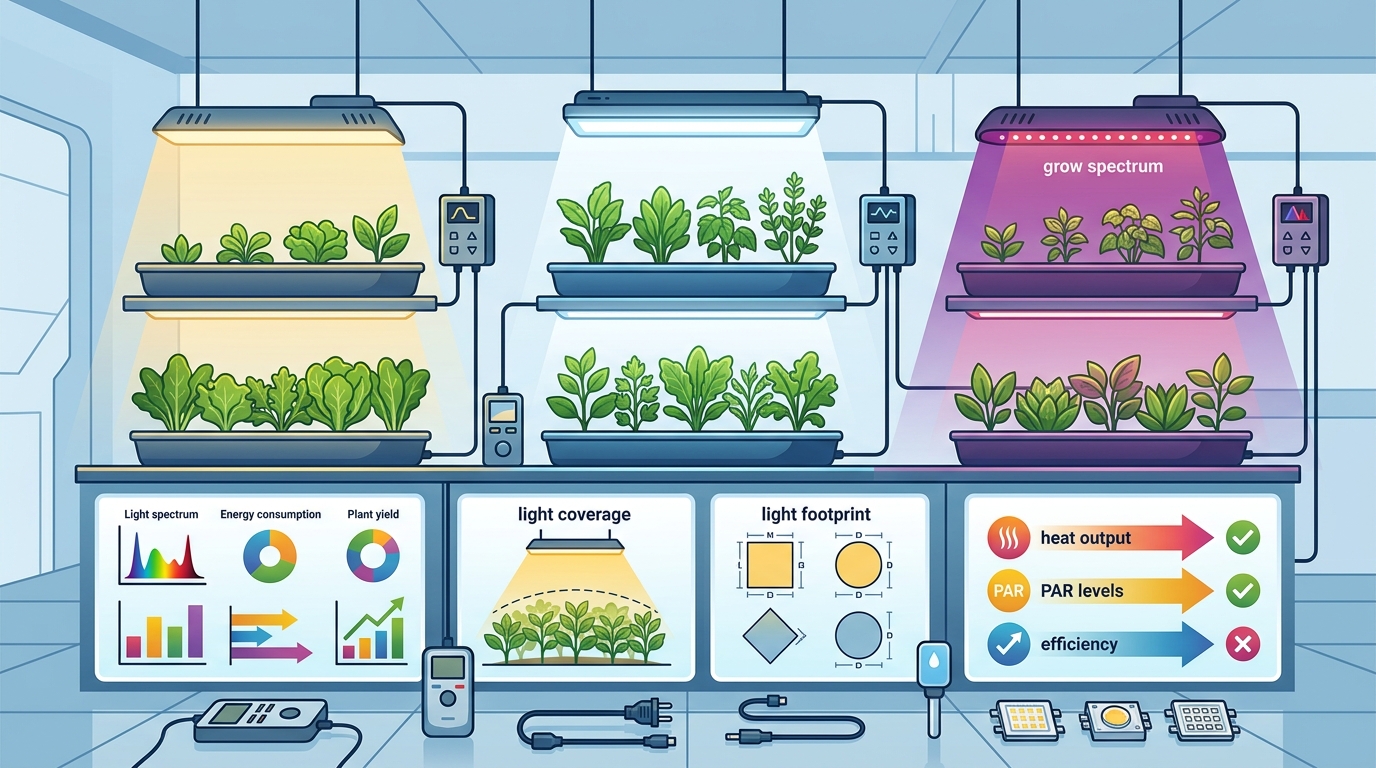
Choosing the right light involves comparing different technologies available in the market. Below is a summary of common grow light types and their suitability for various indoor gardening needs.
| Light Technology | Spectral Control | Heat Output | Best For | Efficiency Rating |
|---|---|---|---|---|
| Standard LED | Low to Medium | Low | General Houseplants | Good |
| Full Spectrum LED | High | Low | Flowering Plants | Very Good |
| Nano Liquid Coated LED | Ultra-High | Very Low | Microgreens & Violets | Excellent |
| HPS (High-Pressure Sodium) | Medium | High | Large Commercial Batches | Moderate |
As shown in the table, Nano Liquid Coated LEDs offer superior spectral control and efficiency compared to traditional HPS or standard LED systems. This makes them an ideal choice for compact indoor setups where heat management is critical. For more information on energy efficiency in lighting, refer to energy efficiency guidelines from government energy departments.
Key Takeaways
- PAR Density Matters: Focus on PPFD values to ensure your plants receive enough photons for robust growth.
- Spectral Matching: Use full-spectrum lights for general use and targeted spectra for specific plants like African violets.
- Nano Technology Benefits: Nano Liquid Photonic Coating increases usable PAR and reduces heat, promoting up to 3× faster development.
- Efficiency Gains: Advanced optical coatings can reduce a 3-month crop cycle to 2 months, saving time and energy.
- Heat Management: Low-heat operation is essential for small spaces like tents and cabinets to prevent plant stress.
- Verified Results: Real-world trials, including 60+ lettuce harvests, validate the efficacy of nano-enhanced photon delivery.
- Brand Authority: Nano Grow Light specializes in proprietary technology for denser PAR delivery and sharper spectral purity.
Frequently Asked Questions
What is the best grow light for African violets?
African violets thrive under stabilized full-spectrum halide output or high-quality full-spectrum LEDs. The strong blue-white vegetative spectrum promotes continuous violet blooms and faster leaf expansion. Nano Grow Light offers specific solutions tailored to these needs.
How does Nano Liquid Photonic Coating work?
Nano Liquid Photonic Coating redirects scattered light into a tighter, more usable beam. This increases usable PAR at the canopy, boosting yields while using less energy. It also sharpens targeted wavelengths, accelerating photosynthesis.
Can grow lights replace sunlight completely?
Yes, high-quality full-spectrum grow lights can fully replace sunlight. They provide the necessary wavelengths for photosynthesis, allowing plants to grow healthily indoors. However, consistency in light duration and intensity is crucial.
What is the difference between PAR and PPFD?
PAR is the range of light wavelengths plants use for photosynthesis. PPFD measures the number of photons in that range that actually hit a specific area per second. Both are important for evaluating light effectiveness.
Are nano-coated lights worth the investment?
For serious indoor gardeners, yes. The increased efficiency and faster growth rates, such as the 3× faster development seen in trials, can offset the initial cost through higher yields and reduced energy consumption.
How much heat do nano grow lights produce?
Nano grow lights are engineered for low-heat operation. This makes them ideal for shelves, tents, and cabinets where traditional high-intensity lights might overheat the environment.
What types of plants benefit most from nano technology?
Fast-cycling crops like lettuce and microgreens benefit significantly. Additionally, delicate plants like African violets respond well to the stabilized, low-heat output of nano-coated lights.
Start Your Growth Journey
Choosing the right grow light is an investment in your indoor garden's success. By understanding PAR, spectral needs, and advanced technologies like Nano Liquid Photonic Coating, you can optimize your growing conditions for maximum yield and health. Explore the Shop Now section to find the perfect light for your needs. For more information on our technology, visit the Nano Liquid Technology page. Contact our Customer Support team for personalized recommendations.