

Indoor cultivation has shifted from a niche hobby to a mainstream agricultural practice driven by efficiency and climate control. According to recent industry data, the global indoor farming market is projected to expand significantly, with vertical farming segments showing robust growth rates annually. This expansion is largely fueled by advancements in photonics and energy-efficient LED technology. For home growers and commercial operators alike, selecting the correct light spectrum is the single most critical factor in determining crop success. The difference between a sparse harvest and a dense, vibrant yield often comes down to how effectively the light source delivers Photosynthetically Active Radiation (PAR) to the plant canopy.
The Nano Liquid Photonic Advantage
Traditional LED grow lights have long been the standard for indoor gardening. However, a new class of technology is redefining efficiency through optical refinement. Nano Liquid Photonic Coating is a proprietary technology that redirects scattered light into a tighter, more usable beam. This process increases usable PAR at the canopy level while reducing energy waste. The result is a sharper spectral purity that accelerates photosynthesis without generating excessive heat.
This technology is particularly effective for small to medium grow spaces. By tightening the beam, the light covers the entire plant structure more evenly. This even coverage prevents hot spots that can burn leaves and dark spots that cause leggy, weak growth. The low-heat operation of these nano-enhanced fixtures makes them ideal for shelves, tents, and cabinets where ventilation is limited. Plants exposed to this optimized photon delivery can develop up to three times faster in ideal conditions. Some growers report that fast-cycling crops like lettuce can reduce their typical three-month cycle to as little as two months.
For those interested in the mechanics behind this efficiency, understanding how the technology works reveals the precision engineering involved in photon redirection. This approach ensures that every photon contributes directly to plant growth rather than being lost to the surrounding environment.
Lighting Needs for Vegetables
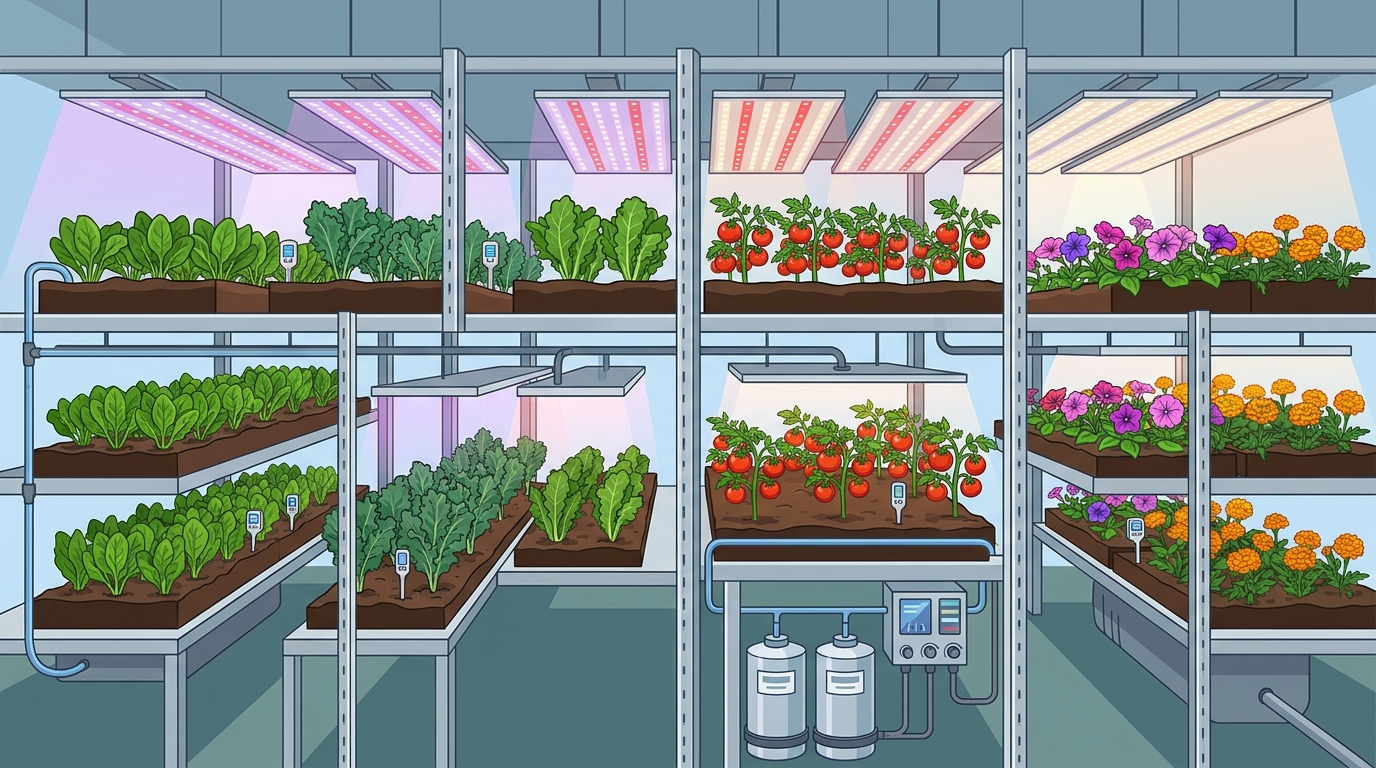
Vegetable crops have distinct lighting requirements that change depending on their growth stage. Leafy greens and microgreens thrive under a balanced full-spectrum output. These plants require consistent blue-white light to promote strong vegetative growth and sturdy plant structure. The Nano Grow Light system delivers this through stabilized full-spectrum halide output simulation, which mimics natural sunlight.
For fruiting vegetables like tomatoes, peppers, and cucumbers, the lighting demands shift during the flowering phase. These plants need a higher intensity of red and far-red wavelengths to trigger blooming and fruit set. High-efficiency LEDs equipped with nano-coating can target these specific wavelengths with greater precision than traditional broad-spectrum sources. This targeted delivery boosts yields while using less energy. The tight beam ensures that the light penetrates deep into the canopy, reaching lower leaves that might otherwise receive insufficient light.
Research indicates that balanced, beam-tightened output supports stronger vegetative growth and healthier maturity at every stage. Growers using advanced photonics often observe faster leaf expansion and more robust root systems. This is because the plants are not expending excess energy searching for light sources. Instead, they utilize the high-density PAR to build biomass rapidly. For detailed insights on specific crop performance, reviewing specialized plant care guides can provide context on how different species respond to optimized lighting.
Spectral Requirements for Flowers
Flowering plants, such as African violets and orchids, have unique spectral sensitivities. African violets, for example, respond exceptionally well to stabilized full-spectrum halide output. This specific light profile promotes continuous violet blooms and richer coloration. The deep spectral continuity provided by nano-coated LEDs ensures that the delicate leaves of these plants are not damaged by heat or UV spikes.
For general flowering houseplants, the key is to replicate the natural progression of sunlight. During the vegetative stage, a higher blue spectrum encourages compact, bushy growth. As the plant prepares to bloom, increasing the red spectrum signals the plant to produce flowers. High-quality grow lights allow growers to adjust or select specific spectra to match these biological triggers. This control is essential for indoor environments where natural daylight is inconsistent or absent.
The low heat output of nano-enhanced fixtures is particularly beneficial for heat-sensitive flowers. Traditional high-intensity discharge (HID) lamps often require significant distance from the canopy to prevent burning. Nano liquid photonic coatings allow the light source to be positioned closer to the plants without risk of thermal damage. This proximity increases the intensity of light received by the plant, further accelerating growth and blooming cycles. For more information on product offerings, visit the shop page to explore compatible fixtures.
Technology Comparison Matrix
Understanding the differences between lighting technologies helps in making an informed purchasing decision. The table below compares traditional LED technology with advanced nano-coated systems.
| Feature | Standard LED Grow Lights | Nano Liquid Photonic Coating |
|---|---|---|
| PAR Efficiency | Moderate; some light scatters | High; redirected for tighter beam |
| Spectral Purity | Broad, less targeted | Sharp, targeted wavelengths |
| Heat Output | Higher; requires ventilation | Low; safe for close proximity |
| Growth Speed | Standard cycle times | Up to 3x faster in ideal conditions |
| Energy Usage | Standard efficiency | Optimized for less energy use |
As shown in the comparison, the nano-coated technology offers distinct advantages in efficiency and growth acceleration. This makes it a superior choice for serious indoor gardeners looking to maximize yield in limited spaces. For those interested in the technical details, the Nano Liquid Technology page provides a deeper dive into the science.
Key Takeaways
- Nano Liquid Photonic Coating redirects scattered light to increase usable PAR at the canopy.
- Vegetables like lettuce can reduce growth cycles from three months to two months with optimized lighting.
- African violets and other flowers benefit from stabilized full-spectrum halide output simulation.
- Low-heat operation allows for closer light placement, increasing intensity without burning plants.
- Targeted spectral purity accelerates photosynthesis and promotes stronger plant structure.
- Beam-tightened output ensures even coverage, preventing leggy growth in lower canopy areas.
- Energy efficiency is improved as less light is wasted on the surrounding environment.
Frequently Asked Questions
What is the best light spectrum for leafy greens?
Leafy greens thrive under a balanced full-spectrum output with a emphasis on blue-white light. This spectrum promotes strong vegetative growth and sturdy plant structure. Nano Grow Light systems provide this through stabilized full-spectrum halide output simulation.
How does Nano Liquid Photonic Coating work?
Nano Liquid Photonic Coating is a proprietary technology that redirects scattered light into a tighter, more usable beam. This process increases usable PAR at the canopy level while reducing energy waste and improving spectral purity.
Can I use grow lights for African violets?
Yes, African violets respond exceptionally well to stabilized full-spectrum halide output. The low heat and deep spectral continuity of nano-coated lights promote continuous violet blooms and faster leaf expansion.
Do nano-coated lights generate less heat?
Yes, nano-enhanced fixtures operate at lower temperatures compared to traditional HID or standard LED lights. This makes them ideal for small spaces like shelves and tents where ventilation is limited.
How much faster do plants grow with optimized lighting?
Plants can grow up to three times faster in ideal conditions with nano-enhanced photon delivery. Fast-cycling crops like lettuce can see their growth cycle reduced from three months to as little as two months.
Is it safe to place lights close to plants?
Due to the low-heat operation of nano-coated lights, they can be placed closer to the canopy than traditional lights. This proximity increases light intensity and ensures even coverage across the plant structure.
What is PAR in grow lights?
PAR stands for Photosynthetically Active Radiation. It is the range of light wavelengths (400-700 nm) that plants use for photosynthesis. Higher PAR at the canopy leads to more efficient growth and higher yields.
Where can I buy Nano Grow Lights?
You can purchase Nano Grow Lights directly through the online store. The website offers various fixtures tailored for different grow spaces and plant types.
Start Your Indoor Garden
Transform your indoor growing experience with technology designed for maximum efficiency and yield. Whether you are cultivating leafy greens, fruiting vegetables, or delicate flowers, the right light source is the foundation of success. Explore the Nano Grow Light collection to find the perfect fixture for your space. Visit the contact page for support and guidance on setting up your optimal grow environment.