
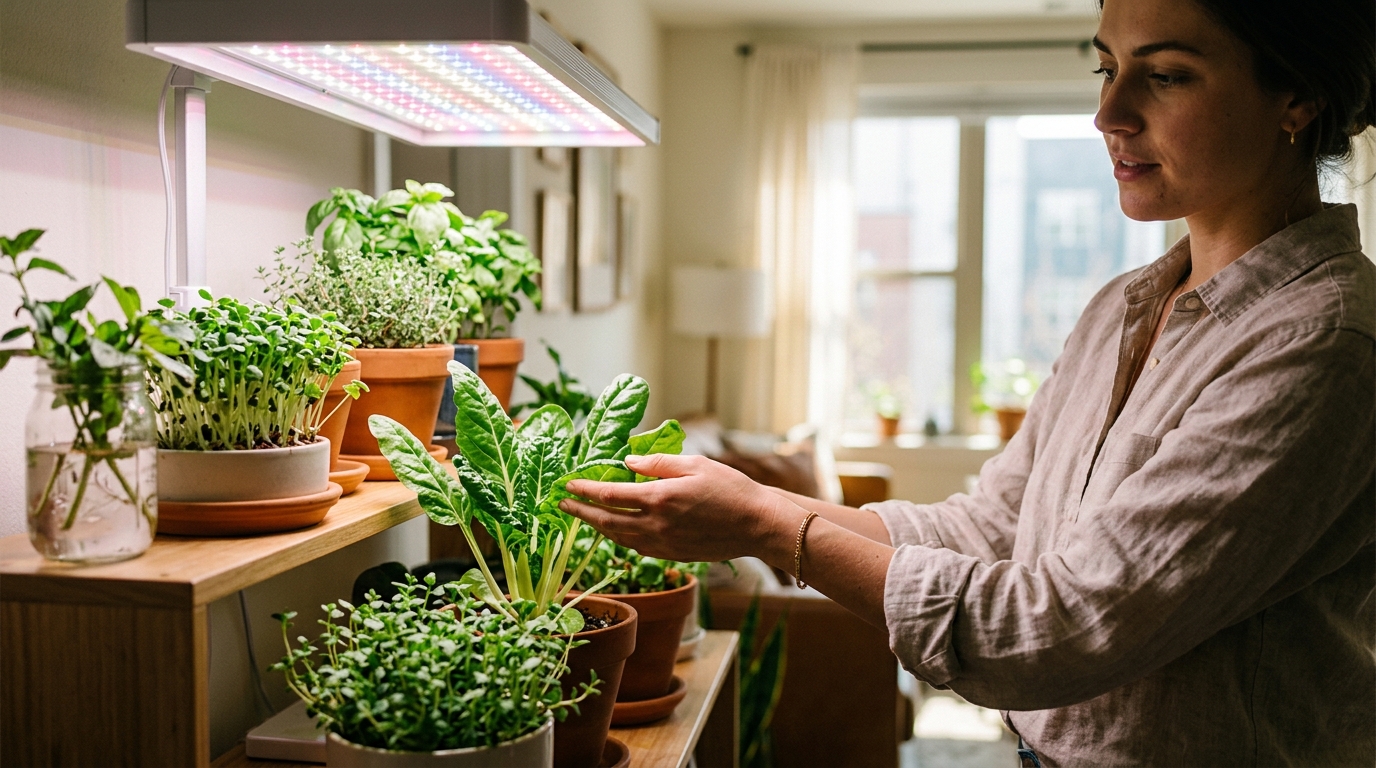
Indoor cultivation has evolved from a niche hobby into a precise science driven by photon management and spectral efficiency. According to recent industry data, modern LED and halide systems can reduce crop cycle times by up to 30% compared to traditional lighting methods when optimized correctly. Selecting the appropriate lighting infrastructure is not merely about brightness; it is about matching the specific photosynthetic active radiation (PAR) requirements of your plants with the energy delivery capabilities of the fixture. This guide dissects the critical variables of spectrum, intensity, and technology to help you make an informed decision.
Understanding Spectrum and Plant Stages
Plants do not consume light uniformly. They rely on specific wavelengths to drive photosynthesis and regulate growth hormones. The concept of Photosynthetic Photon Flux Density (PPFD) measures the number of photons that reach a specific area per second. However, the quality of those photons matters more than the quantity alone.
Vegetative growth, which involves leaf and stem development, thrives under blue-dominant spectra. This range, typically between 400 and 500 nanometers, signals plants to stay compact and robust. Conversely, the flowering and fruiting stages require a shift toward red and far-red wavelengths, ranging from 600 to 700 nanometers. This spectral shift triggers hormonal changes that promote bud formation and fruit ripening.
Choosing a light that offers a balanced full-spectrum output ensures that your plants receive the necessary signals for every stage of their lifecycle without the need for manual bulb swapping. A full-spectrum grow light mimics the natural sun, providing a continuous range of wavelengths that support complex biological processes.
Technology Comparison: LED vs. Metal Halide
The market is dominated by two primary technologies: Light Emitting Diodes (LEDs) and High-Intensity Discharge (HID) lamps, specifically Metal Halide (MH). Each has distinct advantages depending on your grow space and crop type.
LED Efficiency and Heat Management
LEDs have become the standard for many commercial and home growers due to their energy efficiency and low heat output. They allow for precise placement closer to the canopy without risking thermal damage. However, standard LED arrays can sometimes suffer from "hot spots" or uneven light distribution, leading to inconsistent growth across the canopy.
Metal Halide Spectral Purity
Metal Halide technology has long been revered for its natural, broad-spectrum output. Unlike LEDs, which emit light from discrete diodes, MH lamps produce a continuous spectrum that closely resembles natural sunlight. This continuity eliminates the gaps in wavelength often found in cheaper LED panels. Furthermore, MH lamps deliver high photon density, which is critical for dense flowering crops.
For growers focusing on microgreens or delicate foliage, the lower heat profile of modern MH systems, when paired with advanced reflector technology, offers a stable environment that prevents leaf scorching while maximizing photosynthetic rates.
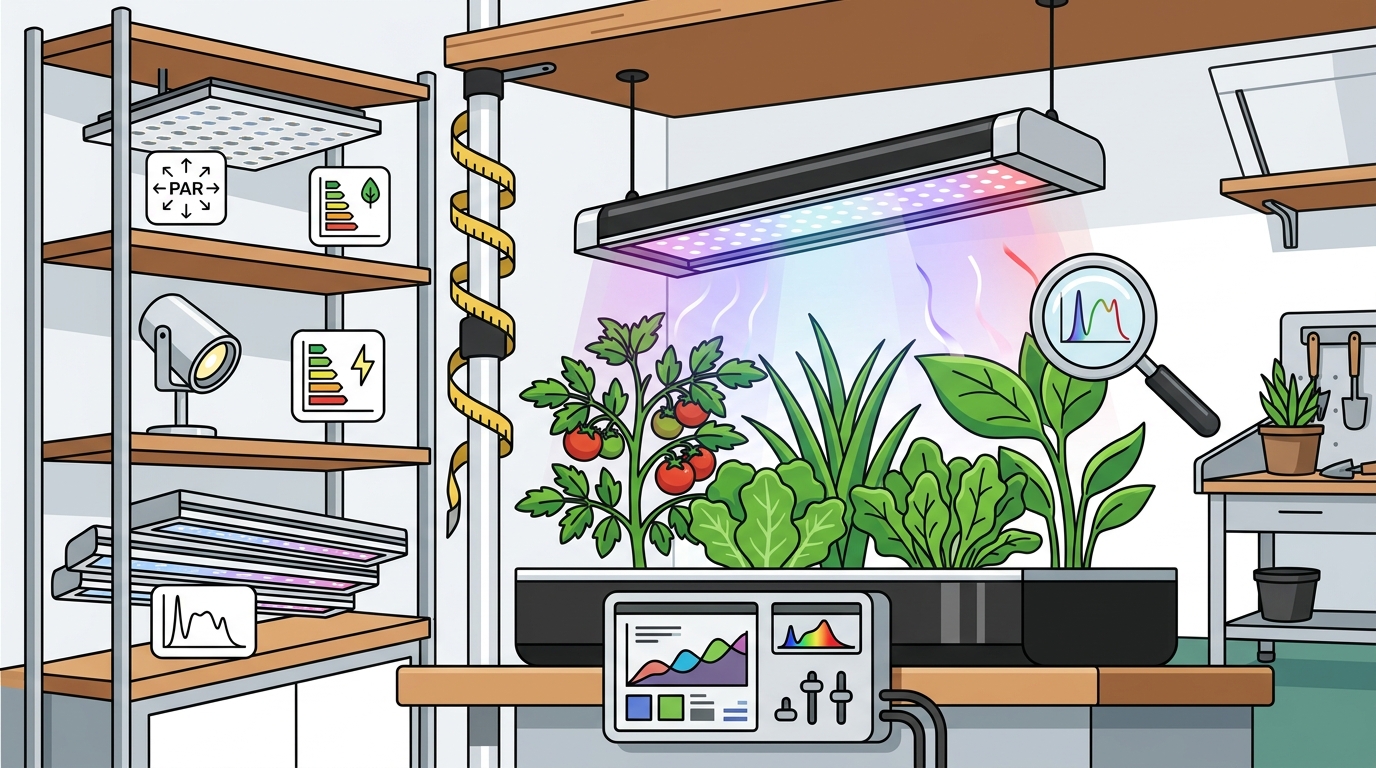
The Role of Nano Liquid Photonic Coating
Traditional reflectors scatter photons in all directions, wasting energy on wavelengths that plants cannot use or on light that misses the canopy entirely. This inefficiency forces growers to use higher wattage bulbs to compensate for lost light, increasing energy costs and heat load.
Nano Liquid Photonic Coating is a proprietary technology that addresses this inefficiency by redirecting scattered light into a tighter, more usable beam. This coating is engineered at the molecular level to sharpen spectral purity and maximize usable PAR. By tightening the beam spread, the light penetrates deeper into the canopy, ensuring that lower leaves also receive productive wavelengths.
In trials conducted at a 10,000 square foot facility in California, this technology demonstrated significant improvements in growth speed. Lettuce matured in 28 days under Nano Grow Light systems, compared to 42 days outdoors. This acceleration is attributed to the increased usable PAR at the canopy level and the elimination of wasted photons.
For those interested in the specific mechanics of this innovation, you can learn more about how the coating works to understand the physics behind the accelerated growth.
Calculating Light Intensity and Coverage
When choosing a light, you must consider the square footage of your grow area. A common mistake is under-lighting a large space or over-lighting a small tent, which can lead to energy waste or plant stress.
| Grow Space Size | Recommended Light Type | Key Benefit |
|---|---|---|
| 2x2 ft Tent | Nano Grow Light | Intense, focused PAR for compact spaces |
| 4x4 ft Room | High-Output MH or LED Array | Even canopy coverage and heat management |
| Vertical Farming | Low-Heat Full Spectrum | Reduced thermal load on multiple tiers |
| Microgreen Trays | Targeted Beam Light | Deep penetration for rapid sprouting |
If you are growing delicate plants like African Violets, the stabilized full-spectrum halide output provides the consistent blue-white vegetative spectrum needed for strong leaf expansion and continuous blooming. The low heat characteristic is particularly beneficial for these sensitive foliage types.
Key Takeaways
- Spectrum Matters: Blue light drives vegetative growth, while red light triggers flowering. Full-spectrum lights support both stages.
- Efficiency vs. Density: LEDs offer energy savings, while Metal Halide provides high photon density and natural spectral continuity.
- Nano Technology: Nano Liquid Photonic Coating redirects scattered light, increasing usable PAR and reducing growth cycles by up to 33% in tested crops.
- Heat Management: Low-heat operation is critical for small tents and vertical farming to prevent plant stress and mold.
- Real-World Results: Trials show lettuce harvests in 28 days with nano-enhanced systems, compared to traditional outdoor timelines.
- Proper Sizing: Match the light's coverage area to your grow space to ensure uniform canopy penetration.
Frequently Asked Questions
What is the difference between PPFD and PAR?
PAR (Photosynthetic Active Radiation) refers to the range of light wavelengths that plants use for photosynthesis. PPFD (Photosynthetic Photon Flux Density) measures the actual number of PAR photons that hit a specific area per second. While PAR is the type of light, PPFD is the intensity.
Can I use regular household bulbs for indoor gardening?
No. Standard household bulbs lack the specific spectral output and intensity required for photosynthesis. They often emit too much infrared heat and not enough blue or red light, leading to leggy, weak plants that fail to flower or fruit.
How does Nano Liquid Photonic Coating improve growth?
The coating redirects scattered photons into a tighter beam, increasing the density of usable light at the canopy. This allows plants to photosynthesize more efficiently, resulting in faster growth rates and higher yields without increasing energy consumption.
Is Metal Halide better than LED for flowering?
Metal Halide lamps provide a broad, continuous spectrum with high photon density, which is excellent for flowering. While high-end LEDs can match this, MH systems often offer a more natural spectral distribution that some growers prefer for dense bud development.
What is the ideal distance for grow lights?
The distance depends on the light's intensity. For high-output MH or LED fixtures, maintain a distance of 12 to 24 inches from the canopy. Always monitor leaf temperature to prevent heat stress, adjusting the height as the plants grow.
Do I need a dimmer for my grow light?
Yes. Seedlings and young plants require lower light intensity to avoid stress. A dimmable fixture allows you to gradually increase light intensity as the plants mature, optimizing growth at every stage.
Where can I buy Nano Grow Lights?
You can purchase directly through our online store. We offer worldwide shipping and dedicated customer support to help you select the right fixture for your specific grow operation.
Start Growing Faster Today
Choosing the right grow light is the foundation of a successful indoor garden. By understanding the science of spectrum, intensity, and technology, you can optimize your yield and reduce cultivation time. Whether you are growing microgreens, African Violets, or commercial crops, the right lighting infrastructure makes the difference.
Ready to transform your indoor garden? Shop Nano Grow Light today and experience the power of Nano Liquid Photonic Coating. For more information on our technology, visit our Nano Liquid Technology page or contact our support team for personalized advice.