
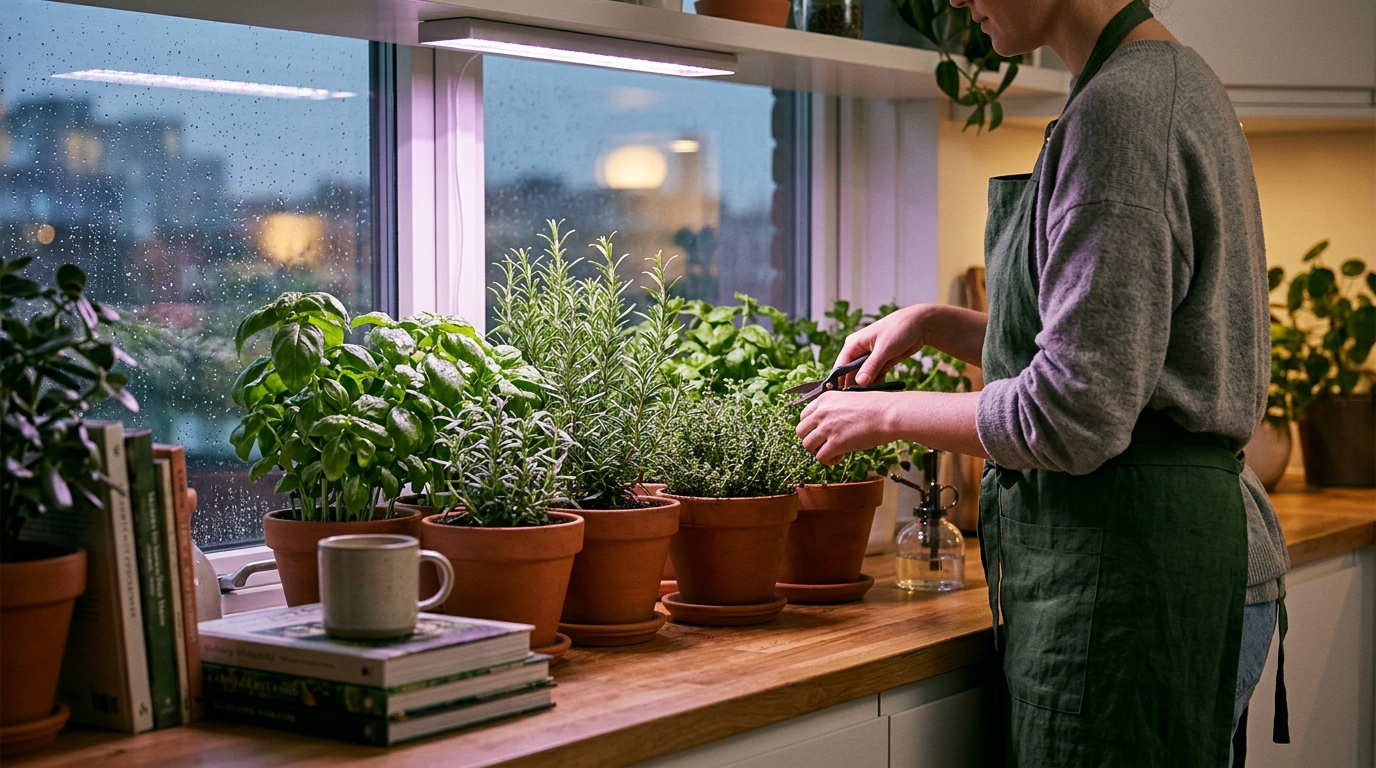
Indoor herb gardening has evolved from a hobbyist pastime into a precise science driven by spectral efficiency and photon density. According to recent horticultural data, plants grown under optimized full-spectrum lighting can achieve up to 30% faster growth rates compared to traditional artificial sources. This acceleration is not merely a matter of brightness but of spectral purity and targeted photon delivery. For serious growers, the choice of lighting technology dictates the difference between sparse, leggy stems and robust, aromatic harvests. Understanding the mechanics behind modern horticultural illumination is essential for maximizing yield in compact indoor environments.
Why Spectrum Matters for Culinary Herbs
Herbs require specific light wavelengths to trigger photosynthesis and essential oil production. The concept of Photosynthetically Active Radiation (PAR) is fundamental here. PAR is the range of light wavelengths from 400 to 700 nanometers that plants use for photosynthesis. Within this range, blue light promotes vegetative growth, while red light encourages flowering and fruiting. However, standard LED lights often create "diode gaps," leaving portions of the spectrum underrepresented. This gap can result in uneven growth patterns and reduced potency in culinary herbs like basil and cilantro.
Traditional lighting solutions frequently scatter photons in every direction, wasting energy on wavelengths that plants cannot utilize. This inefficiency leads to higher electricity costs and increased heat output, which can stress delicate herb leaves. By focusing on spectral purity, growers can ensure that every watt of energy contributes directly to plant development. This precision is particularly critical for herbs, which rely heavily on light quality for flavor profile development.
Nano Liquid Photonic Coating Explained
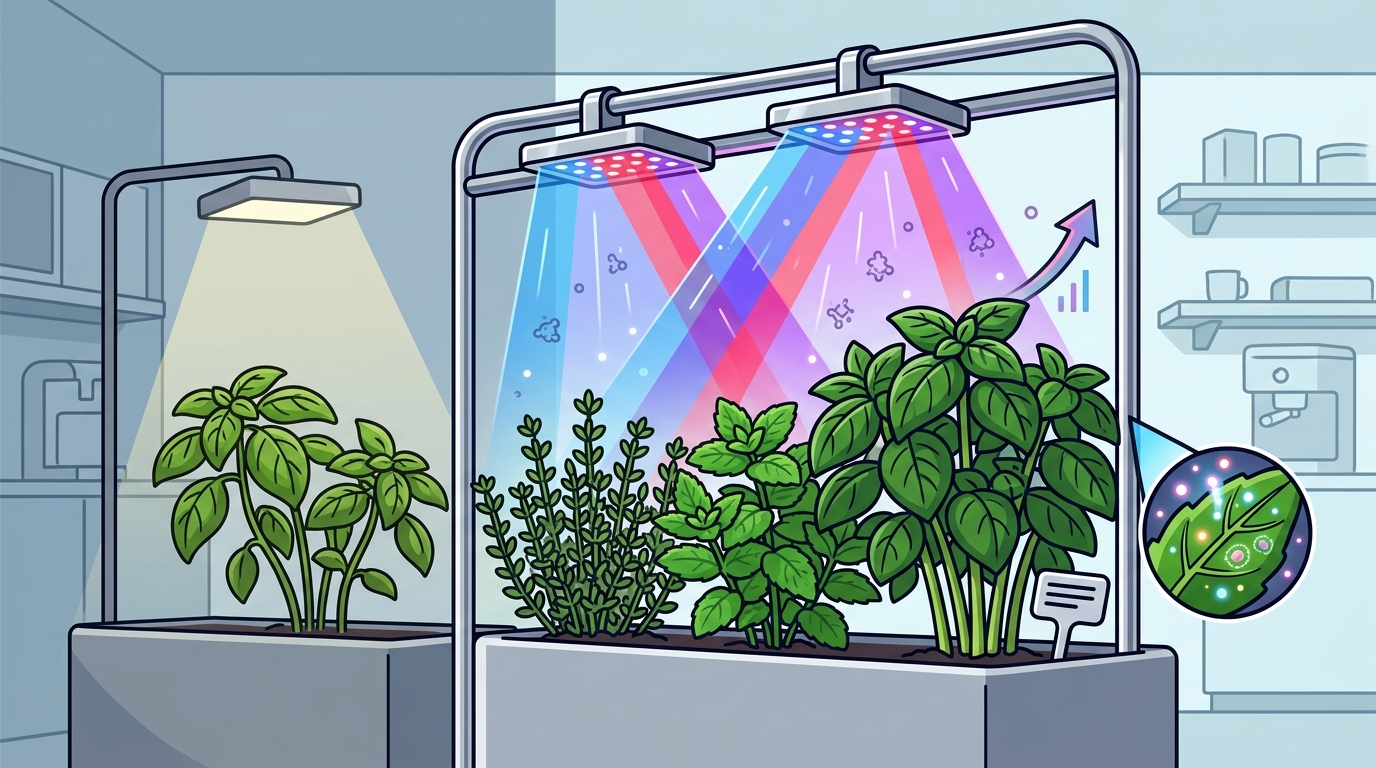
Nano Liquid Photonic Coating is a proprietary reflective technology that reshapes how light interacts with plant canopies. This coating redirects scattered light into a tighter, more usable beam aimed directly at the leaves. The result is a significant increase in usable PAR at the canopy level without increasing energy consumption. This targeted delivery system eliminates the "disco ball" effect common in traditional reflectors, ensuring deeper penetration into the plant structure.
The technology is engineered to maximize usable PAR so plants receive only productive wavelengths. It tightens the beam spread for deeper canopy penetration and sharpens spectral purity for cleaner, more targeted light. By reducing energy waste, the system also lowers heat stress on plants. This is particularly beneficial for heat-sensitive herbs that can wilt or develop leaf burn under high-intensity, poorly managed lighting sources. The nano-structured reflective coating ensures that light is not just bright, but biologically effective.
Metal Halide vs. LED: The Herb Grower's Dilemma
The debate between Metal Halide (MH) and Light Emitting Diode (LED) technology is central to indoor gardening. MH technology provides a broader spectral distribution than standard LEDs. It delivers higher photon density for flowering crops and produces a natural full-spectrum output without the gaps associated with diode arrays. For herb growers, this natural spectrum mimics the sun more closely than many artificial alternatives.
| Feature | Nano Grow Light (MH) | Standard LED Grow Lights |
|---|---|---|
| Spectral Output | Continuous full-spectrum | Discrete diode peaks with gaps |
| Photon Density | High, targeted via nano-coating | Variable, often scattered |
| Heat Management | Low-heat operation ideal for tents | High heat, requires active cooling |
| Growth Speed | Up to 3x faster in ideal conditions | Standard to moderate |
While LEDs are popular for their energy efficiency, they often lack the photon density required for rapid herb growth. The Nano Grow Light system uses metal halide technology enhanced by nano-coating to bridge this gap. It provides the broad spectrum of MH with the precision of modern optics. This combination supports stronger vegetative growth and sturdier plant structure. Growers report that plants mature faster and develop richer essential oils under this system.
Best Herbs for Nano-Enhanced Growth
Certain herbs respond exceptionally well to the stabilized full-spectrum halide output provided by advanced lighting systems. Basil, for instance, thrives under high photon density, developing larger leaves and more intense aroma. Cilantro and parsley benefit from the balanced beam-tightened output, which supports healthy maturity at every stage. Even delicate herbs like mint and chives show improved resilience and growth rates.
The technology is also ideal for microgreens, which require rapid development cycles. In real-world use, growers have brought fast-cycling crops like lettuce to harvest in as little as 28 days, based on testing across 60+ harvests. This speed is achievable because the nano-coating redirects scattered light into a denser, more usable PAR field. The result is stronger vegetative growth and more reliable yields with less wasted energy. For vertical farms and compact indoor setups, this efficiency is paramount.
Optimizing Your Indoor Herb Setup
Setting up an indoor herb garden requires attention to distance, duration, and environment. The Nano Grow Light is engineered for small and medium grow spaces, providing strong, even canopy coverage. It is ideal for shelves, tents, cabinets, and compact indoor grow setups. The low-heat operation makes it safe to place closer to plants without risking burn damage. This proximity allows for more efficient light absorption by the lower leaves.
Consistency is key for herb growth. Maintaining a stable light schedule of 12 to 16 hours per day mimics natural daylight patterns. The nano-enhanced photon delivery promotes up to 3x faster development in ideal conditions. Plants can grow up to 1 inch per day, reducing a typical 3-month cycle to as little as 2 months. This acceleration allows growers to harvest more frequently and enjoy fresher herbs year-round. For more details on the technology, visit the How It Works page.
Key Takeaways
- Nano Liquid Photonic Coating redirects scattered light to increase usable PAR at the canopy.
- Metal halide technology provides a broader spectral distribution than standard LED grow lights.
- Growers have achieved lettuce harvests in 28 days, compared to 42 days outdoors, in controlled trials.
- The system is engineered for small and medium grow spaces with low-heat operation.
- Plants can grow up to 1 inch per day under optimal nano-enhanced conditions.
- Full-spectrum output supports stronger vegetative growth and sturdier plant structure.
- Nano Grow Light is ideal for microgreens, flowering plants, and professional indoor horticulture.
Frequently Asked Questions
Is Nano Grow Light better than LED for herbs?
Yes, for many growers, it is. Nano Grow Light uses metal halide technology with a broader spectral distribution than LED. It delivers higher photon density and natural full-spectrum output without diode gaps, which can accelerate herb growth and improve flavor profiles.
How does Nano Liquid Photonic Coating work?
Nano Liquid Photonic Coating is a reflective technology that redirects scattered light into a tighter, more usable beam. It maximizes usable PAR, tightens beam spread for deeper canopy penetration, and sharpens spectral purity for cleaner light delivery.
Can I use this light for microgreens?
Absolutely. The system is ideal for microgreens and fast-cycling crops. Trials have shown that lettuce can mature in 28 days under this lighting, significantly faster than traditional methods. Learn more about microgreens growth on our dedicated page.
Does the light produce too much heat?
No, the low-heat operation makes it ideal for shelves, tents, and cabinets. The nano-coating reduces energy waste, which in turn reduces heat stress on plants. This is crucial for delicate herbs that can wilt under high-intensity heat.
What is the warranty on Nano Grow Light?
For specific warranty details and support options, please visit our Customer Support page. We are committed to ensuring your indoor gardening success with reliable equipment and assistance.
How far should the light be from the plants?
Due to the low-heat operation, the light can be positioned closer to the canopy than traditional high-intensity discharge lamps. This proximity ensures maximum photon absorption. Refer to the Technical Spec Sheet for precise hanging height recommendations based on plant stage.
Start Growing Today
Transform your indoor herb garden with next-generation lighting technology. The Nano Grow Light system offers superior spectral purity, higher photon density, and faster growth cycles. Whether you are growing basil, cilantro, or microgreens, this system provides the precision needed for professional results. Shop Nano Grow Light today and experience the difference in your harvest.