
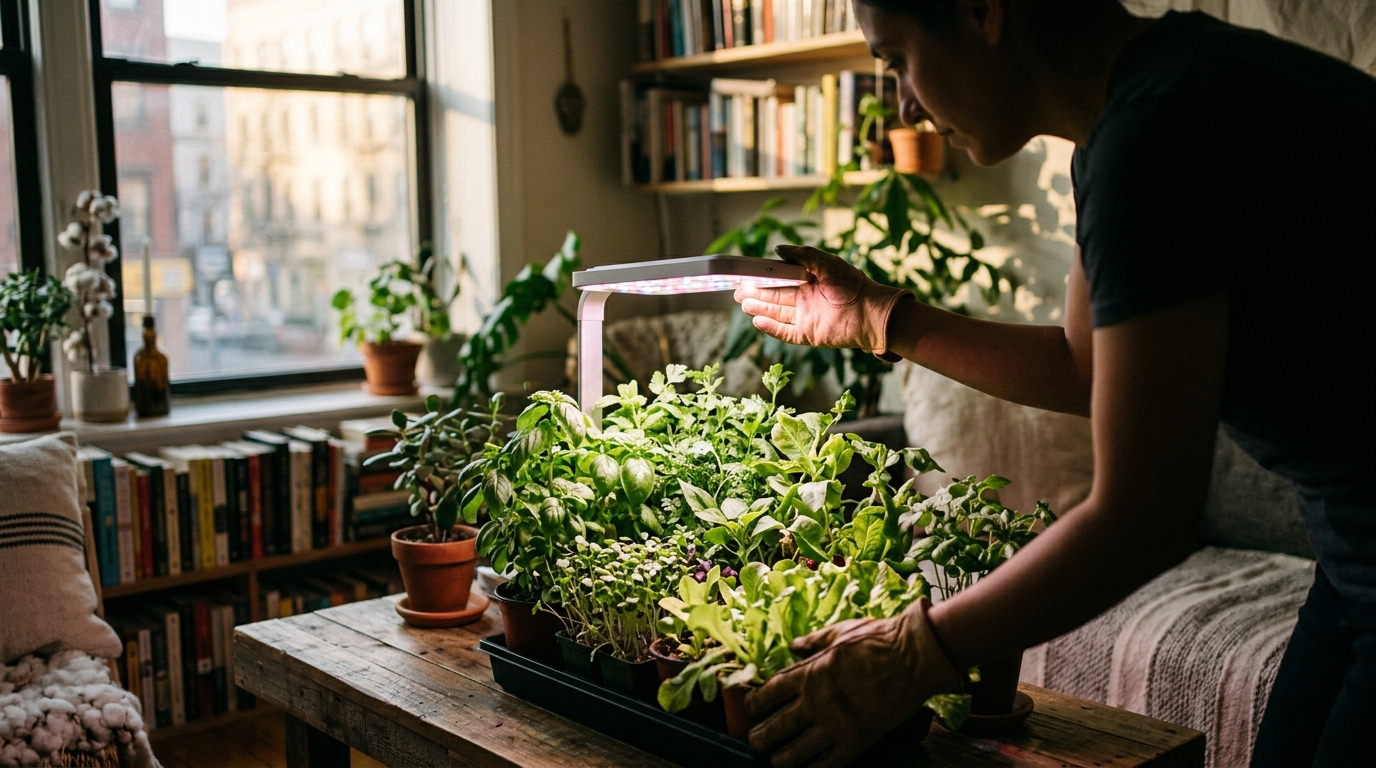
Indoor plant cultivation has evolved from a niche hobby into a precise science driven by photon management and spectral optimization. According to recent horticultural lighting industry reports, the global indoor gardening market is projected to expand significantly, with consumers increasingly prioritizing energy efficiency and yield density over simple illumination. Choosing the correct fixture requires understanding the interplay between light intensity, spectral distribution, and thermal output. This guide breaks down the critical technical factors you must evaluate to maximize photosynthetic efficiency and plant health.
Understanding Spectral Needs and Plant Stages
Plants do not perceive light the same way humans do. They rely on specific wavelengths within the Photosynthetically Active Radiation (PAR) spectrum, typically ranging from 400 to 700 nanometers. The balance of these wavelengths dictates growth patterns, flowering cycles, and overall biomass accumulation.
Vegetative growth phases generally require a higher proportion of blue light, which promotes compact, sturdy stem development and dense leaf structure. Conversely, the flowering and fruiting stages demand an increased ratio of red and far-red wavelengths to trigger photoperiodic responses and accelerate bloom production. A high-quality grow light must deliver a balanced, full-spectrum output that mimics natural sunlight without creating spectral gaps that stunt growth.
When evaluating fixtures, look for specifications that explicitly mention full-spectrum output. This ensures that your plants receive the complete range of photons necessary for robust photosynthesis, rather than relying on narrow-band diodes that may leave critical nutritional gaps.
CMH vs. LED Technology: A Technical Comparison
The two dominant technologies in the indoor gardening space are Ceramic Metal Halide (CMH) and Light Emitting Diode (LED). Each offers distinct advantages depending on your scale and crop type.
The Case for Ceramic Metal Halide (CMH)
CMH lamps are renowned for their exceptional color rendering index (CRI) and continuous spectral distribution. Unlike LEDs, which can have "gaps" between diodes, CMH lamps produce a smooth, broad spectrum that closely resembles natural sunlight. This makes them particularly effective for flowering plants and microgreens that require intense, uniform light penetration.
However, CMH fixtures traditionally suffer from light scatter. Standard aluminum reflectors often fail to direct photons efficiently toward the canopy, resulting in wasted energy and uneven growth patterns. This is where advanced reflector technology becomes critical.
The LED Landscape
LEDs offer superior energy efficiency and lower heat output, making them ideal for compact setups and temperature-sensitive environments. However, lower-quality LED fixtures often lack the depth of penetration required for dense canopies. To compete with CMH in terms of yield, high-end LED systems must employ complex lensing and diode spacing strategies to mimic the broad coverage of metal halide lamps.
The Role of Nano Liquid Photonic Coating
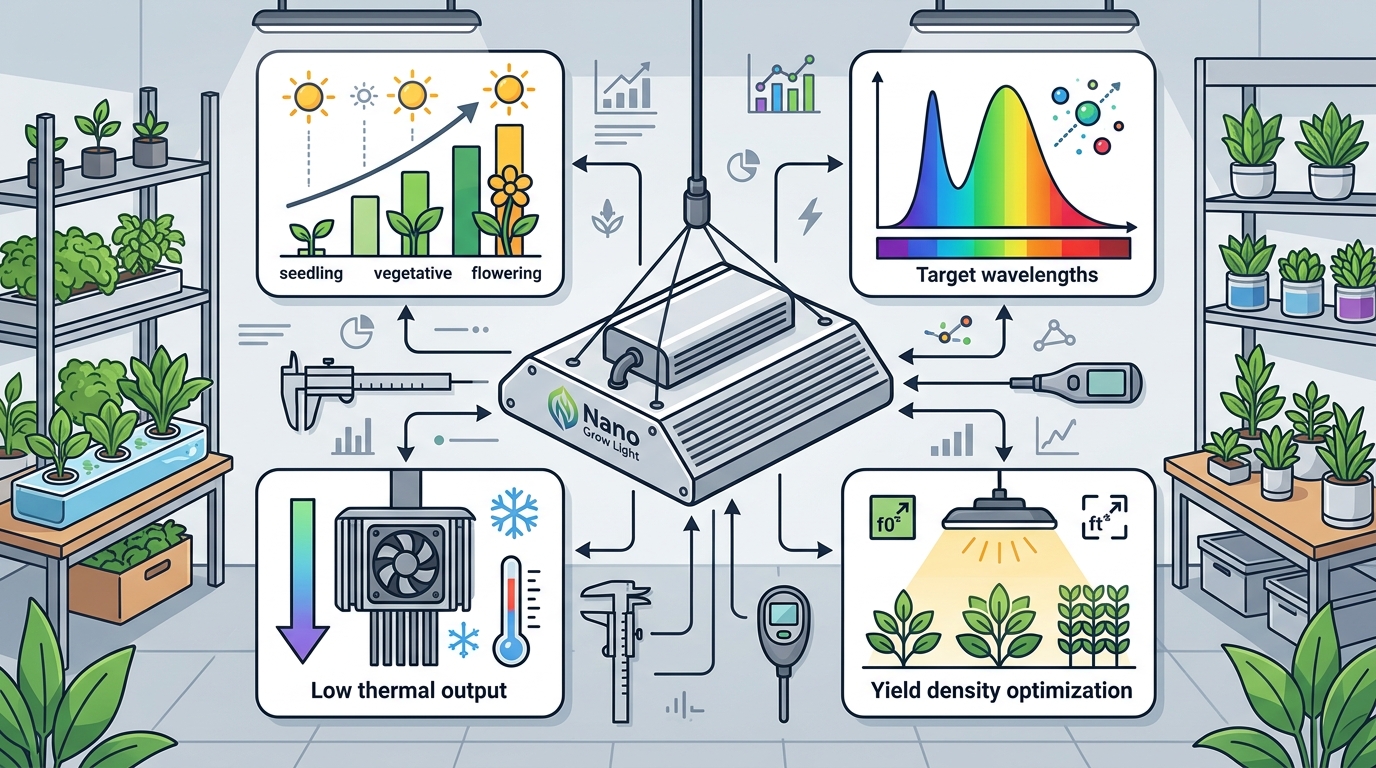
Recent innovations in reflector technology have addressed the primary weakness of CMH lighting: photon scatter. Nano Liquid Photonic Coating is a proprietary nano-scale reflector treatment designed to redirect and concentrate light toward the plant canopy. This technology represents a significant leap forward in horticultural lighting efficiency.
Nano Liquid Photonic Coating consists of nano-scale clusters applied to the fixture’s internal reflector. According to manufacturer-reported internal testing, this coating increases visible-light and PAR reflectance compared to bare aluminum reflectors. By tightening the beam and reducing scatter, the coating ensures that more photons reach the plant leaves, boosting yields while using less energy.
This technology is particularly beneficial for growers looking to maximize the output of a 250W CMH lamp. The result is a denser PAR delivery that accelerates photosynthesis and promotes faster vegetative growth. For more details on the technical specifications, you can review the Nano Liquid Photonic Coating Spec Sheet.
Coverage Area and Light Density
One of the most common mistakes indoor gardeners make is underestimating the coverage area required for their grow space. Light intensity diminishes rapidly with distance, following the inverse square law. A fixture that is too weak for a 4x4 foot tent will result in leggy, stretched plants that fail to produce dense foliage.
For optimal results, a single 250W CMH fixture with Nano Liquid Photonic Coating is sized for approximately 3.5 by 3.5 feet of coverage. This density ensures that the light penetrates the canopy effectively without creating hot spots or shadowed areas. For larger operations, such as commercial greenhouses or multi-tier racks, growers should array multiple fixtures to maintain consistent PAR levels across the entire grow area.
When scaling up, consider the 2-pack or 3-pack bundles available from Nano Grow Light. These bundles are engineered to provide uniform coverage and simplify the installation process for medium to large-scale indoor gardens.
Thermal Management and Heat Output
Heat management is a critical factor in indoor gardening. Excessive heat can stress plants, increase evaporation rates, and create an environment conducive to pests and mold. CMH lamps naturally run hotter than typical LED fixtures, producing approximately 340 BTU/hr of heat output.
The surface temperature of a CMH fixture reaches approximately 45°C at steady state. While this is manageable, it requires careful positioning. Delicate houseplants, such as African violets, must be placed at an appropriate distance from the fixture to prevent leaf burn. Conversely, heat-loving crops like tomatoes and peppers may benefit from the radiant heat during cooler months.
Understanding your fixture’s thermal profile allows you to optimize your ventilation system and maintain a stable microclimate. For specific care instructions regarding sensitive plants, review our guide on growing African Violets under artificial lighting.
Key Takeaways
- Spectral Balance: Full-spectrum output is essential for all growth stages, with blue light supporting vegetation and red light driving flowering.
- CMH Advantages: Ceramic Metal Halide lamps offer superior color rendering and continuous spectrum compared to standard LEDs.
- Nano Technology: Nano Liquid Photonic Coating redirects scattered light, increasing usable PAR and potentially accelerating growth cycles.
- Coverage Precision: A single 250W fixture covers approximately 3.5 by 3.5 feet; scale up with bundles for larger areas.
- Heat Management: CMH fixtures operate at higher temperatures (~45°C); monitor plant distance to prevent thermal stress.
- Yield Potential: In controlled trials, fast-cycling crops like lettuce have matured in as little as 28 days using nano-enhanced fixtures.
- Scalability: Commercial operations achieve coverage by arraying multiple fixtures rather than relying on single high-wattage units.
Frequently Asked Questions
What is the difference between CMH and LED grow lights?
CMH (Ceramic Metal Halide) lights provide a continuous, broad-spectrum output with high color rendering, closely mimicking sunlight. LEDs offer higher energy efficiency and lower heat output but can have spectral gaps depending on the diode configuration.
How does Nano Liquid Photonic Coating improve grow light performance?
Nano Liquid Photonic Coating is a nano-scale reflector treatment that redirects scattered photons into a tighter beam. This increases the amount of usable PAR reaching the canopy, improving efficiency and potentially accelerating plant growth.
What size area does a 250W Nano Grow Light cover?
A single 250W fixture is designed to cover approximately 3.5 by 3.5 feet of grow space. For larger areas, it is recommended to use multiple fixtures in an array.
Is Nano Grow Light suitable for African Violets?
Yes, the full-spectrum output of the 250W CMH fixture supports consistent indoor blooming for African Violets. However, due to the heat output, ensure the plants are positioned at a safe distance from the fixture.
How long does it take to harvest microgreens with this light?
Based on manufacturer-reported internal testing, fast-cycling crops like lettuce can be harvested in as little as 28 days using Nano Grow Light fixtures, compared to longer outdoor cycles.
What is the heat output of a Nano Grow Light fixture?
The fixture produces approximately 340 BTU/hr of heat, with a steady-state surface temperature of around 45°C. Proper ventilation and plant positioning are essential to manage this heat.
Can I use this light for commercial greenhouse applications?
Yes, larger operations can achieve supplemental lighting by arraying multiple Nano Grow Light fixtures across rows or bays to cover wider canopy areas effectively.
Start Your Indoor Garden
Choosing the right grow light is the foundation of successful indoor gardening. By leveraging the precision of Ceramic Metal Halide technology enhanced with Nano Liquid Photonic Coating, you can achieve faster growth, denser yields, and healthier plants. Whether you are cultivating microgreens, flowering houseplants, or commercial crops, the right fixture makes all the difference.
Explore our premium grow light collection today and transform your indoor growing experience. For more insights on plant care and technology, visit our blog or read customer success stories.