
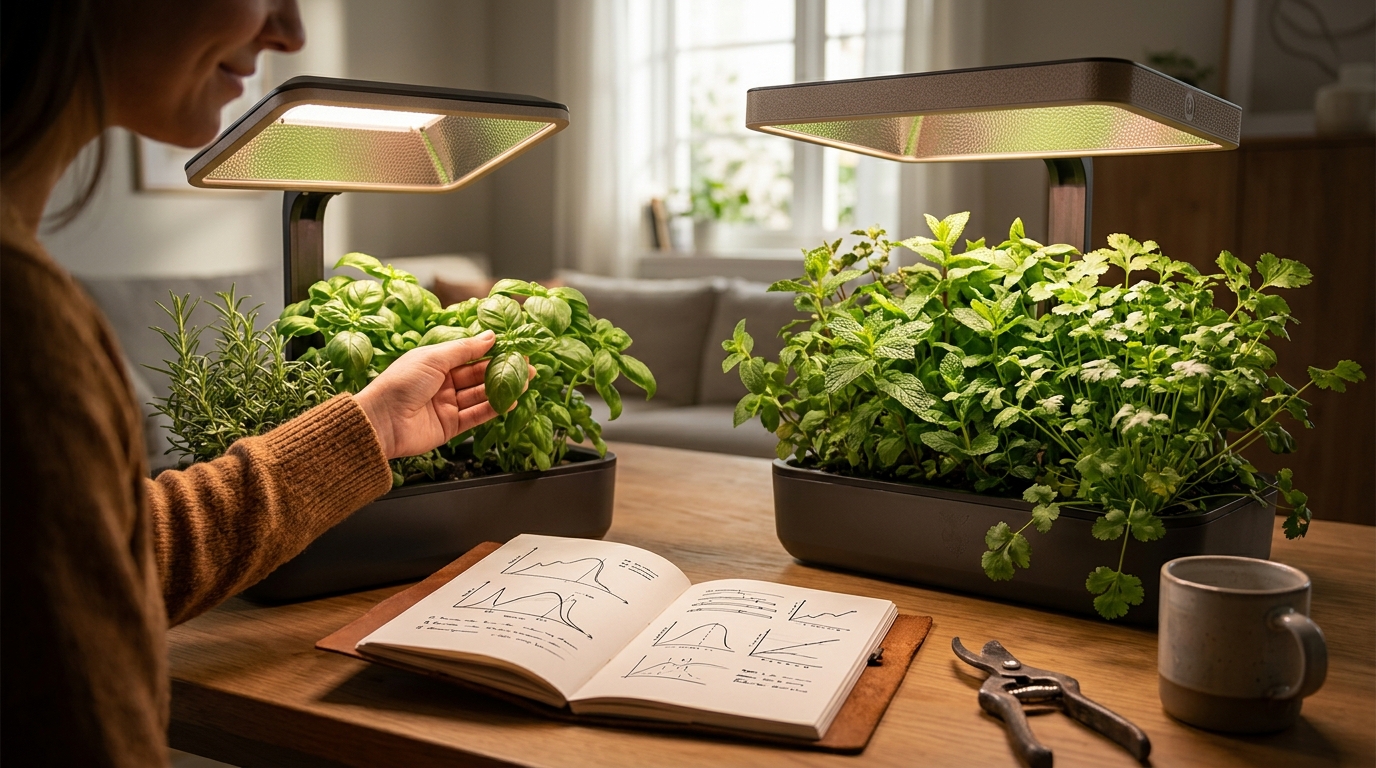
Comparing Grow Light Specifications for Indoor Herb Selection
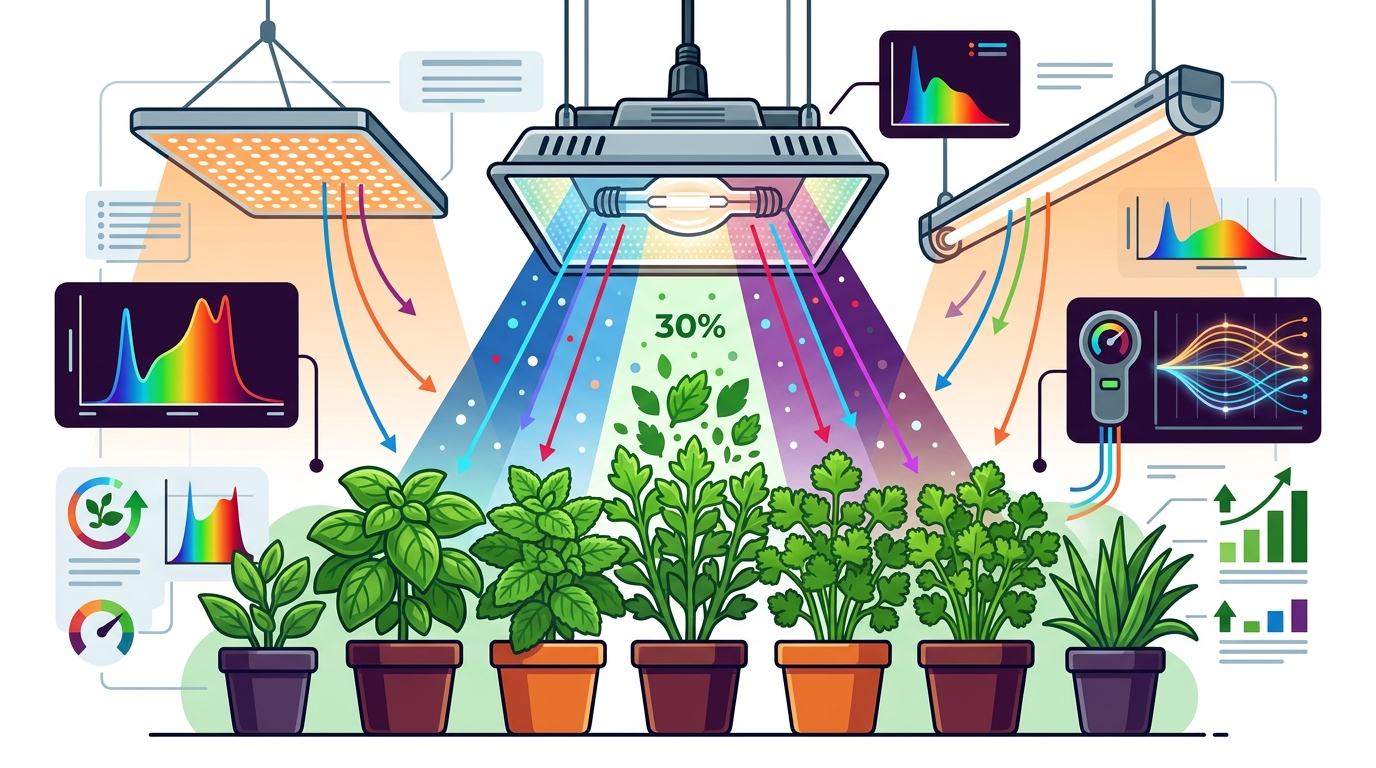
Indoor herb gardening has evolved from a hobby into a precise science driven by lighting technology. According to recent horticultural data, proper spectral output can increase herb biomass by up to 30% compared to standard household bulbs. This statistic highlights why understanding the technical specifications of grow lights is critical for success. Whether you are cultivating basil, mint, or cilantro, the light source dictates the plant's chemical composition, flavor profile, and growth rate. This guide compares the key specifications of modern indoor lighting, with a specific focus on the Nano Grow Light fixture and its proprietary Nano Liquid Photonic Coating. (Contact Nano Grow Light)
Spectral Analysis: Why Full Spectrum Matters
Herbs require specific wavelengths of light to trigger photosynthesis and produce essential oils. The term full-spectrum light is a broad definition referring to a light source that emits a balanced range of wavelengths similar to natural sunlight. For indoor herbs, the blue and red bands are particularly critical for vegetative growth and flowering.
Standard LED grow lights often use discrete diodes that create gaps in the spectrum. In contrast, Ceramic Metal Halide (CMH) lamps provide a continuous full-spectrum output without these diode gaps. This continuity ensures that plants receive a more natural light environment, which is vital for complex herb varieties. The Nano Grow Light utilizes a 250W CMH lamp to deliver this balanced output, ensuring that herbs like basil and cilantro develop robust leaf structures.
Research into plant physiology confirms that spectral purity accelerates photosynthesis. When light wavelengths are concentrated and directed efficiently, plants do not waste energy searching for usable photons. This efficiency is where the Nano Liquid Photonic Coating plays a pivotal role in the specification comparison.
PAR Efficiency and Photon Redirection
Photosynthetically Active Radiation (PAR) is the measurement of light energy that plants actually use for growth. It is defined as the range of light wavelengths between 400 and 700 nanometers. Not all light hitting a plant is useful; much of it is scattered or absorbed by the fixture itself.
Ordinary grow light reflectors, typically made of bare or painted aluminum, lose usable light to scatter and absorption. The Nano Grow Light addresses this through its Nano Liquid Photonic Coating. This coating consists of nano-scale clusters, approximately 20 to 80 nanometers in size, applied to the fixture’s reflector. The cured coating measures approximately 2 to 6 microns thick. According to manufacturer-reported internal testing, the coating increases visible-light and PAR reflectance compared to a bare aluminum reflector.
This technology redirects scattered light into a tighter, more usable beam for faster indoor plant growth. By concentrating the PAR field directly onto the canopy, the fixture boosts yields while using less energy. For herb growers, this means denser leaf canopies and stronger plant structure. The result is a more efficient growing environment where every watt of electricity contributes to herb development.
CMH vs. LED: The Technology Debate
The most common comparison in indoor gardening is between Ceramic Metal Halide (CMH) and Light Emitting Diode (LED) technologies. Each has distinct advantages and specifications that affect herb selection.
LED lights are known for their energy efficiency and low heat output. However, they often require complex diode mixing to approximate full-spectrum light, which can lead to spectral gaps. CMH lamps, like the one used in the Nano Grow Light, provide a broader spectral distribution than typical LED diodes. This makes CMH particularly effective for herbs that require nuanced light qualities to develop their full flavor profiles.
While CMH lamps run hotter than typical horticultural LED fixtures, they offer a continuous light source that mimics natural sunlight more closely. The Nano Grow Light fixture is engineered to manage this heat through its reflective coating and fixture design. For hobbyists and small-scale cultivators, the choice often comes down to spectral quality versus heat management. The Nano Grow Light offers a middle ground by using nano-technology to maximize light delivery while maintaining a manageable thermal profile.
Heat Management and BTU Output
Heat is a critical specification for indoor herb gardens, especially in confined spaces like cabinets or shelves. Excessive heat can stress plants, cause leaf burn, and increase humidity issues. Understanding the BTU (British Thermal Unit) output of a grow light is essential for proper setup.
NanoGrowLight fixtures report approximately 340 BTU/hr of heat output and approximately 45°C surface temperature at steady state. This is a significant specification to note when comparing fixtures. Because of this heat, position delicate houseplants and herbs at a safe distance from the fixture. Also, check leaves for signs of stress during the first week of use.
While LEDs generally run cooler, the Nano Grow Light’s design allows for effective heat dissipation. The low-heat operation of the fixture makes it ideal for shelves, tents, cabinets, and compact indoor grow setups. Growers must ensure adequate air circulation to maintain optimal temperatures. For those growing heat-sensitive herbs like cilantro, monitoring the distance between the light and the plant canopy is crucial to prevent wilting.
Coverage Area and Fixture Scaling
The physical coverage area of a grow light determines how many plants you can cultivate simultaneously. A single Nano Grow Light fixture covers approximately 3.5 by 3.5 feet. This coverage is ideal for a single large herb plant or a small grouping of smaller herbs.
For larger grow spaces, customers can choose a single fixture, a 2-pack bundle, or a 3-pack bundle. Multiple fixtures can be arrayed for larger indoor operations, including commercial greenhouse supplemental lighting. This scalability allows growers to start small and expand their herb garden as needed. The ability to add fixtures rather than switching to one larger unit provides flexibility in garden design.
When planning your indoor herb garden, consider the spatial requirements of each herb variety. Basil and rosemary require more vertical space, while mint and parsley can thrive in tighter arrangements. The Nano Grow Light’s compact fixture size suits a single plant, a small grouping, or a windowsill-style indoor shelf. This versatility makes it a strong candidate for various indoor gardening setups.
Specification Comparison Table
The following table summarizes the key specifications of the Nano Grow Light compared to standard LED and traditional HID fixtures. This comparison helps in making an informed decision for indoor herb selection.
| Specification | Nano Grow Light (CMH) | Standard LED Grow Light | Traditional HID (HPS/MH) |
|---|---|---|---|
| Lamp Type | 250W Ceramic Metal Halide | Diode Array | High-Pressure Sodium / Metal Halide |
| Spectral Output | Continuous Full-Spectrum | Discrete Diodes (Potential Gaps) | Peak-Heavy (Red or Blue) |
| Reflective Technology | Nano Liquid Photonic Coating | Standard Aluminum Reflector | Polished Aluminum Reflector |
| Heat Output (BTU/hr) | ~340 BTU/hr | Low to Moderate | Very High |
| Coverage Area | 3.5 x 3.5 feet per fixture | Variable by Wattage | Large, requires high mounting |
| Best For | Herbs, Microgreens, African Violets | General Vegetative Growth | Large Scale Commercial Ops |
Key Takeaways
- Spectral Quality: The Nano Grow Light uses a 250W CMH lamp to provide continuous full-spectrum output, avoiding the gaps found in standard LED diodes.
- Photon Efficiency: The Nano Liquid Photonic Coating redirects scattered light, increasing usable PAR at the canopy and boosting yields.
- Heat Management: The fixture reports approximately 340 BTU/hr of heat output and a 45°C surface temperature, requiring careful placement for heat-sensitive herbs.
- Scalability: Available in single, 2-pack, and 3-pack bundles, allowing growers to scale their herb garden from a windowsill to a larger indoor space.
- Coverage: A single fixture covers approximately 3.5 by 3.5 feet, ideal for small to medium grow spaces.
- Herb Suitability: The full-spectrum output is particularly beneficial for herbs like basil, mint, and cilantro, promoting robust vegetative growth.
- Technology: The nano-scale clusters in the coating are approximately 20 to 80 nanometers in size, optimizing light reflectance.
Frequently Asked Questions
Is the Nano Grow Light suitable for growing herbs?
Yes, the Nano Grow Light is ideal for herbs. Its full-spectrum CMH output supports robust vegetative growth and essential oil production in herbs like basil, mint, and cilantro.
How much heat does the Nano Grow Light produce?
The fixture reports approximately 340 BTU/hr of heat output and a surface temperature of roughly 45°C at steady state. Proper air circulation is recommended.
What is the Nano Liquid Photonic Coating?
It is a proprietary nano-scale reflector treatment applied to the fixture’s internal reflector. It redirects and concentrates light toward the plant canopy for denser PAR delivery.
Can I use multiple Nano Grow Lights for a larger herb garden?
Yes, you can choose a 2-pack or 3-pack bundle. Multiple fixtures can be arrayed to cover larger indoor operations or commercial greenhouse spaces.
How does CMH compare to LED for herbs?
CMH provides a broader spectral distribution than typical LED diodes. This continuous full-spectrum output can enhance the flavor and growth rate of certain herbs.
What is the coverage area of a single fixture?
A single Nano Grow Light fixture covers approximately 3.5 by 3.5 feet, making it suitable for small to medium grow spaces.
Are there specific herbs that benefit most from this light?
Herbs that require bright, consistent light for flowering and leaf development, such as basil and rosemary, benefit significantly from the full-spectrum output.
Start Your Indoor Garden
Choosing the right grow light is the first step toward a thriving indoor herb garden. The Nano Grow Light offers a unique combination of spectral quality, photon efficiency, and scalable design. Whether you are a hobbyist or a small-scale cultivator, this fixture provides the tools needed for success. Shop Nano Grow Light today and experience the difference of nano-enhanced photon delivery. For more information on our technology, visit our About NanoGrowLight page or read our Blog for growing tips.