
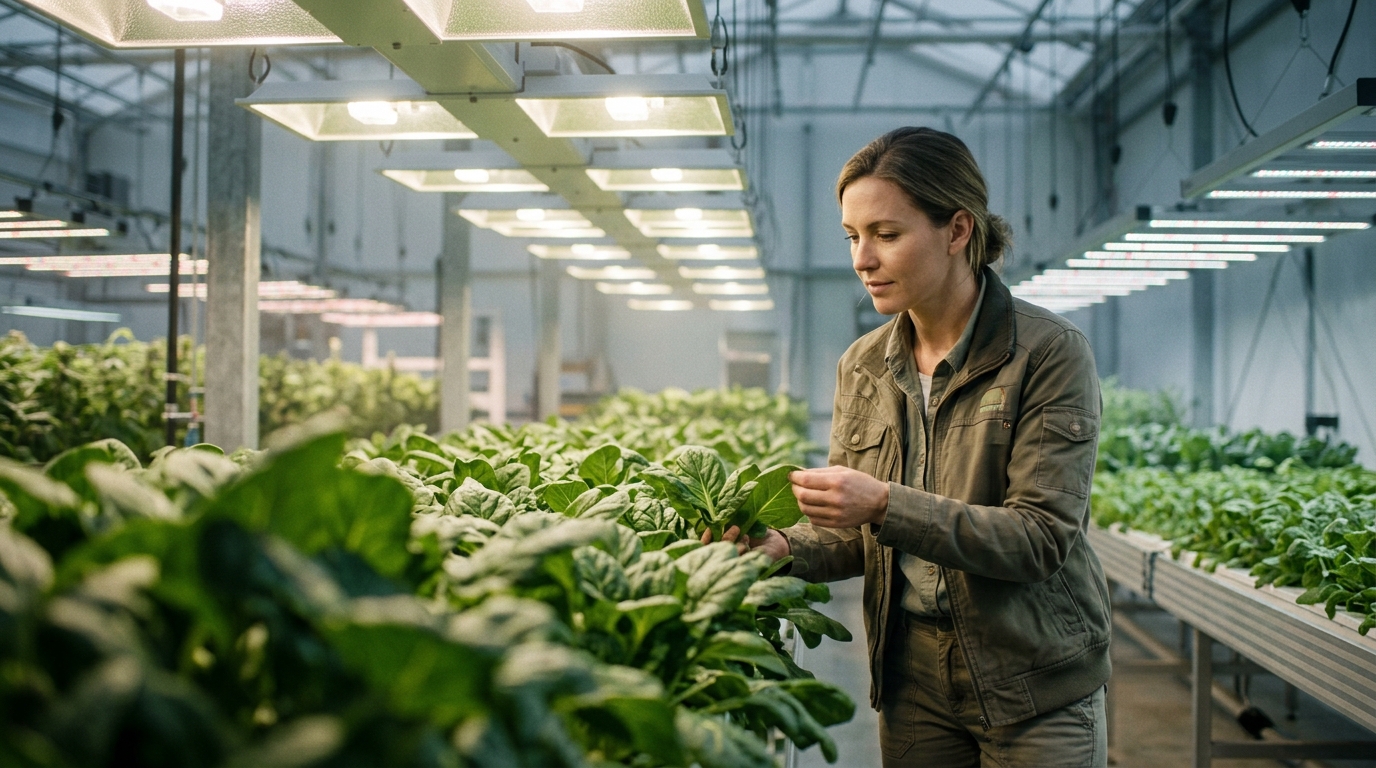
The indoor horticulture market has undergone a seismic shift in the last decade, driven by the demand for higher yields and lower operational costs. According to recent industry data, modern LED technology has captured over 60% of the commercial grow light market share, displacing older high-intensity discharge (HID) systems. This transition is not merely a trend but a fundamental change in how growers approach energy efficiency and plant physiology. Understanding the specific advantages of nano-enhanced LEDs over traditional HID or standard LED fixtures is critical for maximizing return on investment in 2026.
Spectrum Analysis and Plant Response
Traditional grow lights, such as High-Pressure Sodium (HPS) and Metal Halide (MH) fixtures, have long been the industry standard. These lights operate by passing an electric arc through a gas mixture, producing a broad but often inefficient spectrum. While effective, they emit significant amounts of infrared radiation, which can stress plants and require extensive cooling infrastructure.
Standard LED grow lights improved upon this by offering a more targeted spectrum. However, they often lack the precision needed to optimize specific growth stages. This is where the distinction becomes vital for serious cultivators.
Photoperiodism is the physiological reaction of organisms to the length of day or night. Plants rely on specific light wavelengths to trigger flowering, vegetative growth, and other biological processes. Traditional lights often waste energy on wavelengths that plants do not utilize efficiently, such as excessive green light or far-red in inappropriate ratios. (About)
NanoGrow technology addresses this by utilizing nano-scale phosphor coatings and advanced diode arrays. This allows for a highly customized spectrum that matches the absorption peaks of chlorophyll a and chlorophyll b. By delivering light exactly where it is needed, NanoGrow systems reduce spectral waste and enhance photosynthetic efficiency. For more details on how spectrum affects yield, you can explore our comprehensive spectrum guide.
Energy Efficiency and Heat Management
Energy consumption is one of the largest operational expenses for indoor growers. Traditional HPS lights operate at roughly 2.8 to 3.0 micromoles per joule (μmol/J). While this was considered good decades ago, it is now outdated. Standard LED fixtures have improved this to around 2.7 to 3.2 μmol/J, but they still generate significant heat at the diode level, requiring large heatsinks and fans.
NanoGrow lights leverage advanced thermal management systems and high-efficiency diodes to achieve photon flux densities that exceed 3.0 μmol/J. This means more light reaches the canopy for every watt of electricity consumed. The result is a lower electric bill and a reduced carbon footprint.
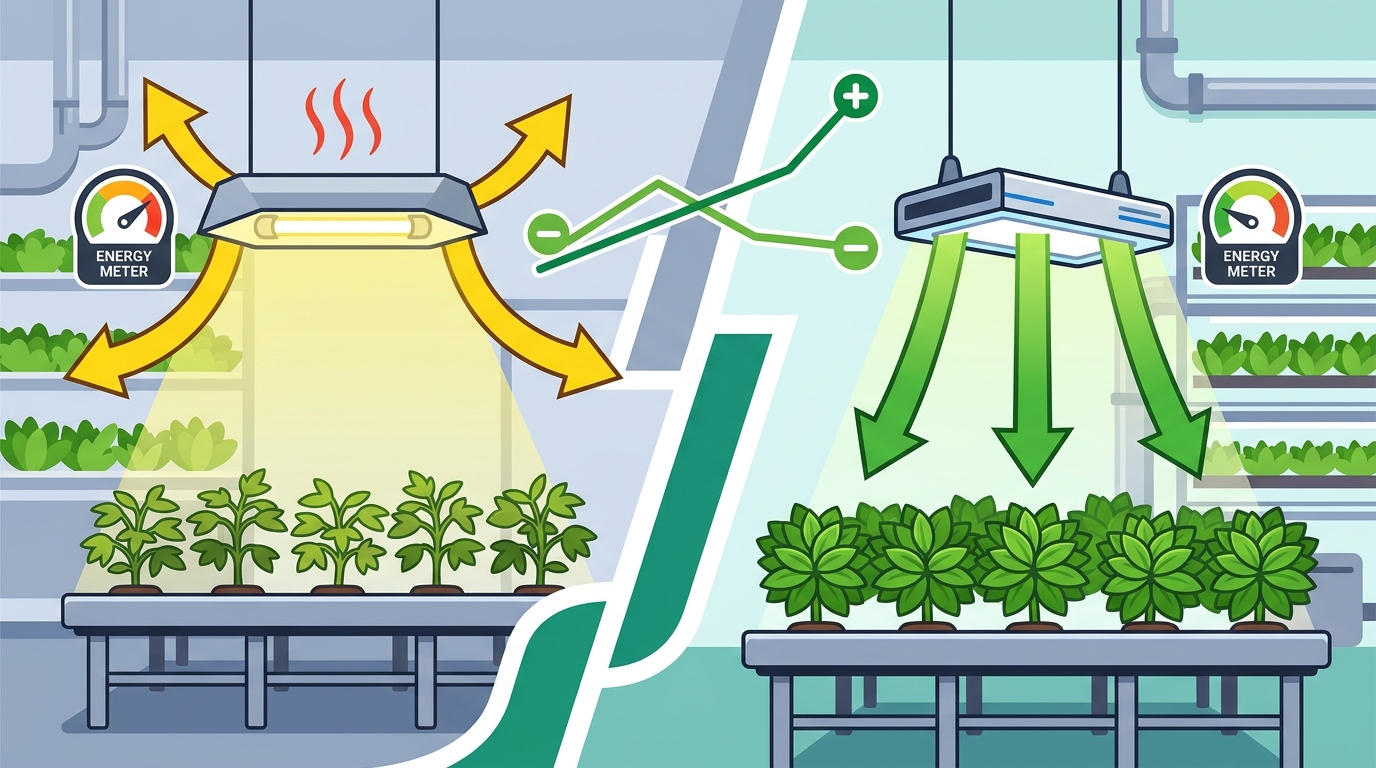
Heat management is equally critical. Traditional HID lights radiate heat in all directions, often burning leaves that are too close to the bulb. This necessitates a greater distance between the light and the plant canopy, which can lead to light loss and uneven growth. NanoGrow fixtures are designed with low surface temperatures, allowing them to be placed closer to the canopy without causing heat stress. This proximity enhances light intensity and promotes denser plant structures.
For growers looking to optimize their climate control systems, understanding the thermal output of different fixtures is essential. You can learn more about our NanoGrow Pro series and its thermal design features.
The Nano-Grow Advantage
What exactly is NanoGrow technology? NanoGrow technology is a proprietary lighting system that utilizes nano-scale materials to enhance light emission efficiency and spectral precision. Unlike traditional LEDs that rely on broad-spectrum white light mixed with red and blue diodes, NanoGrow systems use engineered nano-phosphors to convert blue light into specific, plant-optimal wavelengths.
This precision offers several distinct benefits:
- Enhanced Photosynthesis: By targeting specific absorption peaks, plants convert light to energy more efficiently.
- Reduced Light Pollution: The focused spectrum minimizes stray light, which is beneficial for both the environment and worker safety.
- Longer Lifespan: Nano-scale components are less prone to degradation, extending the operational life of the fixture.
Traditional lights often suffer from rapid lumen depreciation, meaning their output drops significantly after just a few thousand hours of use. NanoGrow fixtures maintain their intensity for over 50,000 hours, ensuring consistent yields throughout the fixture's life. This stability is crucial for commercial operations where yield consistency is paramount.
If you are interested in the science behind our diodes, read our technical breakdown of LED science.
Cost Comparison and ROI
When comparing NanoGrow lights to traditional HID or standard LED systems, the initial investment is often higher for the nano-enhanced models. However, the total cost of ownership tells a different story. Traditional HID systems require frequent bulb replacements, ballast maintenance, and significant cooling costs due to high heat output.
Standard LEDs reduce some of these costs but often lack the spectral precision to maximize yield per watt. NanoGrow lights offer a middle ground of high efficiency and high yield, leading to a faster return on investment.
| Feature | Traditional HID | Standard LED | NanoGrow LED |
|---|---|---|---|
| Efficiency (μmol/J) | 2.8 | 2.9 | 3.2+ |
| Lifespan (Hours) | 10,000 | 50,000 | 50,000+ |
| Heat Output | High | Medium | Low |
| Spectral Precision | Low | Medium | High |
| Maintenance Cost | High | Low | Very Low |
The data shows that while the upfront cost of NanoGrow is higher, the savings in electricity and maintenance quickly offset the difference. For commercial growers, this can mean thousands of dollars in annual savings. To see how our fixtures perform in real-world scenarios, check out our case studies.
Frequently Asked Questions
Is NanoGrow light better than HPS?
Yes, NanoGrow light is significantly better than HPS in terms of energy efficiency, heat management, and spectral precision. HPS lights waste a large portion of their energy as heat and have a shorter lifespan compared to modern LED technology.
How long do NanoGrow lights last?
NanoGrow lights are designed to last over 50,000 hours. This is substantially longer than traditional HID bulbs, which typically need replacement every 10,000 to 18,000 hours.
Can I use NanoGrow lights for all plant stages?
Yes, NanoGrow fixtures are engineered to provide optimal spectra for both vegetative and flowering stages. Many models offer adjustable spectrum options to tailor the light to specific growth phases.
Do I need additional cooling for NanoGrow lights?
NanoGrow lights generate significantly less heat than traditional HID lights. While passive cooling is often sufficient, active cooling may be recommended for high-density setups to maintain optimal canopy temperatures.
What is the warranty on NanoGrow products?
We offer a comprehensive warranty on all NanoGrow fixtures, covering defects in materials and workmanship. Please refer to our warranty policy for specific terms and conditions.
How does the spectrum of NanoGrow differ from standard LEDs?
Standard LEDs often use a mix of red and blue diodes with white light. NanoGrow uses nano-phosphor technology to create a more continuous and plant-optimized spectrum, reducing spectral gaps and enhancing photosynthetic efficiency.
Is NanoGrow suitable for home growers?
Absolutely. NanoGrow offers a range of fixtures suitable for home growers, from small closet setups to larger grow rooms. The energy efficiency makes it cost-effective for residential use as well.
Upgrade Your Grow Operation Today
The transition from traditional lighting to nano-enhanced LED technology is no longer optional for serious growers. It is a necessity for maximizing yield, minimizing costs, and ensuring plant health. NanoGrow lights provide the precision, efficiency, and durability required to thrive in the competitive indoor horticulture market of 2026.
Ready to make the switch? Explore our full range of high-performance grow lights and start optimizing your harvest today. Contact our support team for personalized recommendations based on your specific grow space and plant types.