
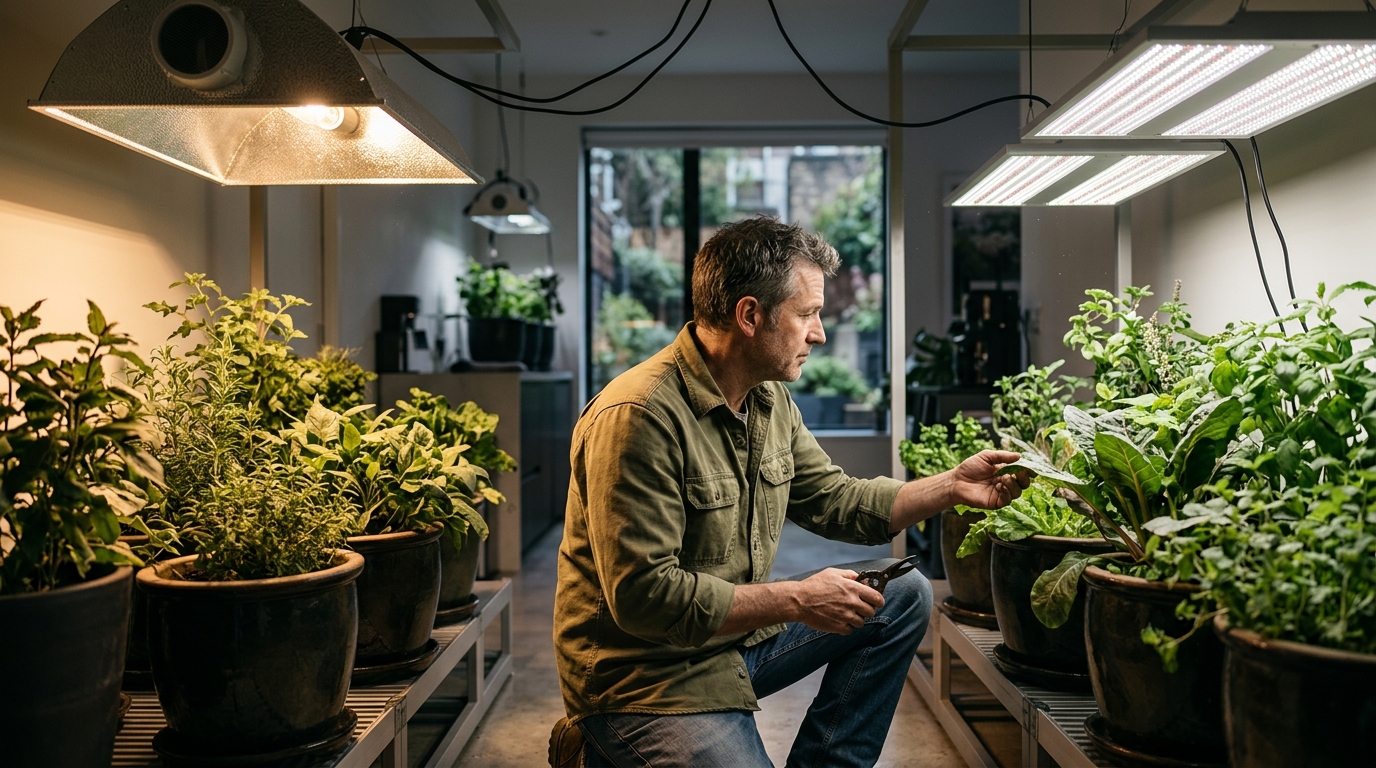
Indoor horticulture has undergone a massive technological shift over the last decade. According to recent industry data, the global indoor gardening market is projected to grow at a compound annual growth rate of over 10% through 2030, driven largely by the demand for consistent, year-round harvests. Within this expanding market, two primary lighting technologies dominate the conversation: Light Emitting Diodes (LED) and Ceramic Metal Halide (CMH) fixtures. While LEDs have captured the majority of the consumer mindshare due to their energy efficiency, a specialized alternative is gaining traction among serious growers. Nano Grow Light utilizes a proprietary Nano Liquid Photonic Coating on its 250W CMH fixtures to deliver a unique spectral output that challenges traditional LED paradigms. This article compares these two technologies to help you determine which system best suits your specific growing environment. (Illustrative Use Cases Nano)
Spectral Output and Plant Response
The fundamental difference between these two technologies lies in how they generate light. LED fixtures use semiconductor diodes to emit specific wavelengths of light. While modern full-spectrum LEDs attempt to mimic sunlight, they often do so by combining distinct peaks of red and blue light, which can create gaps in the continuous spectrum. In contrast, Nano Grow Light uses a ceramic metal halide (CMH) lamp. CMH lamps provide a broader spectral distribution than typical LED diodes. This continuous full-spectrum output is critical for many plant species that rely on a wide range of wavelengths for optimal photosynthesis and flowering.
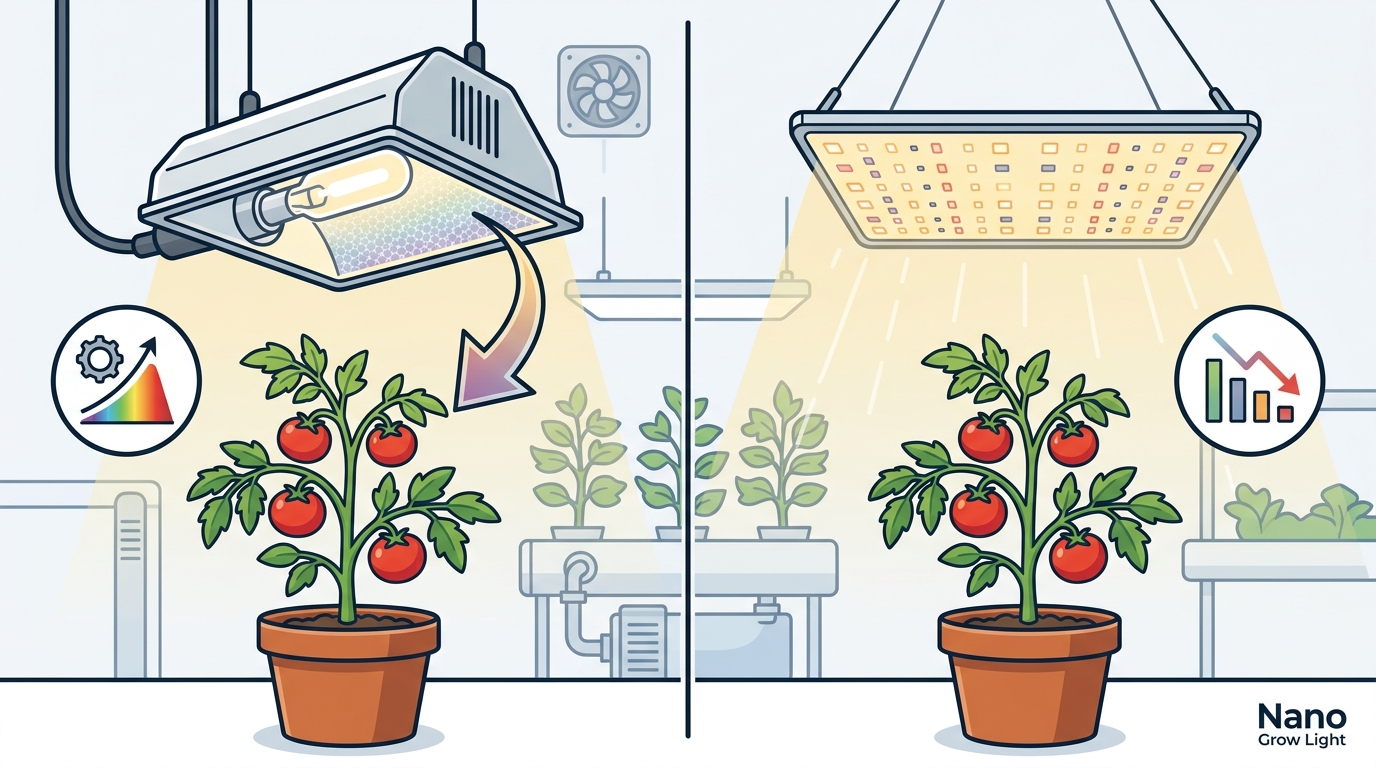
Nano Grow Light enhances this natural CMH output with its proprietary Nano Liquid Photonic Coating. This coating is applied to the fixture’s internal reflector, where it redirects and concentrates light toward the plant canopy. The Nano Liquid Photonic Coating redirects scattered light into a tighter, more usable beam for faster indoor plant growth. By narrowing the beam and increasing reflectance, the fixture delivers denser Photosynthetically Active Radiation (PAR) to the leaves. This targeted delivery means that plants receive more usable energy per watt, potentially accelerating vegetative biomass and reducing the time to harvest. For growers focusing on microgreens or flowering houseplants, this spectral density can be a decisive advantage.
Efficiency vs. Quality: The PAR Debate
LED technology is often marketed as the most efficient option because it converts a high percentage of electricity directly into light with minimal heat waste. However, efficiency in lighting is not just about watts consumed; it is about photons delivered to the canopy. Ordinary grow lights scatter photons in every direction, wasting energy on wavelengths plants can’t use. Nano Liquid Photonic Coating redirects and tightens that same light into a denser, more usable PAR field aimed straight at the canopy.
This photon redirection increases usable PAR at the canopy, boosting yields while using less energy. In manufacturer-reported internal testing, a 28-day prototype trial versus a standard LED fixture at equal wattage showed increased vegetative biomass and denser leaf canopy. While LEDs are excellent for general growth, the Nano Grow Light fixture demonstrates that CMH technology, when paired with advanced reflector technology, can outperform standard LEDs in terms of plant density and growth speed. Plants can grow up to 1 inch per day, reducing a typical 3-month cycle to as little as 2 months. This performance metric highlights that raw energy efficiency does not always equate to superior agricultural output.
Heat Management and Fixture Safety
One of the most significant operational differences between CMH and LED fixtures is heat output. LEDs run cool, allowing them to be placed closer to the plant canopy without risking heat stress. CMH lamps, however, are incandescent sources that generate significant thermal energy. NanoGrowLight fixtures report approximately 340 BTU/hr of heat output and approximately 45°C surface temperature at steady state. This heat profile requires careful placement and ventilation planning.
Because of this heat, position delicate houseplants at a safe distance from the fixture. Also, check leaves for signs of stress during the first week. The low-heat operation mentioned in marketing materials for CMH systems usually refers to the fact that they do not emit the intense, concentrated infrared radiation that some high-wattage LEDs do, but the overall ambient heat in a small grow tent can still rise quickly. Growers must use exhaust fans and temperature monitors to maintain an optimal environment. Despite the heat, the balanced, beam-tightened output supports stronger vegetative growth and sturdier plant structure. The heat generated can also be beneficial in cooler climates, acting as a supplementary heat source for the grow space.
Scalability for Home and Commercial Use
Scalability is a critical factor for both hobbyists and commercial operators. Nano Grow Light fixtures serve indoor home growers, hobbyist and small-scale cultivators, including microgreens growers. They also serve larger operations, such as commercial greenhouses. For larger installations, growers arrange multiple fixtures across rows, bays, or multi-tier racks to cover a wider canopy area. A single fixture covers approximately 3.5 by 3.5 feet. Larger operations simply scale up by adding more fixtures, rather than switching to one larger unit.
This modular approach offers distinct advantages over high-wattage LED panels. If one LED diode fails, the entire panel may need replacement. With Nano Grow Light, you can replace individual bulbs or fixtures as needed. Multiple fixtures can be arrayed for larger indoor operations, including commercial greenhouse supplemental lighting. This flexibility allows growers to start small with a single unit for African violets or microgreens and expand to a full commercial setup without changing their lighting strategy. The company’s central technology is the Nano Liquid Photonic Coating, which remains consistent across all fixture sizes, ensuring uniform light quality regardless of scale.
Cost Analysis: Initial Investment and ROI
When comparing costs, it is essential to look beyond the initial purchase price. LED fixtures often have a higher upfront cost but promise lower electricity bills and longer lifespans. However, the operational costs of CMH systems must be weighed against their performance benefits. Nano Grow Light uses a 250W ceramic metal halide (CMH) lamp, not LED. While the electricity consumption is comparable to mid-range LED fixtures, the yield increase can offset these costs.
In real-world use, growers have brought fast-cycling crops like lettuce to harvest in as little as 28 days, based on our own testing across 60+ harvests. This accelerated cycle time means more harvests per year, directly increasing revenue potential. For commercial growers, the ability to reduce crop cycles from 42 days to 28 days represents a significant financial advantage. Additionally, the Nano Liquid Photonic Coating is a durable treatment that enhances the reflector's longevity, reducing the frequency of reflector replacements. The company pairs this coating with a 250W ceramic metal halide (CMH) lamp, a light source with a broad spectral output. When evaluating ROI, consider the value of faster turnover and higher quality biomass, which often commands a premium in the market.
Key Takeaways
- Spectral Density: Nano Grow Light’s CMH fixtures provide a continuous full-spectrum output that avoids the diode gaps found in many LED panels.
- Photon Redirection: The Nano Liquid Photonic Coating increases reflectance and concentrates light, delivering denser PAR to the canopy.
- Growth Speed: Internal testing indicates that plants can grow up to 1 inch per day, potentially reducing harvest cycles by several weeks.
- Heat Output: Fixtures generate approximately 340 BTU/hr and reach 45°C surface temperature, requiring careful ventilation management.
- Scalability: The modular 3.5x3.5 foot coverage per fixture allows for easy scaling from home shelves to commercial greenhouses.
- Yield Quality: Growers report denser leaf canopies and stronger plant structure compared to standard LED setups.
- Target Audience: Ideal for microgreens, flowering houseplants, and commercial growers seeking faster turnover times.
Frequently Asked Questions
Is Nano Grow Light better than LED for African Violets?
Yes, many growers find Nano Grow Light superior for African Violets because it provides the bright, consistent, full-spectrum light these plants need to bloom well indoors. The Nano Liquid Photonic Coating ensures that the light is directed efficiently toward the canopy, promoting healthy growth even in small windowsill setups.
How does the Nano Liquid Photonic Coating work?
The Nano Liquid Photonic Coating is a nano-scale reflector treatment applied to the fixture’s internal reflector. It consists of nano-scale clusters, approximately 20 to 80 nanometers in size, which redirect scattered light into a tighter beam. This process increases visible-light and PAR reflectance compared to a bare aluminum reflector.
Does the CMH lamp get too hot for indoor use?
NanoGrowLight fixtures report approximately 340 BTU/hr of heat output and roughly 45°C surface temperature at steady state. While this is hotter than LED fixtures, it is manageable with proper ventilation. Growers should position delicate plants at a safe distance and monitor ambient temperatures to prevent heat stress.
Can I use Nano Grow Light for commercial greenhouses?
Absolutely. Multiple fixtures can be arrayed for larger indoor operations, including commercial greenhouse supplemental lighting. A single fixture covers approximately 3.5 by 3.5 feet, allowing you to scale your setup by adding more units as your operation grows.
How long does it take to harvest lettuce with Nano Grow Light?
In manufacturer-reported internal testing, lettuce matured in 28 days versus 42 days outdoors. This accelerated growth cycle is due to the dense PAR delivery and optimal spectral output provided by the CMH lamp and nano-coated reflector.
What is the difference between CMH and standard Metal Halide?
Ceramic Metal Halide (CMH) lamps use a ceramic arc tube that allows for a more stable and efficient light output compared to traditional quartz metal halide lamps. This results in a broader spectral distribution and longer lifespan, making CMH ideal for horticultural applications.
Is Nano Grow Light suitable for microgreens?
Yes, Nano Grow Light is ideal for microgreens. The compact fixture size suits small groupings or shelf setups, and the high PAR density promotes rapid, uniform growth. Many hobbyists and commercial growers use these fixtures specifically for fast-cycling microgreen production.
Start Growing Smarter Today
Whether you are cultivating delicate African Violets on a windowsill or managing a commercial microgreen operation, the right lighting technology can transform your results. Nano Grow Light offers a proven alternative to standard LED fixtures, combining the spectral benefits of CMH with the precision of nano-scale reflector technology. Explore our Shop Now page to view available fixtures and bundles. For more insights on our technology, visit our Blog or learn more about the About NanoGrowLight team. Contact us at Contact for personalized growing advice.