
Selecting the Right Spectrum and Distance for African Violet Grow Lights
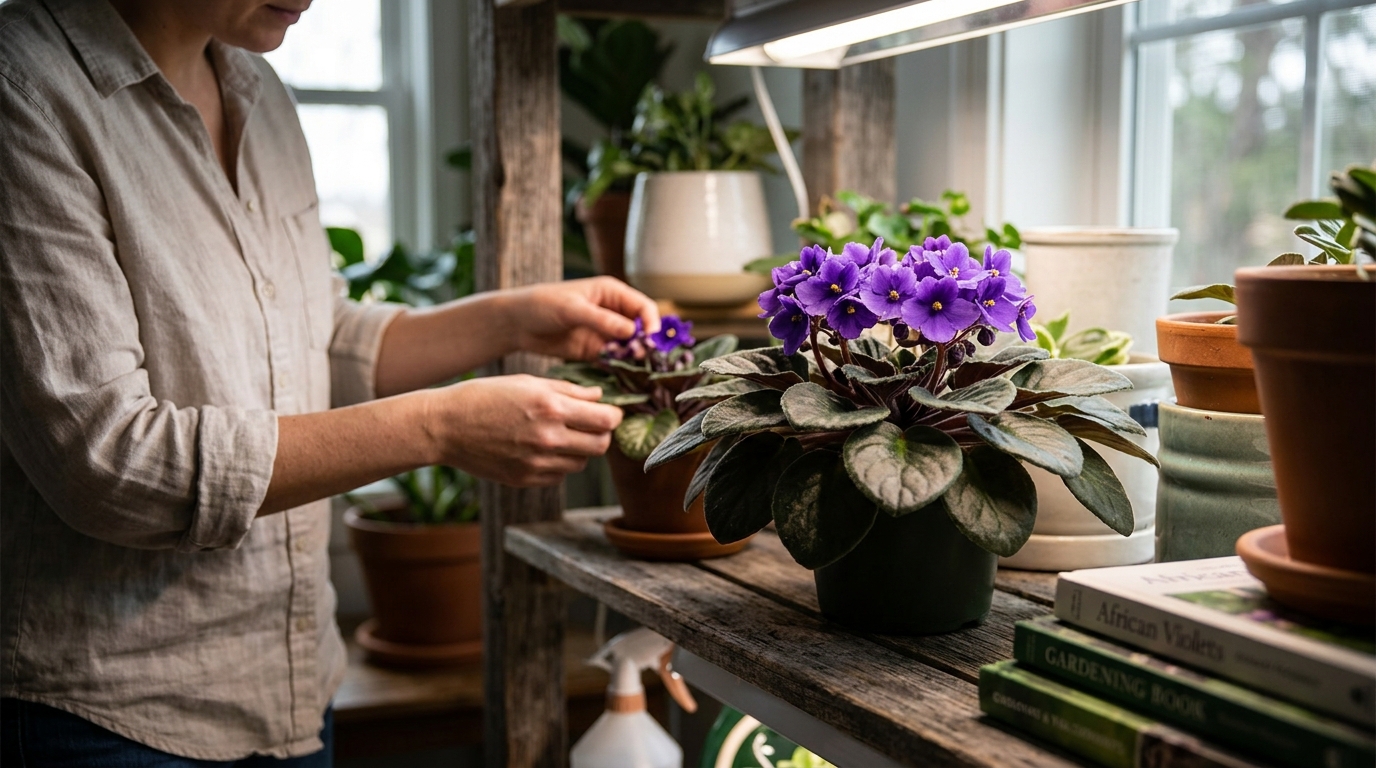
African violets are among the most popular indoor flowering houseplants, yet they remain notoriously finicky about their lighting conditions. Getting the balance wrong often results in leggy growth or a complete failure to bloom. According to horticultural standards, African violets require bright, indirect light to trigger their flowering cycle effectively. When artificial lighting is necessary, selecting the correct spectrum and maintaining the proper distance from the canopy are the two most critical variables for success. This guide breaks down the technical requirements for illuminating these plants using advanced horticultural technology. (Contact Nano Grow Light)
Understanding Spectrum Requirements
The term "spectrum" refers to the range of wavelengths of light emitted by a source. For African violets, the spectrum must closely mimic natural sunlight to support both vegetative growth and floral development. Full-spectrum light is the gold standard for indoor African violet cultivation. This type of light contains a balanced mix of blue, green, and red wavelengths, which are essential for photosynthesis and hormone regulation in plants. (Illustrative Use Cases Nano)
Blue wavelengths are particularly important for keeping the plant compact and encouraging dense foliage. Red wavelengths stimulate the flowering process. If the spectrum is skewed too heavily toward green or yellow, the plant may struggle to absorb the energy it needs. Traditional incandescent bulbs fail here because they emit too much heat and too little usable light. Fluorescent tubes were once the default choice, but they often lack the intensity required for robust blooming in modern indoor environments. (About NanoGrowLight Company amp)
Nano Grow Light addresses this need by utilizing a 250W ceramic metal halide (CMH) lamp. CMH lamps are known for their broad spectral distribution, which covers the entire visible spectrum more evenly than many other artificial sources. This ensures that your African violets receive the complete range of wavelengths they evolved to use in nature. (Indoor Grow Lights Nano)
CMH Technology vs. Standard LEDs
When selecting a grow light, you will likely encounter a debate between Ceramic Metal Halide (CMH) and Light Emitting Diode (LED) technologies. Understanding the difference is crucial for making an informed decision for your specific growing space.
Standard LED grow lights use individual diodes to produce specific wavelengths. While efficient, they can sometimes create "gaps" in the spectrum where no light is emitted. In contrast, CMH lamps provide a continuous full-spectrum output without diode gaps. This continuity is vital for African violets, which are sensitive to subtle shifts in light quality.
The Nano Grow Light fixture incorporates a proprietary Nano Liquid Photonic Coating on its internal reflector. This coating is designed to redirect scattered photons back toward the plant canopy. According to manufacturer-reported internal testing, this nano-structured reflective treatment increases reflectance and concentrates more of the fixture’s output onto the grow area. This means you get higher Photosynthetically Active Radiation (PAR) density at the leaves without needing to increase the wattage of the bulb.
| Feature | Nano Grow Light (CMH) | Standard LED Grow Light |
|---|---|---|
| Spectrum Type | Continuous Full-Spectrum | Discrete Peaks (Gaps Possible) |
| Reflective Technology | Nano Liquid Photonic Coating | Standard Aluminum or Paint |
| Heat Output | Higher (Requires Distance) | Lower (Can be closer) |
| Ideal For | High-fidelity blooming | General vegetative growth |
Optimal Distance Guidelines
Distance is just as important as spectrum. Placing a light too close can scorch the delicate leaves of an African violet, while placing it too far away will cause the plant to stretch toward the light source, resulting in weak stems and fewer flowers.
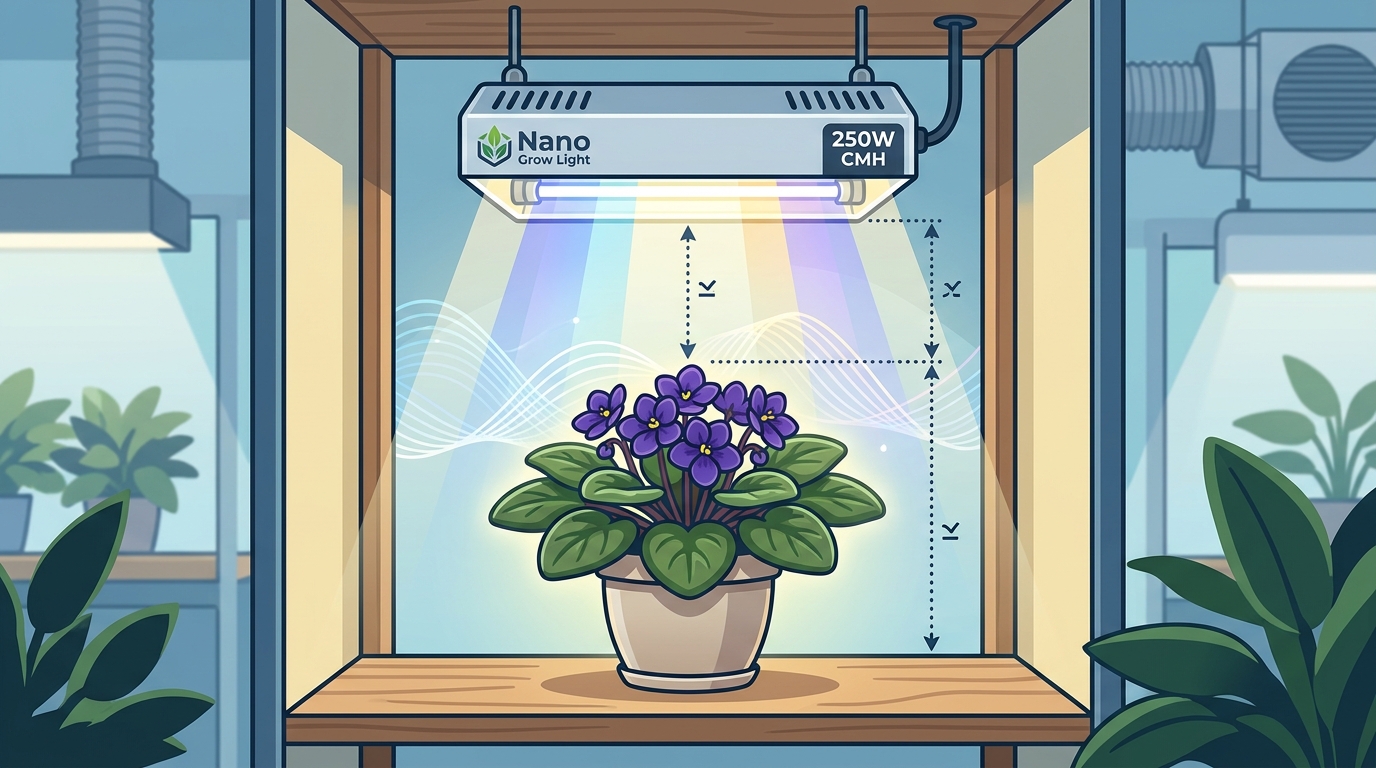
For the Nano Grow Light 250W CMH fixture, the recommended distance varies based on the growth stage of the plant. During the vegetative stage, you can position the light slightly closer to encourage compact growth. However, as the plant begins to bud and bloom, you should increase the distance to prevent heat stress on the flowers.
A general rule of thumb for CMH fixtures is to maintain a distance of 12 to 18 inches from the top of the canopy. You should monitor the leaves closely during the first week of use. If the leaves begin to curl upward or show signs of bleaching, move the light higher immediately. Conversely, if the plant is stretching, lower the fixture carefully, ensuring you do not exceed the heat tolerance of the plant.
The Nano Grow Light fixture is designed to cover an area of approximately 3.5 by 3.5 feet. This coverage is ideal for a single large African violet or a small grouping of medium-sized plants. For larger collections, you may need to arrange multiple fixtures to ensure even light distribution across all plants.
Heat Management and Safety
CMH lamps generate more heat than LED alternatives. It is essential to understand the thermal profile of your grow light to protect your plants and your home. The Nano Grow Light fixture reports approximately 340 BTU/hr of heat output and reaches a surface temperature of roughly 45°C at steady state.
While this heat is manageable in most indoor environments, it requires proper ventilation. Ensure that the area around your grow light has adequate air circulation. A small oscillating fan can help dissipate heat and strengthen the stems of your African violets by simulating a gentle breeze.
Never place the light in an enclosed space without ventilation. The buildup of heat can quickly damage the plant and potentially create a fire hazard. Always keep flammable materials, such as curtains or paper, at a safe distance from the fixture. The Nano Liquid Photonic Coating helps direct light efficiently, but the physical heat from the bulb remains a factor that must be managed through distance and airflow.
Lighting Schedule and Routine
African violets are not native to the deep shade; they thrive in bright conditions similar to those found in a south-facing window. To replicate this indoors, you must provide a consistent light schedule. Most African violets require 12 to 14 hours of light per day.
Using a timer is highly recommended to maintain this consistency. Plants rely on photoperiods to regulate their biological clocks. Irregular lighting can stress the plant and inhibit flowering. Set your timer to turn the Nano Grow Light on in the morning and off in the evening, mimicking the natural rise and fall of the sun.
During the winter months, when natural daylight is scarce, artificial lighting becomes even more critical. The full-spectrum output of the Nano Grow Light helps compensate for the lack of sunlight, keeping your violets healthy and vibrant year-round. In the summer, you may be able to reduce the duration of artificial light if you have a bright window, but consistency is always key.
Key Takeaways
- Spectrum Matters: Use full-spectrum CMH lighting to provide the continuous wavelengths African violets need for blooming.
- Distance is Critical: Maintain a 12 to 18-inch distance to prevent heat stress while maximizing light intensity.
- Heat Output: The 250W CMH bulb produces approximately 340 BTU/hr; ensure proper ventilation.
- Coating Technology: The Nano Liquid Photonic Coating redirects scattered light, increasing PAR efficiency at the canopy.
- Consistent Schedule: Provide 12 to 14 hours of light daily using a reliable timer.
- Coverage Area: One fixture covers approximately 3.5 by 3.5 feet, suitable for small to medium setups.
- Monitoring: Watch for leaf curling or bleaching as signs that the light is too close.
Frequently Asked Questions
Can I use an LED grow light for African violets?
Yes, you can use LED grow lights, but they must be full-spectrum and provide sufficient intensity. However, CMH lamps like the Nano Grow Light offer a continuous spectrum that many growers find superior for triggering blooms in sensitive houseplants.
How often should I change the grow light bulb?
CMH bulbs typically last between 10,000 and 20,000 hours. Over time, the spectral output can degrade, leading to reduced flowering. It is best to replace the bulb annually or when you notice a significant drop in bloom quality.
Why are my African violet leaves turning yellow?
Yellowing leaves can indicate overwatering, nutrient deficiency, or excessive light exposure. If the leaves near the light are yellowing or bleached, move the fixture higher. If the lower leaves are yellowing, it may be a natural aging process or a watering issue.
Does the Nano Liquid Photonic Coating increase heat?
No, the coating does not increase heat. It redirects light photons to improve efficiency. The heat comes from the 250W CMH bulb itself. The coating ensures that more of the light energy reaches the plant, potentially allowing you to achieve better results without increasing wattage.
How many African violets can one Nano Grow Light support?
One fixture covers approximately 3.5 by 3.5 feet. This is ideal for one large plant or a cluster of smaller plants. For larger collections, consider using a 2-pack or 3-pack bundle to ensure even coverage.
What is the best distance for budding plants?
When plants are budding, they are more sensitive to heat. Maintain a distance of 18 inches or more to protect the delicate flowers while still providing ample light for development.
Do I need a humidifier with a CMH grow light?
CMH lights can dry out the air around them. African violets prefer moderate humidity. Using a humidifier or a pebble tray can help maintain the ideal moisture level for your plants, especially in dry climates.
Start Growing Today
Achieving vibrant blooms from your African violets requires precision in both spectrum and distance. The Nano Grow Light 250W CMH fixture, with its proprietary Nano Liquid Photonic Coating, offers a scientifically advanced solution for indoor horticulture. By providing a continuous full-spectrum output and efficient photon redirection, it creates the ideal environment for healthy growth and abundant flowering.
Ready to transform your indoor garden? Shop Nano Grow Light today and experience the difference that nano-structured reflector technology can make for your plants.