
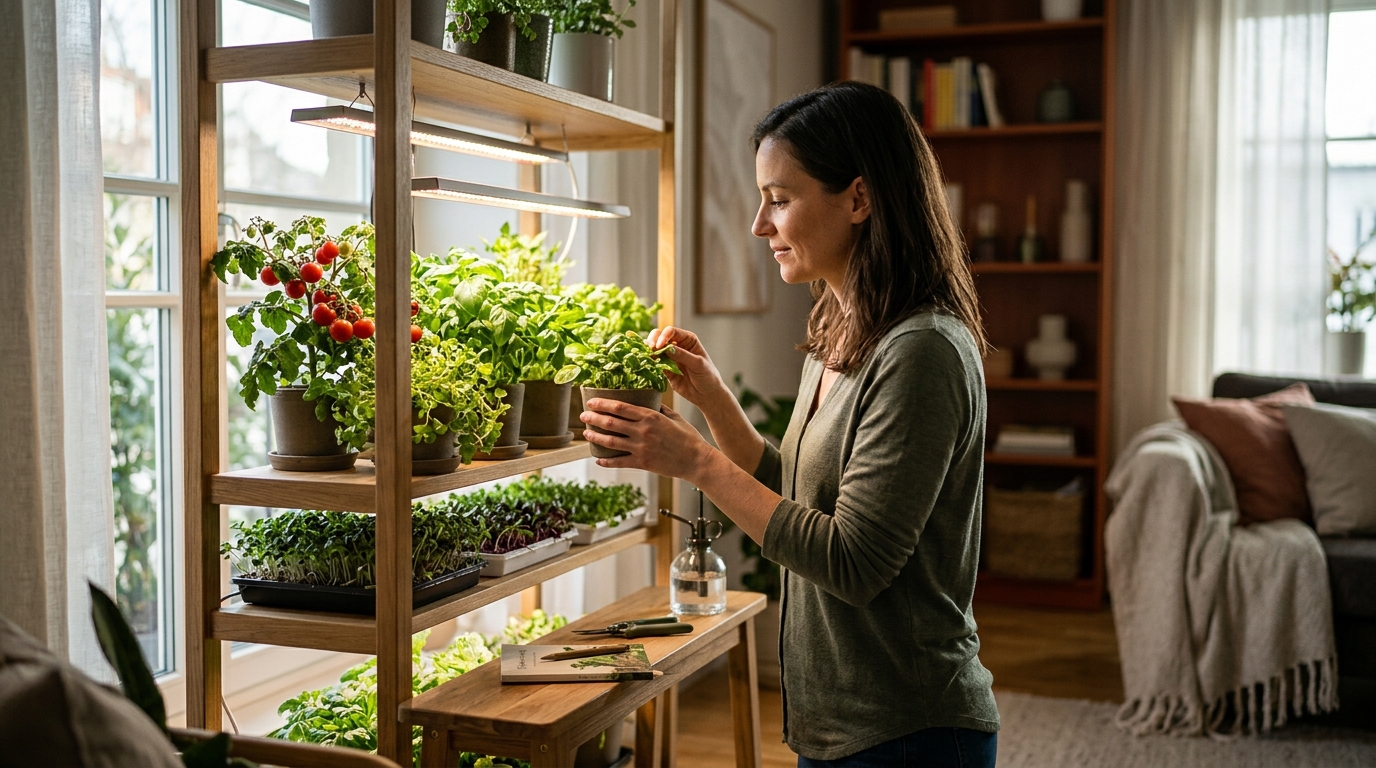
Indoor gardening has evolved from a niche hobby into a mainstream lifestyle driven by the need for fresh produce and year-round greenery. According to recent agricultural data, indoor growers can achieve up to 3 times faster development cycles compared to traditional soil methods when utilizing optimized spectral outputs. This acceleration is not magic but the result of precise photon management. Understanding the science behind light delivery is the first step toward cultivating healthy, vibrant plants in any environment, from a small apartment balcony to a dedicated grow room.
Understanding Light Spectrum and PAR
Light is the primary energy source for photosynthesis. Without adequate light, plants cannot convert carbon dioxide and water into glucose. The quality of this light is defined by its spectrum, measured in nanometers (nm). The most critical metric for growers is Photosynthetically Active Radiation (PAR), which measures the number of photons in the 400 to 700 nm range that plants can actually use.
PAR is not just about brightness. It is about the density of usable photons reaching the plant canopy. A light might appear bright to the human eye but lack the specific wavelengths required for robust vegetative growth or flowering. This is where spectral purity becomes essential. High-quality grow lights focus on delivering targeted wavelengths rather than scattering energy across the entire visible spectrum.
Blue light, typically in the 400-500 nm range, promotes vegetative growth and compact plant structure. Red light, found in the 600-700 nm range, is crucial for flowering and fruiting. A balanced full-spectrum output mimics natural sunlight, ensuring plants receive the complete range of energy they need to thrive indoors.
Evaluating Coverage Area and Intensity
One of the most common mistakes indoor gardeners make is underestimating the coverage area of their grow lights. A light that works for a single potted herb may fail completely when trying to illuminate a large vegetable bed. Coverage is determined by the light's intensity and its ability to penetrate the canopy without creating hot spots or shadowed areas.
Intensity is measured in PPFD (Photosynthetic Photon Flux Density), which indicates the number of photons hitting a specific area per second. For leafy greens like lettuce, a PPFD of 200-400 µmol/m²/s is often sufficient. However, fruiting plants like tomatoes or peppers require significantly higher intensities, often exceeding 600 µmol/m²/s.
When selecting a light, always check the manufacturer's coverage chart. Ensure the light's footprint matches your grow space dimensions. If you are using shelves or tents, consider the vertical distance between the light and the plants. Most LEDs can be hung closer to the canopy than traditional HID lights due to their lower heat output.
Comparing LED vs. Traditional Technologies
The market offers several lighting technologies, each with distinct advantages and drawbacks. High-Intensity Discharge (HID) lights, such as Metal Halide (MH) and High-Pressure Sodium (HPS), have been the industry standard for decades. They produce intense light but generate significant heat and consume more energy.
Light Emitting Diodes (LEDs) have emerged as the superior choice for most indoor growers. They are energy-efficient, produce less heat, and allow for precise spectral tuning. However, not all LEDs are created equal. Standard white LEDs often lack the spectral depth required for optimal plant growth. This is where advanced technologies like Nano Liquid Photonic Coating come into play.
Nano Grow Light utilizes proprietary Nano Liquid Photonic Coating to redirect and tighten every photon. This technology ensures denser PAR delivery and sharper spectral purity. By redirecting scattered light into a tighter, more usable beam, the system boosts yields while using less energy. This innovation makes it ideal for small and medium grow spaces, providing strong, even canopy coverage.
The Role of Nano Liquid Photonic Coating
Nano Liquid Photonic Coating is a breakthrough in grow light technology. It works by manipulating light at the molecular level to maximize efficiency. This coating redirects scattered photons, ensuring that more light reaches the plant leaves rather than being lost to the surrounding environment.
The benefits of this technology are measurable. In real-world trials, growers have reported faster development cycles. For example, a typical 3-month cycle for fast-cycling crops like lettuce can be reduced to as little as 2 months. Plants can grow up to 1 inch per day under optimized nano-enhanced photon delivery.
This technology is particularly effective for delicate plants. The low-heat operation makes it safe for use near sensitive foliage, such as African violets. These plants respond exceptionally well to stabilized full-spectrum halide output, which the nano coating helps simulate with greater precision and efficiency than traditional HID systems.
Matching Lights to Plant Types
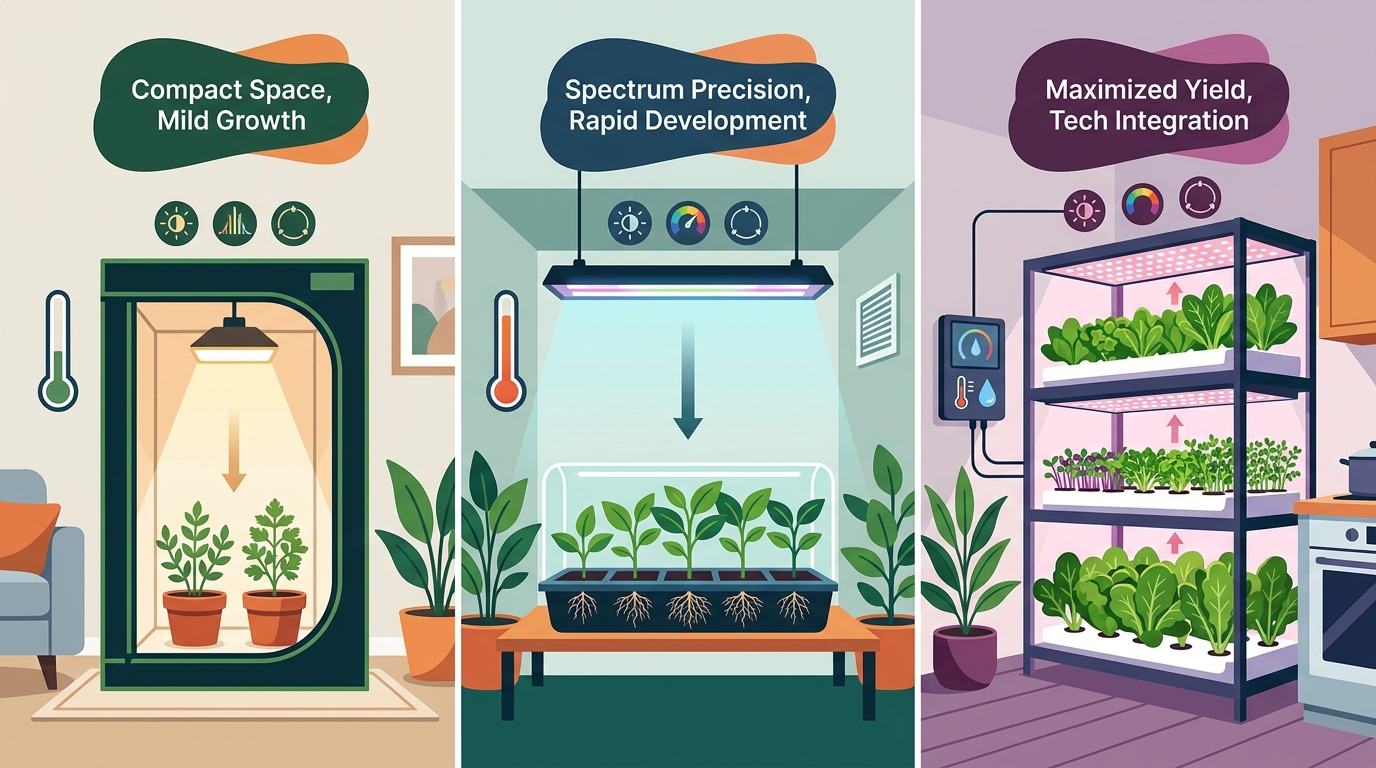
Different plants have different light requirements. Understanding these needs is crucial for selecting the right equipment. Leafy greens generally require lower light intensity and a spectrum rich in blue light. Fruiting plants need higher intensity and a balanced spectrum with significant red light components.
| Plant Type | Light Spectrum Focus | Intensity Requirement | Recommended Technology |
|---|---|---|---|
| Leafy Greens (Lettuce, Spinach) | Blue-dominant | Low to Medium | Nano Grow Light |
| Fruiting Plants (Tomatoes, Peppers) | Full Spectrum | High | High-Output LED |
| African Violets | Stabilized Full-Spectrum | Medium | Nano Liquid Coating |
| Microgreens | Blue-Red Balance | Medium | Compact LED |
For African violets, the continuous violet blooms and faster leaf expansion are directly linked to the stabilized full-spectrum output. The deep spectral continuity ensures that the delicate leaves receive consistent energy without the risk of heat damage. This makes the nano-coated lights an excellent choice for indoor flower enthusiasts.
Key Takeaways
- Spectral Purity Matters: Look for lights with targeted wavelengths rather than broad-spectrum white light.
- PAR is Key: Prioritize Photosynthetically Active Radiation over lumens for accurate growth potential.
- Nano Technology: Nano Liquid Photonic Coating can accelerate growth cycles by up to 3x in ideal conditions.
- Coverage Area: Ensure the light's footprint matches your grow space to avoid weak growth zones.
- Heat Management: Low-heat LEDs are safer for dense canopies and small spaces.
- Plant Specificity: Match the light spectrum to the specific needs of your plants, whether vegetative or flowering.
- Efficiency: Advanced photon redirection reduces energy consumption while increasing yield.
Frequently Asked Questions
What is the best light spectrum for vegetative growth?
The best spectrum for vegetative growth is rich in blue light, typically between 400 and 500 nm. This range promotes compact, sturdy growth and strong root development.
How far should I hang my grow light from the plants?
For LED lights, hang them 12 to 24 inches above the canopy. Adjust the height based on plant response and light intensity to prevent light burn or stretching.
Can I use regular household bulbs for indoor gardening?
No, regular household bulbs lack the specific PAR output required for photosynthesis. They are inefficient and may not provide the necessary spectral balance for healthy plant growth.
What is Nano Liquid Photonic Coating?
Nano Liquid Photonic Coating is a proprietary technology that redirects scattered light into a tighter, more usable beam, increasing usable PAR at the canopy and boosting yields.
Do I need a different light for flowering plants?
Yes, flowering plants benefit from a spectrum with more red light (600-700 nm) to stimulate blooming and fruiting. A full-spectrum light that balances blue and red is ideal.
How long should I leave grow lights on?
Most plants require 12 to 16 hours of light per day. Follow the specific photoperiod requirements for your plant species to ensure healthy growth cycles.
Is nano-coated light better than standard LED?
Nano-coated lights offer higher spectral purity and denser photon delivery, leading to faster growth rates and higher yields compared to standard white LEDs.
Start Your Indoor Garden Today
Choosing the right grow light is the foundation of successful indoor gardening. By understanding spectrum, PAR, and advanced technologies like Nano Liquid Photonic Coating, you can create an optimal environment for your plants. Visit our Shop Now page to explore our range of premium grow lights designed for every stage of plant growth. Contact us for personalized advice on selecting the perfect light for your specific indoor gardening needs.