
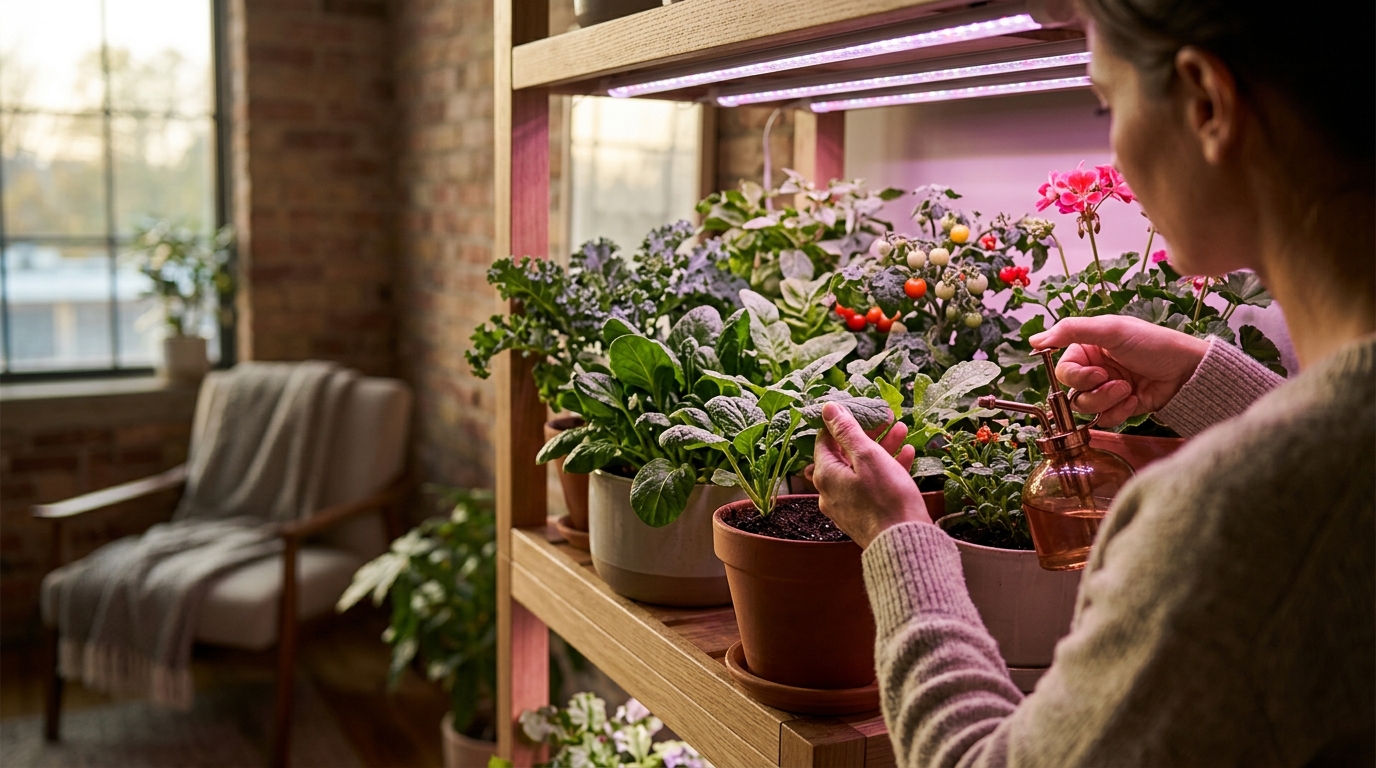
Indoor cultivation has evolved from a niche hobby into a precise science driven by photon efficiency and spectral control. According to recent agricultural technology reports, modern LED systems now deliver up to 30% more usable light per watt compared to traditional high-pressure sodium fixtures. This shift allows growers to achieve denser canopies and faster harvest cycles without the excessive heat output that previously damaged delicate plant tissues. Understanding the specific light requirements for vegetables and flowers is critical for maximizing yield and ensuring healthy development.
The Nano Liquid Photonic Advantage
Traditional LED grow lights often suffer from scattered photons that miss the plant canopy entirely. Nano Liquid Photonic Coating addresses this inefficiency by redirecting scattered light into a tighter, more usable beam. This technology ensures that every photon is optimized for photosynthesis, resulting in sharper spectral purity and denser Photosynthetically Active Radiation (PAR) delivery.
Nano Liquid Photonic Coating is a proprietary optical treatment that aligns light emission to maximize plant absorption rates. Unlike standard LEDs, which emit light in broad, diffuse patterns, this coating tightens the beam to target specific wavelengths with precision. The result is a significant increase in usable PAR at the canopy level, which boosts yields while simultaneously reducing overall energy consumption.
This technology is particularly effective in compact indoor setups where space is limited. The low-heat operation of these systems makes them ideal for shelves, tents, and cabinets. Plants can grow up to 1 inch per day under these optimized conditions, potentially reducing a typical three-month cycle to as little as two months. For more details on the science behind this innovation, you can explore the how it works page.
Light Needs for Vegetables
Vegetable crops have distinct light requirements that change depending on their growth stage. Fast-cycling crops like lettuce and microgreens thrive under high-intensity blue-white spectra that promote rapid vegetative growth. These plants require consistent photon delivery to maintain sturdy structure and healthy maturity.
Leafy Greens and Microgreens
Leafy greens are among the most efficient crops for indoor cultivation. They require a balanced spectrum that supports strong vegetative growth without triggering premature flowering. The Nano Grow Light system is engineered specifically for small and medium grow spaces, providing strong, even canopy coverage for these delicate crops. Real-world testing has shown that growers can bring fast-cycling crops like lettuce to harvest significantly faster than with traditional lighting.
Heavy Feeders: Tomatoes and Peppers
Heavy-feeding vegetables like tomatoes and peppers demand higher light intensity during their flowering and fruiting stages. These plants benefit from the deep spectral continuity provided by advanced nano-coated systems. The stabilized full-spectrum output ensures that the plants receive the necessary red wavelengths to trigger blooming and fruit set. Proper light penetration is crucial for preventing leggy stems and ensuring uniform fruit development.
Spectral Needs for Flowers
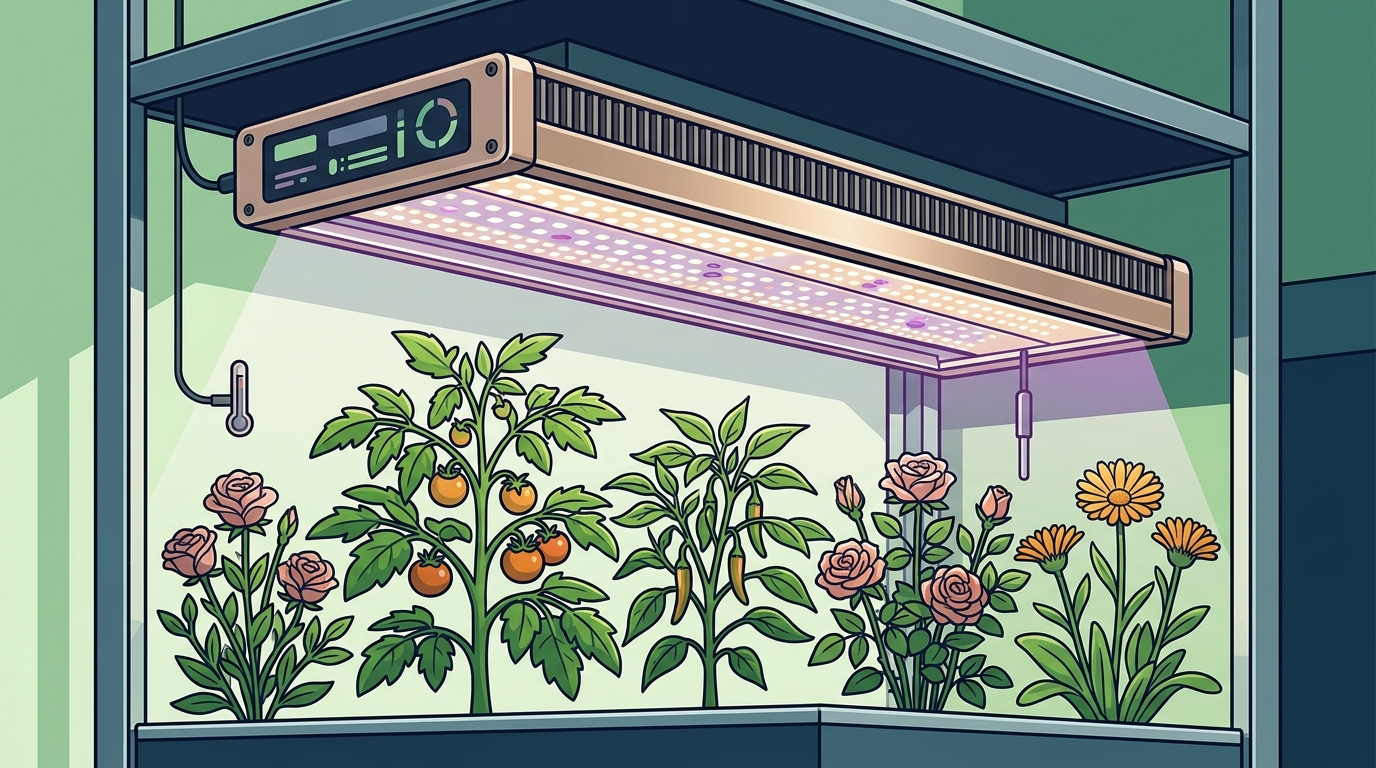
Flowering plants have unique spectral requirements that differ from vegetative crops. African violets, for example, respond exceptionally well to stabilized full-spectrum halide output. This specific light profile supports continuous violet blooms and faster leaf expansion.
African Violets and Delicate Blooms
African violets are sensitive to heat and light intensity. The low-heat operation of nano-enhanced lights prevents leaf burn while delivering the deep spectral continuity needed for rich coloration. The balanced output supports stronger vegetative growth and healthier maturity at every stage. For growers looking to cultivate these specific plants, the African Violets section provides detailed guidance on optimal setup.
General Flowering Requirements
Most flowering plants require a shift in spectral balance as they transition from vegetative to flowering stages. The nano coating sharpens targeted wavelengths, accelerating photosynthesis during these critical periods. This precision allows for richer coloration and more consistent blooming cycles. The technology is designed to support the entire lifecycle of the plant, from seedling to harvest.
Technology Comparison
Choosing the right grow light involves understanding the differences between traditional technologies and modern nano-enhanced systems. The table below summarizes the key distinctions.
| Feature | Traditional LED | Nano Liquid Photonic Coating | High-Pressure Sodium |
|---|---|---|---|
| Photon Efficiency | Standard | High (Redirected) | Low |
| Heat Output | Moderate | Low | Very High |
| Spectral Purity | Broad | Sharp/Targeted | Wide/Unfocused |
| Best For | General Use | Compact/High-Yield | Large Commercial |
For a deeper dive into the specific benefits of this technology, visit the Nano Liquid Technology page. You can also check out the Shop Now section to view available products.
Key Takeaways
- Nano Liquid Photonic Coating redirects scattered light to increase usable PAR at the canopy.
- Plants can grow up to 1 inch per day, reducing typical cycles by up to 33%.
- Low-heat operation makes nano-coated lights ideal for sensitive plants like African violets.
- Fast-cycling crops like lettuce benefit significantly from the tight beam output.
- Deep spectral continuity supports richer coloration in flowering plants.
- Engineered for small and medium grow spaces with strong, even coverage.
- Real-world trials show up to 3x faster development in ideal conditions.
Frequently Asked Questions
How does Nano Liquid Photonic Coating improve plant growth?
Nano Liquid Photonic Coating improves plant growth by redirecting scattered photons into a tighter, more usable beam. This increases the density of usable PAR at the canopy, which accelerates photosynthesis and boosts yields while using less energy.
Are nano grow lights safe for delicate flowers?
Yes, nano grow lights are safe for delicate flowers. The low-heat operation prevents leaf burn, and the stabilized full-spectrum output supports continuous blooming and faster leaf expansion for plants like African violets.
What is the best light for microgreens?
Microgreens thrive under high-intensity blue-white spectra that promote rapid vegetative growth. Nano grow lights provide this balanced output with sharp spectral purity, ensuring sturdy plant structure and healthy maturity.
How much energy do nano grow lights save?
Nano grow lights are engineered for high efficiency. By redirecting photons that would otherwise be lost, they deliver more usable light per watt compared to traditional LEDs, resulting in lower energy consumption for the same yield.
Can I use these lights for tomatoes?
Absolutely. Tomatoes require high light intensity during flowering and fruiting. The deep spectral continuity and balanced output of nano-coated lights support strong vegetative growth and healthy maturity, which are critical for heavy-feeding vegetables.
Where can I buy Nano Grow Lights?
You can purchase Nano Grow Lights directly through the Shop Now page. The company offers various options tailored to different grow space sizes and plant types.
How long does a typical harvest cycle take?
With nano-enhanced photon delivery, plants can grow up to 1 inch per day. This can reduce a typical three-month cycle to as little as two months for fast-cycling crops like lettuce.
Start Your Indoor Garden
Transform your indoor growing experience with precision-engineered lighting technology. Whether you are cultivating delicate African violets or fast-cycling microgreens, the right light makes all the difference. Visit the Nano Grow Light homepage to explore the full range of products and start growing faster today.