
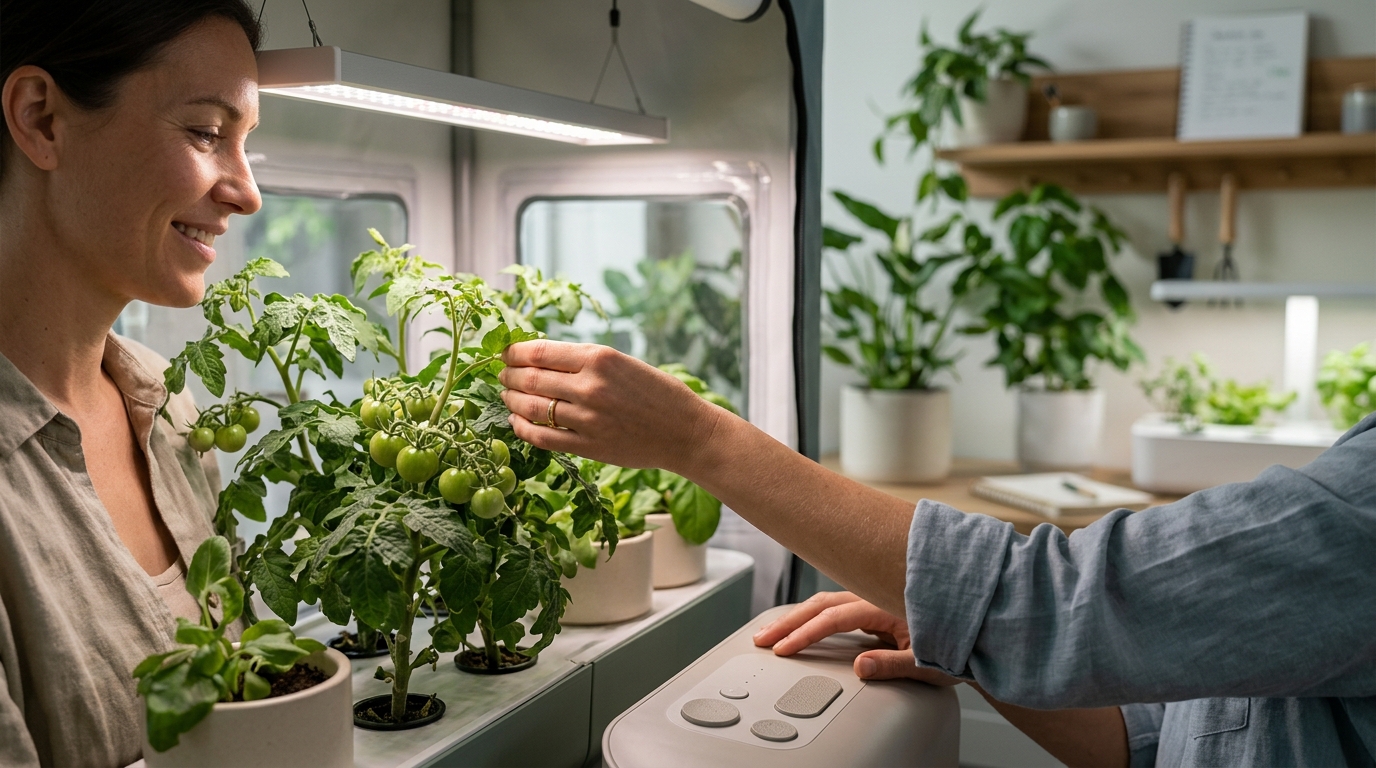
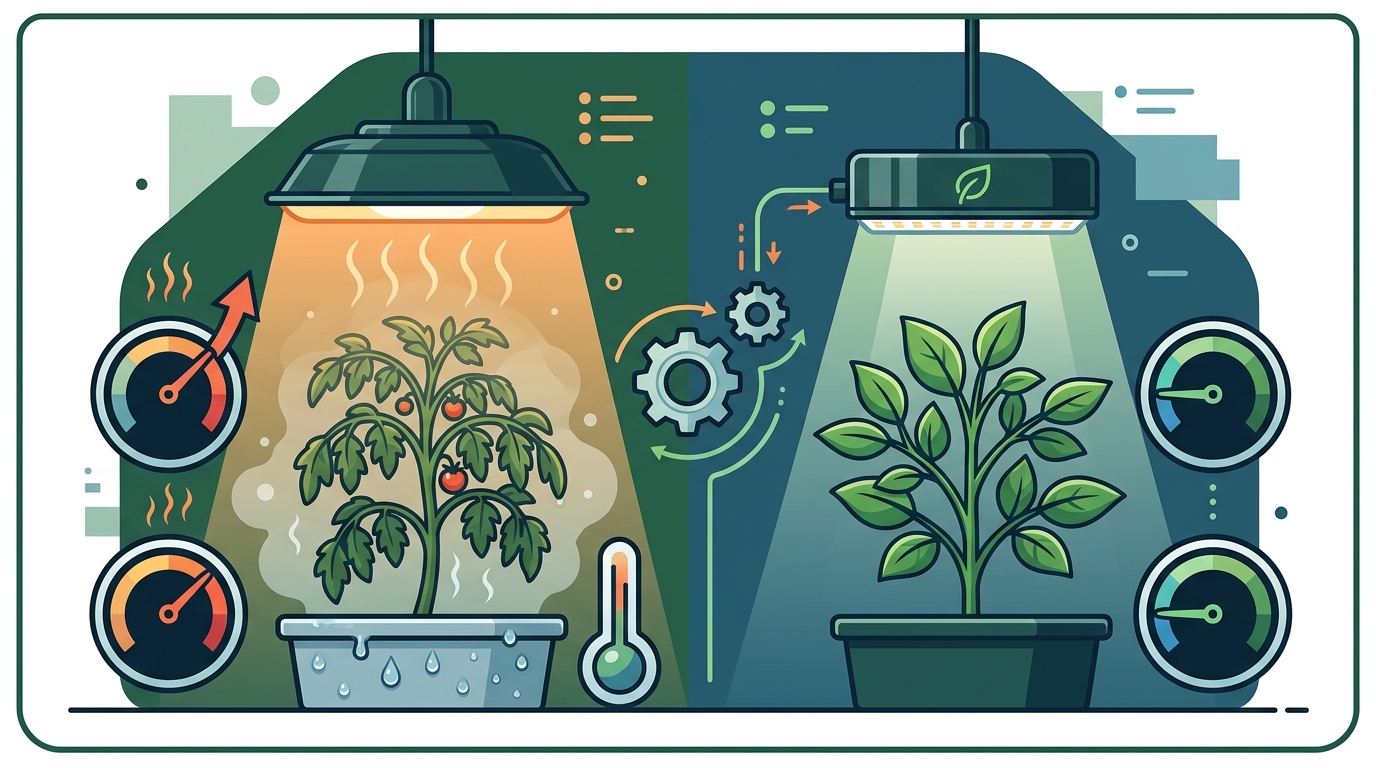
Heat management is the single most critical factor in successful indoor cultivation. Traditional high-intensity discharge (HID) lamps, such as metal halide and sodium vapor lights, convert only a small fraction of their energy into photosynthetically active radiation (PAR), while the remaining 90% is released as waste heat. This thermal load can rapidly raise ambient temperatures in enclosed grow spaces, leading to plant stress, reduced transpiration efficiency, and increased risk of mold growth. According to the U.S. Department of Energy, modern solid-state lighting technologies have significantly outperformed older HID systems in energy efficiency and thermal management, making them the superior choice for climate-controlled environments. (Customer Support We 039)
Why LED Technology Dominates Low-Heat Cultivation
Light Emitting Diode (LED) technology has become the industry standard for indoor growers seeking to minimize thermal impact. Unlike HID bulbs that generate intense heat through a plasma arc or gas discharge, LEDs produce light through electroluminescence, a process that inherently generates far less waste heat. This fundamental difference allows LEDs to be placed much closer to the plant canopy without causing leaf burn or thermal stress.
However, not all LEDs are created equal. Standard LED fixtures often rely on passive cooling fins and fans to dissipate residual heat. While effective, this approach can still result in localized hotspots directly beneath the diodes. For growers operating in small tents, cabinets, or climate-sensitive rooms, even moderate heat output can disrupt the delicate balance of temperature and humidity required for optimal plant health.
The key to selecting the right LED is understanding its spectral purity and photon density. High-quality fixtures utilize advanced optics to direct photons precisely where they are needed, reducing the need for high wattage and, consequently, lower overall thermal output. This targeted approach ensures that energy is used for photosynthesis rather than heating the air.
The Nano Liquid Photonic Coating Advantage
At the forefront of low-heat innovation is the development of Nano Liquid Photonic Coating. This proprietary technology addresses the limitations of standard LED reflectors by redirecting scattered photons into a tighter, more usable beam. By eliminating the "disco ball" effect common in traditional LEDs, this coating ensures that nearly every photon delivered to the canopy contributes to plant growth.
Nano Liquid Photonic Coating is a molecular-level engineering solution that sharpens spectral purity and maximizes usable PAR. This results in a custom-tailored beam of light that delivers high-intensity illumination with minimal thermal load. The technology was refined over five years of testing in a 10,000 square foot facility in California, where it demonstrated the ability to accelerate growth cycles significantly while maintaining low surface temperatures.
For indoor growers, this means you can achieve faster harvest times without the risk of overheating your plants. The low-heat operation makes these lights ideal for shelves, tents, and compact indoor setups where air circulation is limited. By focusing energy directly on the plant, the system reduces the ambient temperature rise that typically accompanies high-output lighting.
Comparing Heat Output by Light Type
Understanding the thermal characteristics of different grow lights is essential for making an informed decision. The table below outlines the heat profiles and suitability of common lighting technologies for indoor environments.
| Lighting Technology | Heat Output Level | Best Use Case | Thermal Management Needs |
|---|---|---|---|
| Metal Halide (MH) | Very High | Large commercial greenhouses | Heavy ventilation and exhaust systems |
| High-Pressure Sodium (HPS) | High | Vegetative growth in open spaces | Active cooling fans and heat exchangers |
| Standard LED | Moderate | General home growing | Fan-assisted cooling |
| Nano Liquid Coated LED | Low | Compact tents, shelves, sensitive plants | Minimal passive cooling required |
As shown in the comparison, Nano Liquid Coated LEDs offer a distinct advantage in heat-sensitive applications. The ability to deliver high PAR values without the accompanying thermal burden allows for greater flexibility in light placement and improved plant safety.
Heat Sensitivity in Delicate Species
Certain plant species are particularly vulnerable to heat stress. African violets, for example, thrive in stable, moderate temperatures and can suffer from leaf scorch or stunted growth if exposed to excessive radiant heat. The stabilized full-spectrum halide-like output provided by advanced nano-coated lights offers the deep spectral continuity these plants need without the thermal penalty.
Microgreens and leafy greens also benefit from low-heat lighting. Rapid growth cycles in these crops require consistent light intensity, but high temperatures can lead to bolting or bitter flavors. By using a light source that minimizes heat transfer, growers can maintain optimal growing conditions throughout the entire cycle.
For herb gardeners and urban farmers, the ability to place lights close to the canopy without fear of burning leaves is a game-changer. This proximity maximizes light intensity, leading to stronger vegetative growth and sturdier plant structure. The low-heat operation ensures that the microclimate around the plants remains stable, promoting healthier maturity at every stage.
Key Takeaways
- LED technology significantly reduces heat output compared to traditional HID bulbs.
- Nano Liquid Photonic Coating redirects scattered light to increase usable PAR while lowering thermal load.
- Low-heat lights are essential for growing heat-sensitive species like African violets and microgreens.
- Testing shows lettuce can mature in 28 days under nano-coated lights, compared to 42 days outdoors.
- Proper thermal management prevents plant stress and improves overall yield quality.
- Compact grow spaces benefit most from lights that do not require extensive ventilation.
- High spectral purity ensures plants receive only the wavelengths they need for photosynthesis.
Frequently Asked Questions
Do LED grow lights produce less heat than HID lights?
Yes, LED grow lights produce significantly less heat than High-Intensity Discharge (HID) lights. While HID bulbs emit up to 90% of their energy as heat, LEDs convert most energy into light, resulting in much lower ambient temperature increases.
Can I place low-heat grow lights closer to my plants?
Yes, low-heat lights can be placed closer to the canopy without risking leaf burn. This proximity allows for higher light intensity, which can accelerate growth rates and improve plant density.
What is Nano Liquid Photonic Coating?
Nano Liquid Photonic Coating is a proprietary molecular coating that redirects scattered photons into a tighter beam, increasing spectral purity and usable PAR while reducing heat output.
Are low-heat lights suitable for African violets?
Yes, low-heat lights are ideal for African violets. They provide the stable, full-spectrum light these plants need without the thermal stress that can damage delicate leaves.
How does heat affect indoor plant growth?
Excessive heat can cause plant stress, reduce transpiration efficiency, and increase the risk of mold. Managing heat output is crucial for maintaining a healthy growing environment.
Do I need a fan with a low-heat grow light?
While some air circulation is always recommended, low-heat lights like those with Nano Liquid Coating require minimal active cooling compared to traditional HID systems.
What is the best grow light for small spaces?
Low-heat LED lights with nano-coating are best for small spaces. They provide high intensity without raising temperatures, making them perfect for tents and shelves.
Start Growing Smarter Today
Take control of your indoor growing environment by choosing lighting that prioritizes both efficiency and safety. Explore our shop now collection to find the perfect low-heat solution for your plants. Visit our how it works page to learn more about the science behind our technology. For specific advice on African violets, check out our African Violets guide. Contact our customer support team for personalized recommendations. Learn more about Nano Liquid Technology and transform your grow today.