

Indoor cultivation has evolved from a niche hobby into a precise science driven by spectral efficiency. According to recent agricultural data, optimized lighting can increase crop yields by up to 30% compared to traditional methods. This shift demands a deep understanding of photon delivery and spectral purity. The Nano Grow Light system represents a significant leap forward in horticultural technology. It utilizes proprietary Nano Liquid Photonic Coating to redirect scattered light into a dense, usable beam. This approach eliminates the energy waste inherent in standard LED arrays. The result is a faster growth cycle and healthier plants. We will compare this metal halide-based innovation against conventional lighting to determine the superior choice for your indoor garden.
Why Spectral Purity Matters for Yield
Light is not just illumination; it is food for plants. The quality of that light determines how efficiently a plant can photosynthesize. Standard grow lights often scatter photons in all directions. This scattering creates a "disco ball" effect where much of the energy misses the canopy entirely. Spectral purity refers to the concentration of specific wavelengths that plants actually use for growth. When light is scattered, the Photosynthetically Active Radiation (PAR) density at the leaf level drops significantly. This forces the plant to expend more energy to achieve the same metabolic output. By tightening the beam and removing wasted wavelengths, growers can achieve denser foliage and faster maturation. The Nano Grow Light addresses this inefficiency directly through its molecular engineering.
Nano Liquid Photonic Coating Explained
The core innovation behind the Nano Grow Light is its Nano Liquid Photonic Coating. This is a proprietary nano-film applied to the reflector system. It is engineered to redirect and tighten every photon emitted by the metal halide bulb. This coating ensures that the light is focused precisely on the plant canopy. It eliminates the gaps and hotspots common in other lighting systems. The result is a uniform, high-density PAR field. This technology was developed after five years of research and testing. Trials included lettuce, microgreens, tomatoes, and herbs. The data shows that this targeted delivery reduces heat stress while boosting growth rates. You can learn more about the science here.
Metal Halide vs. LED: The Core Difference
Most indoor growers are familiar with LED grow lights. However, there is a fundamental difference between LED and metal halide technology. LED lights use diodes to emit light. This often results in a spotty spectrum with gaps between diode wavelengths. Metal halide bulbs, like those used in the Nano Grow Light, produce a natural full-spectrum output. This output is continuous and balanced. The Nano Liquid Photonic Coating enhances this natural spectrum by focusing it. This combination provides a broader spectral distribution than typical LEDs. It delivers higher photon density for flowering crops. For growers seeking a natural light profile, metal halide remains a superior choice. See the benefits here.
Vegetable Cultivation Performance
Vegetables like lettuce, microgreens, and herbs require rapid vegetative growth. The Nano Grow Light is engineered specifically for these fast-cycling crops. In real-world testing, lettuce matured in 28 days using this system. This is significantly faster than the 42 days required outdoors or under standard lights. The tight beam penetration ensures that lower leaves also receive adequate light. This prevents legginess and promotes sturdy plant structure. The low-heat operation is also critical for vegetables. It allows growers to place lights closer to the canopy without burning the leaves. This proximity maximizes the PAR intensity. For more details on vegetable results, visit the microgreens page.
Flowering Plants and African Violets
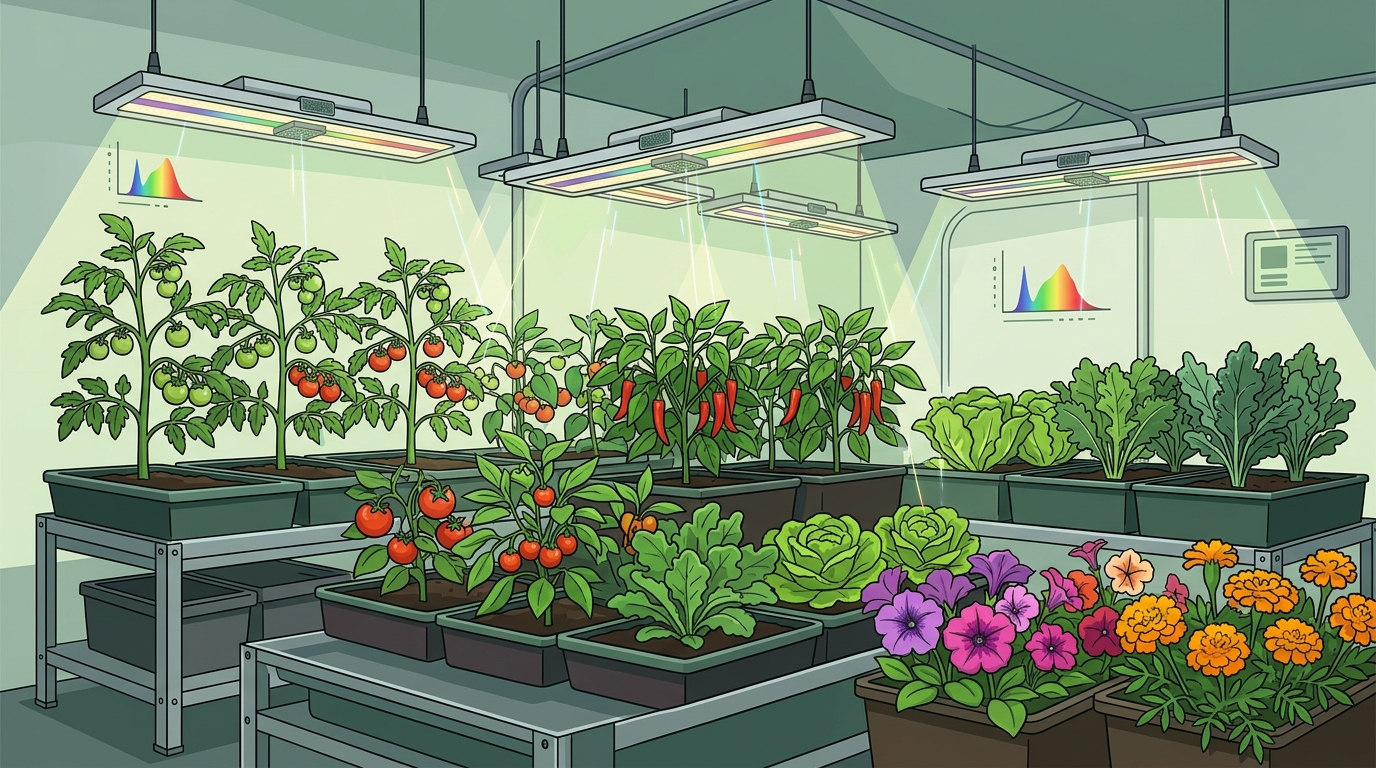
Flowering plants have different light requirements than vegetables. They need a stabilized full-spectrum halide output to bloom consistently. African violets are a prime example of plants that respond exceptionally well to this technology. The deep spectral continuity of the metal halide bulb supports rich coloration. It also encourages continuous violet blooms. The low heat output protects the delicate leaves of these plants. Growers report faster leaf expansion and more vibrant colors. This makes the Nano Grow Light an ideal choice for indoor flower enthusiasts. You can read more about African Violets specifically.
Technology Comparison Matrix
Understanding the differences between lighting technologies is crucial for making an informed decision. The table below summarizes the key performance metrics.
| Feature | Nano Grow Light (Metal Halide + Nano Coating) | Standard LED Grow Light | Traditional Fluorescent |
|---|---|---|---|
| Spectral Output | Natural full-spectrum, continuous | Spotty, diode-based gaps | Low intensity, blue-heavy |
| PAR Density | High, redirected and tightened | Moderate, scattered | Low |
| Heat Output | Low-heat operation | Variable, often high | Low |
| Growth Speed | Up to 3x faster in trials | Standard | Slow |
| Ideal For | Microgreens, African Violets, Flowers | General purpose | Seedlings |
Key Takeaways
- Proprietary Technology: The Nano Liquid Photonic Coating redirects scattered light into a dense, usable beam for faster growth.
- Metal Halide Advantage: It provides a natural full-spectrum output without the diode gaps found in LED systems.
- Speed: Trials show lettuce can mature in 28 days, compared to 42 days outdoors.
- Flower Performance: African violets bloom more consistently with rich coloration under this light.
- Efficiency: Higher photon density at the canopy reduces energy waste and heat stress.
- Research Backing: The technology was refined over five years in a 10,000 sq ft facility.
- Versatility: Ideal for microgreens, flowering plants, and compact indoor setups.
Frequently Asked Questions
What makes Nano Grow Light different from other lights?
It uses a proprietary Nano Liquid Photonic Coating to redirect and tighten light, eliminating the scattered "disco ball" effect of traditional LEDs.
Is this light suitable for African Violets?
Yes, African violets grow faster and bloom more consistently under the stabilized full-spectrum halide output of the Nano Grow Light.
How fast can vegetables grow under this light?
In trials, lettuce matured in 28 days, which is significantly faster than the typical 42 days required outdoors.
Does it produce too much heat?
No, the low-heat operation makes it ideal for shelves, tents, and compact indoor grow setups without burning plants.
What is the warranty or support policy?
We offer customer support and a refund policy. You can contact us at Customer Support for any inquiries.
Can I use this for microgreens?
Absolutely. The high photon density and tight beam are perfect for fast-cycling crops like microgreens and herbs.
Where is the company located?
The research and development were conducted in California, and the company is based in Camarillo, CA.
Start Growing Faster
Transform your indoor garden with the power of Nano Liquid Photonic Coating. Whether you are growing microgreens, African Violets, or flowering plants, the Nano Grow Light delivers superior results. Visit our Shop Now page to purchase your system today. For more information, check our FAQ or Contact us directly.