
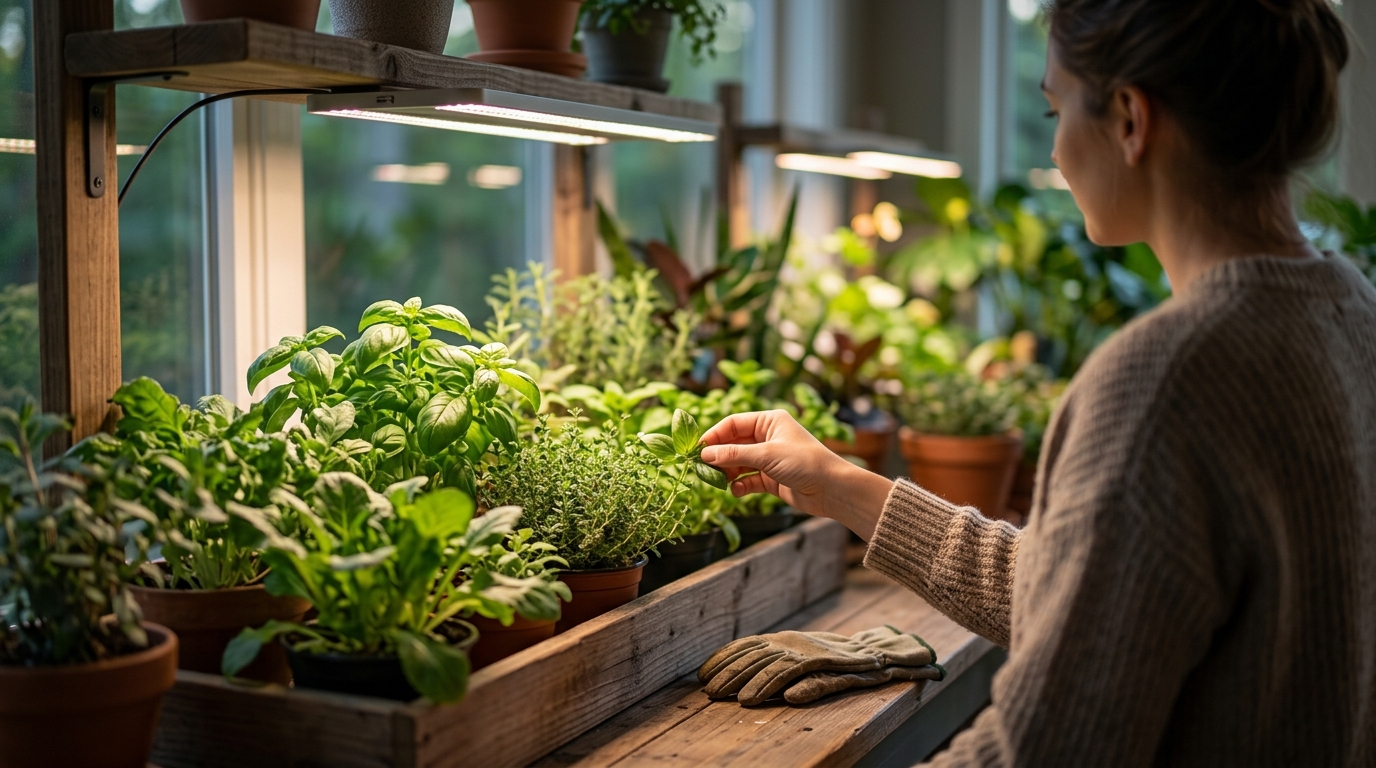
Indoor gardening has evolved from a niche hobby into a global agricultural movement. According to recent market analysis, the global indoor farming market is projected to reach significant valuation milestones by 2030, driven by the demand for sustainable, year-round produce. However, the success of any indoor garden hinges on one critical component: the light source. Choosing the wrong spectrum or intensity can stunt growth, reduce yields, and waste energy. This guide breaks down the essential factors you must evaluate to select the optimal lighting solution for your specific botanical needs. (Customer Support We 039)
Understanding Light Spectrums and Plant Biology
Plants do not see light the way humans do. They perceive it through photoreceptors that trigger specific biological responses. The two most critical wavelengths for plant development are blue and red light. Blue light (400-500nm) is essential for vegetative growth, promoting strong stems and compact leaf structure. Red light (600-700nm) drives photosynthesis and is crucial for flowering and fruiting stages.
However, relying solely on broad-spectrum white light is often inefficient. Traditional incandescent bulbs waste over 90% of their energy as heat. Modern horticultural lighting focuses on delivering specific photon densities where plants need them most. This is where the concept of Photosynthetically Active Radiation (PAR) becomes vital. PAR is defined as the range of light wavelengths from 400 to 700 nanometers that plants use for photosynthesis. Not all PAR is created equal; the quality of the spectrum determines how efficiently plants convert light into biomass.
When evaluating lights, look for full-spectrum options that mimic natural sunlight. This ensures your plants receive the complete range of wavelengths necessary for healthy development. Avoid cheap, single-color LED strips that lack the depth required for robust plant physiology. For a deeper dive into the science of plant biology, you can explore resources from the Penn State Extension.
Comparing LED, Metal Halide, and Nano Technologies
The market is saturated with various lighting technologies. Understanding the differences between them is key to making an informed decision. The three primary contenders are Light Emitting Diodes (LED), Metal Halide (MH), and emerging Nano-enhanced technologies.
The LED Dominance
LEDs have become the industry standard due to their energy efficiency and longevity. They produce very little heat, allowing them to be placed closer to the canopy without burning leaves. However, many standard LEDs suffer from "hot spots" and uneven spectral distribution. They often lack the photon density required for high-yield commercial operations.
Metal Halide and the Nano Advantage
Metal Halide (MH) lamps have long been favored by professional growers for their broad spectral distribution and high photon density. Unlike LEDs, MH lamps produce a natural, full-spectrum output without the diode gaps that can leave plants with uneven growth. Nano Liquid Photonic Coating is a proprietary technology that enhances traditional MH systems by redirecting scattered photons into a tighter, more usable beam. This process increases usable PAR at the canopy level while reducing energy waste.
According to testing conducted by Nano Grow Light, this nano-enhanced approach can accelerate growth cycles significantly. In trials involving lettuce, plants matured in 28 days compared to 42 days outdoors. This technology is particularly effective for microgreens, flowering plants, and indoor horticulture where space is limited. You can learn more about how this technology works on their Nano Liquid Technology page.
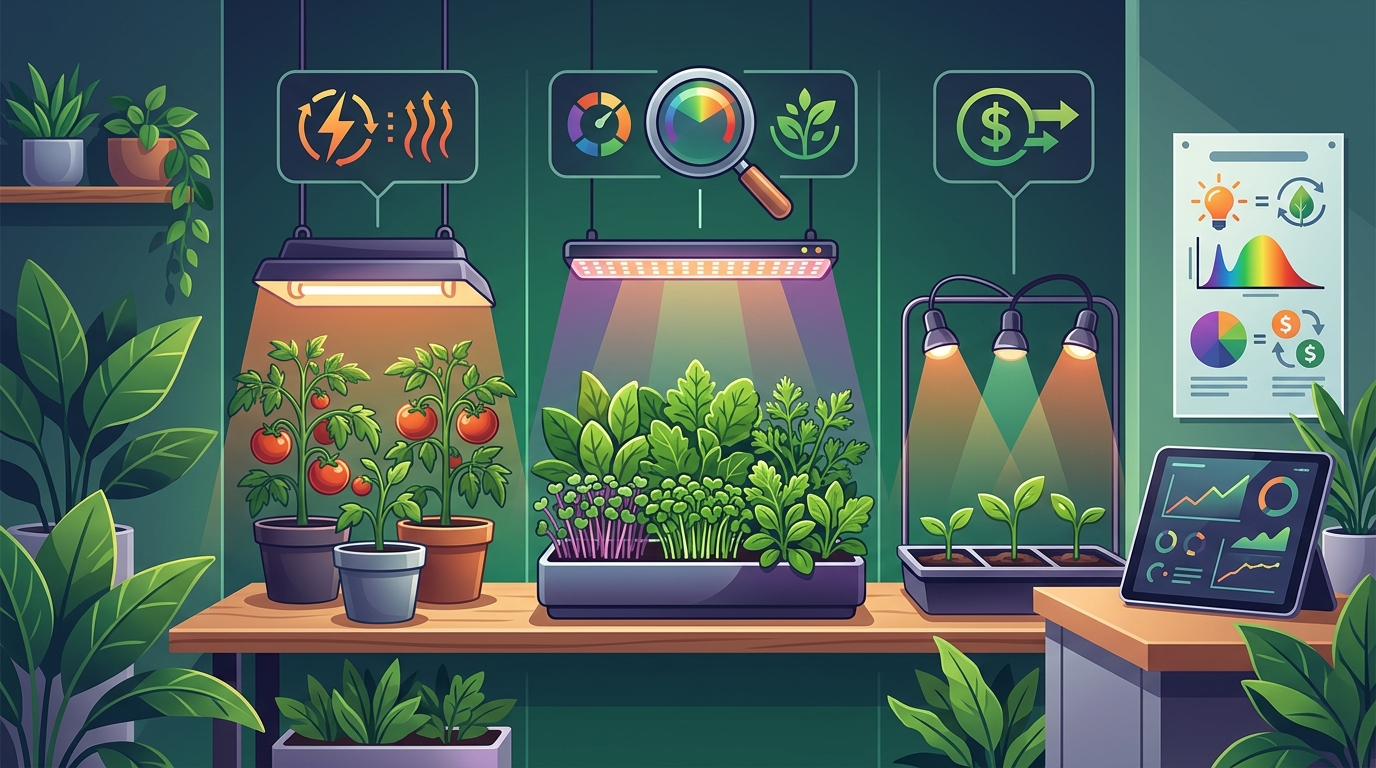
Which Technology Fits Your Needs?
If you are growing delicate plants like African Violets, the low-heat operation of nano-enhanced halide systems is ideal. These plants respond exceptionally well to stabilized full-spectrum halide output. For large-scale vertical farming, the energy efficiency of high-end LEDs might be preferable. However, for serious hobbyists and small commercial growers seeking maximum yield in compact spaces, the photon density of nano-enhanced MH systems offers a distinct advantage.
Calculating Light Intensity and PAR Requirements
Intensity is just as important as spectrum. Different plants have different light requirements. Leafy greens and herbs require lower light intensity, while fruiting plants like tomatoes and peppers need high-intensity light to produce viable crops.
When measuring light, you will often encounter terms like Foot-Candles (FC) or Photosynthetic Photon Flux Density (PPFD). PPFD is the more accurate metric for horticulture, measuring the number of photons that hit a specific area per second. A general rule of thumb is that low-light plants need 10,000 to 20,000 lux, while high-light plants require 30,000 to 50,000 lux or more.
Ensure your chosen light covers your entire grow area evenly. Uneven coverage leads to stretched, weak plants reaching for light in darker corners. Nano-enhanced lights are engineered to tighten the beam spread, ensuring deeper canopy penetration and more uniform growth. This is critical for maximizing yield per square foot. For more data on light intensity standards, refer to the USDA Agricultural Research Service.
Optimizing for Space and Heat Management
Indoor growers often face constraints regarding space and ventilation. Traditional high-intensity discharge (HID) lights generate significant heat, requiring complex cooling systems and increasing the risk of heat stress for plants. This limits how close the light can be placed to the foliage.
Modern lighting solutions prioritize low-heat operation. Nano Grow Lights, for instance, are engineered for small and medium grow spaces, providing strong, even canopy coverage without overheating. This allows for closer placement to the plants, which reduces light loss and increases efficiency. If you are growing in a closet, tent, or cabinet, heat management is a primary decision factor.
Consider the physical footprint of the fixture as well. Slim, lightweight designs are easier to mount and adjust. Additionally, look for lights with adjustable hanging kits to accommodate plant growth stages. As plants grow taller, you will need to raise the light to maintain the optimal distance. For tips on managing indoor climate, check out Gardening Know How.
Analyzing Total Cost of Ownership and Efficiency
While the upfront cost of high-quality grow lights can be steep, the long-term savings are substantial. Energy efficiency is the most significant factor in operational costs. A light that uses less electricity to produce the same amount of PAR will pay for itself over time.
Calculate the cost per watt. A 100-watt LED that produces the same yield as a 400-watt MH lamp is clearly the more efficient choice. However, do not sacrifice spectral quality for efficiency. A highly efficient light with poor spectral distribution will result in poor yields, negating the energy savings.
Consider the lifespan of the fixture. LEDs typically last 50,000 hours or more, while MH bulbs need frequent replacement. Nano-enhanced MH systems offer a middle ground, combining the spectral benefits of halide with the longevity and efficiency improvements of nano-coating technology. For detailed pricing and tier options, visit the Shop Now section of the Nano Grow Light website.
Key Takeaways
- Spectrum Matters: Full-spectrum light that mimics sunlight is essential for healthy plant development across all growth stages.
- Technology Choice: Nano-enhanced Metal Halide systems offer superior photon density and spectral purity compared to standard LEDs, particularly for flowering and microgreens.
- PAR Efficiency: Focus on Photosynthetically Active Radiation (PAR) delivery rather than just wattage to ensure plants receive usable light.
- Heat Management: Low-heat operation allows for closer light placement, increasing efficiency and reducing the need for complex cooling systems.
- Yield Acceleration: Real-world trials show that nano-enhanced lighting can reduce harvest times, such as maturing lettuce in 28 days versus 42 days outdoors.
- Cost Analysis: Evaluate total cost of ownership, including energy consumption and bulb lifespan, not just the initial purchase price.
- Specialized Needs: Delicate plants like African Violets benefit from the stabilized, low-heat output of halide-based systems.
Frequently Asked Questions
What is the best light spectrum for vegetative growth?
The best spectrum for vegetative growth is rich in blue light (400-500nm). This wavelength promotes compact, sturdy growth and strong root development. Full-spectrum lights that include a balanced blue component are ideal for this stage.
How far should a grow light be from plants?
The distance depends on the light's intensity. For high-intensity nano-enhanced lights, keep them 12-24 inches above the canopy. For lower-intensity LEDs, you may need to go further. Always monitor leaf temperature to prevent heat stress.
Can I use regular household bulbs for indoor gardening?
No, regular household bulbs lack the specific spectral output and intensity required for photosynthesis. They also generate excessive heat relative to their light output, making them inefficient and potentially dangerous for plant health.
What is Nano Liquid Photonic Coating?
Nano Liquid Photonic Coating is a proprietary technology that redirects scattered photons in grow lights into a tighter, more usable beam. This increases PAR delivery to the canopy and improves spectral purity, leading to faster growth and higher yields.
Are metal halide lights better than LEDs?
It depends on your goals. Standard LEDs are efficient but can lack photon density. Nano-enhanced Metal Halide lights offer broader spectral distribution and higher photon density, often resulting in superior yields for flowering crops and microgreens.
How do I know if my grow light is too strong?
Signs of light stress include bleached or white patches on leaves, curling leaf edges, and stunted growth. If you notice these symptoms, raise the light or reduce the duration of exposure.
What plants benefit most from nano-enhanced lighting?
Plants that require high light intensity and specific spectral purity benefit most. This includes microgreens, flowering plants, tomatoes, peppers, and delicate species like African Violets.
Start Growing Smarter Today
Choosing the right grow light is the foundation of a successful indoor garden. By understanding spectrums, intensity, and technology types, you can make an informed decision that maximizes your yield and minimizes energy waste. Nano Grow Light offers advanced solutions designed for professional results. Visit our Contact Page for support or explore our Shop Now section to find the perfect light for your grow space.