
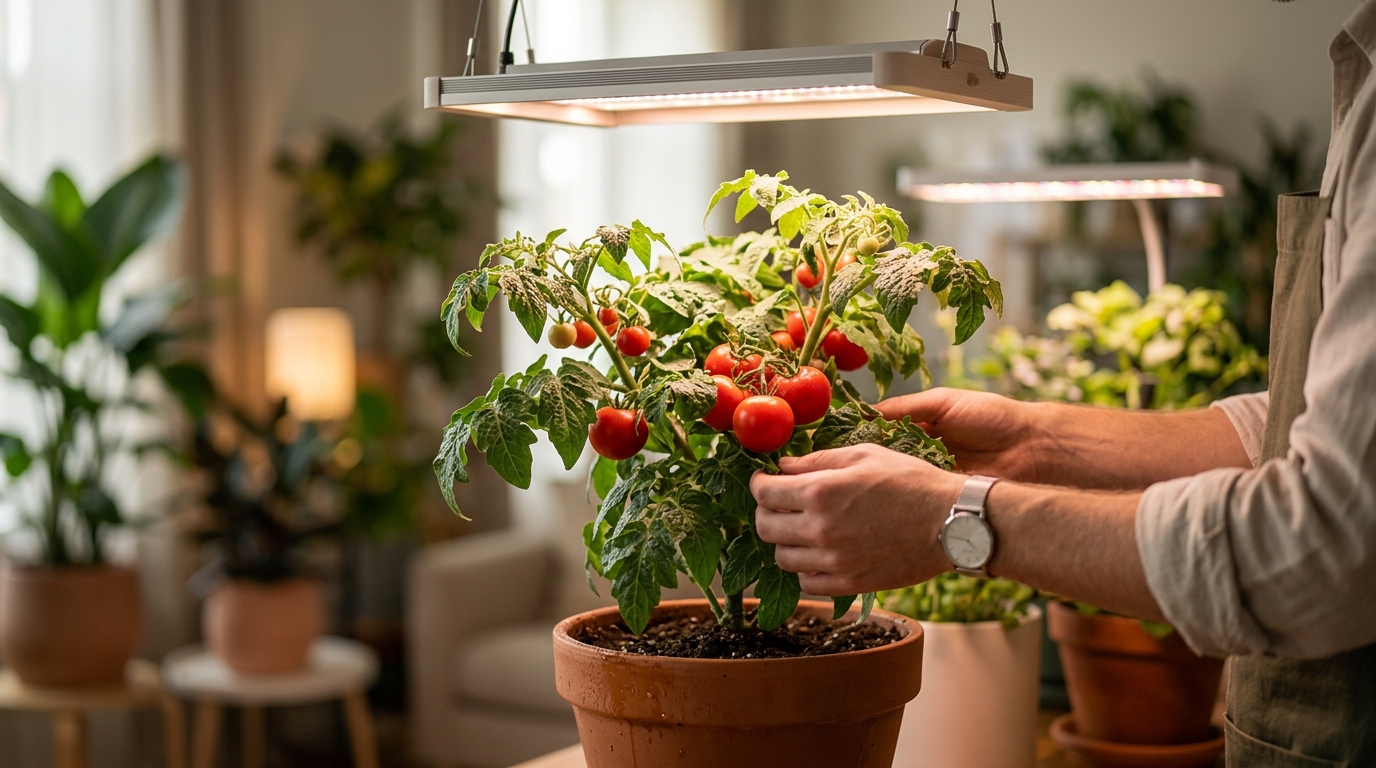
Indoor horticulture has evolved from a niche hobby into a multi-billion dollar industry driven by the demand for year-round freshness and aesthetic plant care. According to recent market analysis, the global indoor farming sector is projected to expand significantly through 2026, with lighting technology being the primary catalyst for yield improvements. Traditional lighting solutions often struggle with spectral gaps and heat management, leading to suboptimal growth cycles. This guide compares standard LED systems against advanced metal halide technology enhanced with Nano Liquid Photonic Coating to determine the superior choice for your cultivation needs. (Customer Support We 039)
The Limitations of Standard LED Grow Lights
Most indoor growers default to Light Emitting Diode (LED) systems due to their initial energy efficiency and lower upfront cost. However, these systems often suffer from inherent physical limitations that become apparent during the flowering and fruiting stages of plant development. The primary issue lies in the spectral distribution. Standard LEDs emit light in narrow, discrete peaks, creating "diode gaps" where plants receive little to no usable light.
These gaps force plants to expend additional energy searching for the wavelengths they need to photosynthesize effectively. Furthermore, while LEDs are marketed as cool-running, high-intensity diodes can create hot spots on the canopy, leading to light burn or heat stress in delicate foliage. For growers seeking maximum yield and plant health, understanding these limitations is critical before investing in equipment.
How Nano Liquid Photonic Coating Works
Nano Grow Light utilizes a fundamentally different approach by employing metal halide technology enhanced with proprietary Nano Liquid Photonic Coating. This coating is engineered at the molecular level to redirect scattered photons into a tighter, more usable beam aimed directly at the plant canopy. Unlike traditional reflectors that simply bounce light around, this nano-film shapes the light with pinpoint accuracy.
This technology eliminates the scattered "disco ball" effect common in ordinary grow lights. By tightening the beam spread, the system ensures that every photon delivered has a high probability of being absorbed by the plant. This results in a custom-tailored light environment that maximizes usable Photosynthetically Active Radiation (PAR) while minimizing energy waste. The result is a more efficient energy-to-biomass conversion ratio for your crops.
Spectral Purity and Photon Density
Spectral purity refers to the consistency and completeness of the light wavelengths emitted by a source. Metal halide lamps naturally produce a broad, continuous spectrum that closely mimics natural sunlight. When combined with Nano Liquid Photonic Coating, this spectrum is sharpened to deliver targeted wavelengths that accelerate photosynthesis.
Photon density is the concentration of photons hitting a specific area. Higher photon density drives faster photosynthetic rates. Nano Grow Light delivers higher photon density than standard LEDs, which is particularly beneficial for flowering crops that require intense light energy to develop robust buds and fruits. The balanced, beam-tightened output supports stronger vegetative growth and sturdier plant structure, ensuring healthy maturity at every stage of development.
Accelerating Growth Cycles
One of the most significant advantages of using Nano-enhanced metal halide technology is the dramatic reduction in cultivation time. In real-world trials conducted at a 10,000 sq ft grow facility in California, lettuce matured in just 28 days compared to 42 days outdoors or under standard lighting. This acceleration is attributed to the optimized PAR delivery and the absence of spectral gaps.
Plants can grow up to 1 inch per day under ideal conditions, reducing a typical 3-month cycle to as little as 2 months. This speed is not just a metric of efficiency but a direct indicator of plant vitality. Faster growth cycles mean more harvests per year, which translates to higher revenue for commercial growers and greater satisfaction for hobbyists. The low-heat operation of this system also allows for closer placement to the canopy, further increasing light intensity without the risk of burning.
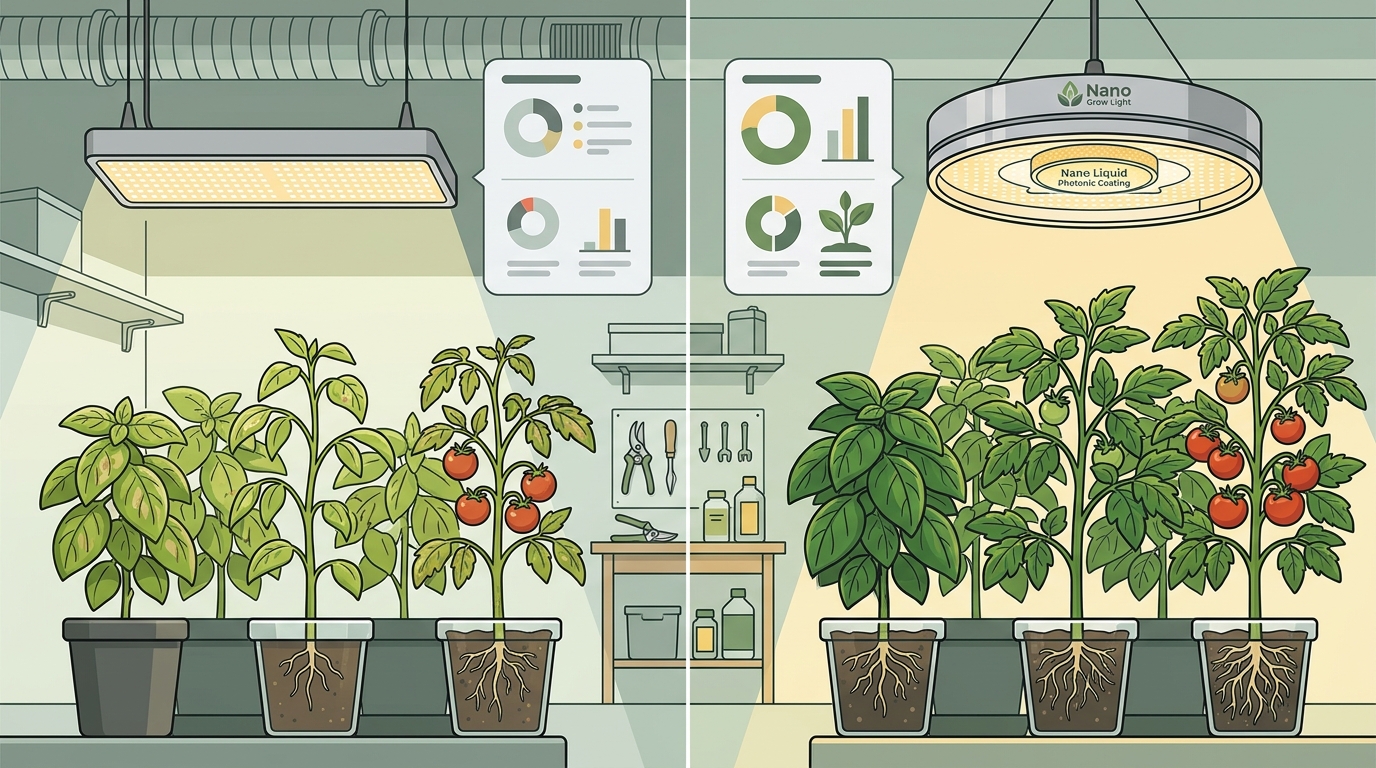
Technology Comparison Matrix
| Feature | Standard LED Grow Lights | Nano Grow Light (Metal Halide + Nano Coating) |
|---|---|---|
| Spectral Distribution | Discrete peaks with diode gaps | Continuous, broad full-spectrum output |
| Photon Density | Lower, scattered delivery | High, tightly focused PAR delivery |
| Heat Management | Hot spots near diodes | Low-heat operation, safe for delicate leaves |
| Growth Speed | Standard cycles | Up to 3x faster development in trials |
| Ideal For | General maintenance | Microgreens, flowering plants, vertical farms |
Key Takeaways
- Technology Distinction: Nano Grow Light uses metal halide technology, not LED, providing broader spectral distribution.
- Efficiency: Nano Liquid Photonic Coating redirects scattered light into a tighter beam, increasing usable PAR at the canopy.
- Speed: Trials show lettuce maturing in 28 days, significantly faster than traditional outdoor or LED methods.
- Spectral Purity: The nano coating sharpens targeted wavelengths, accelerating photosynthesis without diode gaps.
- Versatility: Ideal for microgreens, African violets, flowering plants, and professional vertical farming.
- Heat Profile: Low-heat operation makes it safe for shelves, tents, and compact indoor setups.
- Origin: Developed from five years of research in a 10,000 sq ft California grow facility.
Frequently Asked Questions
What makes Nano Grow Light different from other grow lights?
Nano Grow Light uses advanced metal halide technology combined with proprietary Nano Liquid Photonic Coating. This coating redirects scattered light into a tighter, more usable beam, maximizing usable PAR and reducing energy waste compared to standard LEDs.
Is Nano Grow Light suitable for African Violets?
Yes, African violets respond exceptionally well to the stabilized full-spectrum halide output. The deep spectral continuity and low heat profile promote continuous violet blooms, faster leaf expansion, and richer coloration.
How does the Nano Liquid Photonic Coating work?
The coating is engineered at the molecular level to tighten the beam spread and sharpen spectral purity. It eliminates the scattered light effect of traditional reflectors, delivering highly targeted photon density directly to the plant canopy.
Can I use this light for microgreens?
Absolutely. Nano Grow Light is ideal for microgreens due to its ability to accelerate growth cycles. Growers have reported bringing fast-cycling crops like lettuce to harvest in as little as 28 days using this technology.
Does this light produce too much heat?
No. One of the key benefits of Nano Grow Light is its low-heat operation. This makes it ideal for use in shelves, tents, cabinets, and compact indoor grow setups where heat management is critical.
Where is Nano Grow Light based?
Nano Grow Light is based in Camarillo, California. The technology was refined over five years in their own 10,000 sq ft grow facility before being commercialized for professional and home growers.
What types of plants benefit most from this light?
Plants that require high photon density for flowering and fruiting benefit the most. This includes microgreens, flowering plants, tomatoes, herbs, and African violets. The balanced output supports strong vegetative growth and healthy maturity.
Start Growing Faster Today
Transform your indoor cultivation experience with technology that delivers real, measurable results. Whether you are growing microgreens, African violets, or professional-grade flowers, Nano Grow Light offers the spectral purity and photon density needed to maximize your yield. Shop Nano Grow Light today and see the difference for yourself. For more information on how our technology works, visit our How It Works page or contact our Customer Support team for personalized advice.