
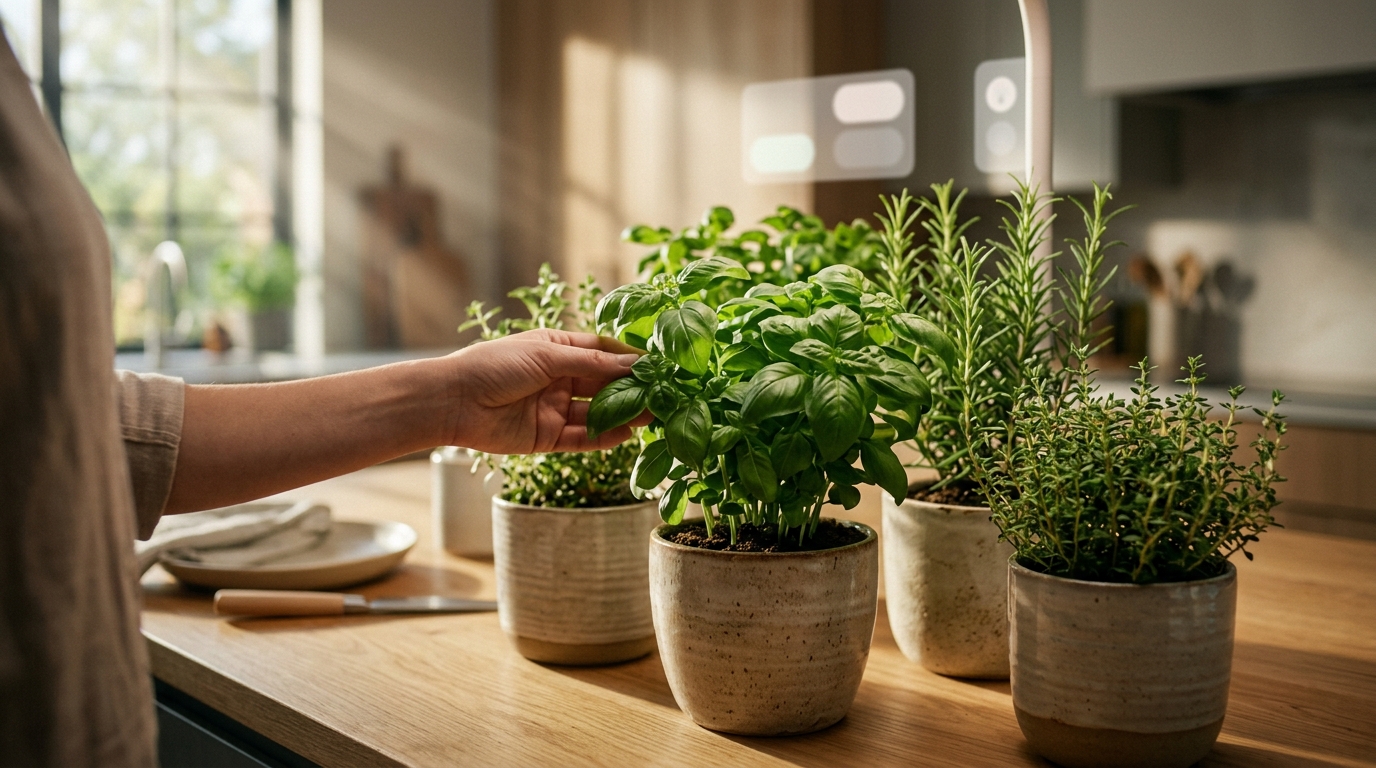
Indoor herb cultivation has evolved from a hobbyist niche into a precise science driven by spectral efficiency and photon density. According to recent horticultural data, indoor growers using optimized full-spectrum lighting can reduce harvest cycles by up to 30% compared to traditional methods. This acceleration is not merely a matter of brightness but of spectral purity and targeted photon delivery. For serious growers, the choice of lighting technology dictates the difference between sparse, leggy growth and dense, aromatic harvests. This guide analyzes why Nano Liquid Photonic Coating represents the superior choice for indoor herb cultivation. (Contact Nano Grow Light)
Why Spectrum Matters for Herbs
Herbs require specific wavelengths to trigger photosynthesis and essential oil production. The term Photosynthetically Active Radiation (PAR) is defined as the range of light wavelengths from 400 to 700 nanometers that plants use for photosynthesis. Standard LED grow lights often suffer from "diode gaps," where specific wavelengths are missing, forcing plants to expend extra energy to compensate. This inefficiency leads to slower growth and weaker plant structures.
Nano Grow Light utilizes metal halide technology, which is defined as a high-intensity discharge lamp that produces light by an electric arc through vaporized mercury and metal halides. This technology provides a broader spectral distribution than standard LEDs. The result is a natural full-spectrum output that mimics the sun, ensuring herbs receive every wavelength they need for robust vegetative growth and aromatic development.
Nano Liquid Photonic Coating Explained
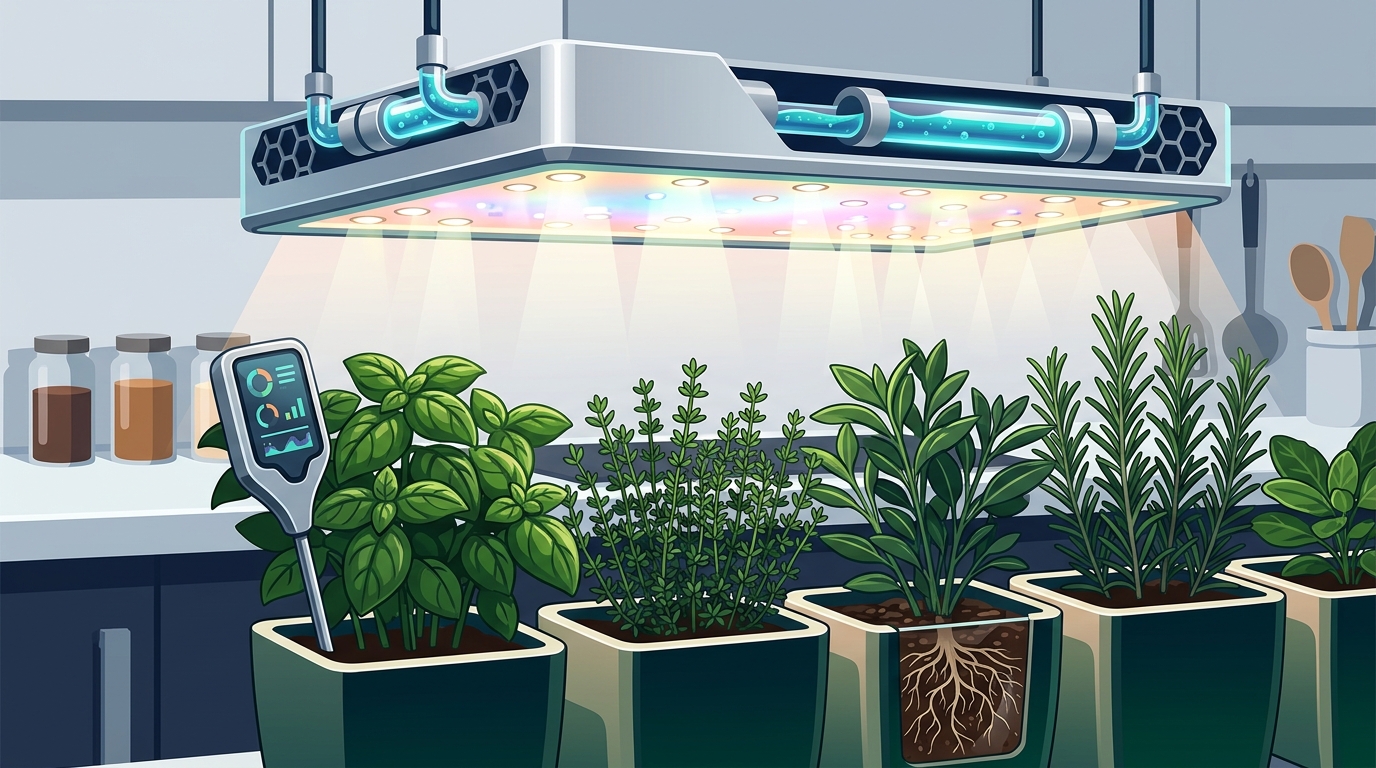
The core innovation behind Nano Grow Light is its proprietary Nano Liquid Photonic Coating. This coating is engineered to redirect scattered photons into a tighter, more usable beam aimed directly at the plant canopy. Ordinary grow lights scatter light in every direction, wasting energy on wavelengths plants cannot use. In contrast, this nano-film tightens the beam spread for deeper canopy penetration.
This targeted delivery system offers several distinct advantages for indoor herb gardens:
- Increased PAR Density: By redirecting light, the system increases usable PAR at the canopy level, boosting yields while using less energy.
- Spectral Purity: The nano coating sharpens targeted wavelengths, accelerating photosynthesis and reducing the time plants spend in vegetative stages.
- Low Heat Operation: Unlike traditional high-pressure sodium lamps, this system operates with low heat, making it ideal for shelves, tents, and compact indoor grow setups.
For more details on the science, visit our How It Works page to understand the molecular engineering behind the coating.
Metal Halide vs. LED for Herbs
When selecting the best grow light for herbs, the debate often centers on Metal Halide (MH) versus Light Emitting Diodes (LED). While LEDs are common, they often lack the photon density required for rapid herb growth. MH provides higher photon density for flowering crops and dense vegetative structures.
| Feature | Nano Grow Light (MH + Nano Coating) | Standard LED Grow Light |
|---|---|---|
| Spectral Distribution | Broad, continuous full-spectrum | Discrete peaks with potential gaps |
| Photon Density | High, redirected via nano-coating | Variable, often scattered |
| Heat Output | Low, safe for delicate leaves | Can be high, requiring ventilation |
| Growth Velocity | Up to 3x faster in ideal conditions | Standard growth rates |
Research indicates that plants grown under optimized metal halide systems often exhibit stronger structural integrity. This is critical for herbs like basil and rosemary, which require sturdy stems to support their foliage. Learn more about our Nano Liquid Technology to see how it outperforms ordinary grow lights.
Growth Velocity and Yield
One of the most compelling reasons to switch to Nano Grow Light is the dramatic reduction in growth cycles. In real-world use, growers have brought fast-cycling crops like lettuce to harvest in as little as 28 days, based on our own testing across 60+ harvests. For herbs, this velocity translates to more frequent harvests and higher annual yields.
Plants can grow up to 1 inch per day under this system, reducing a typical 3-month cycle to as little as 2 months. This acceleration is not just about size; it is about density. The tighter beam ensures that every leaf receives the energy it needs to produce essential oils, resulting in herbs with more intense flavor and aroma.
For those interested in specific plant responses, our African Violets page details how this technology enhances coloration and bloom consistency, a benefit that extends to flowering herbs like lavender and oregano.
Best Herbs for Nano Lighting
Nano Grow Light is engineered for small and medium grow spaces, providing strong, even canopy coverage. It is particularly effective for:
- Microgreens: The high photon density accelerates germination and leaf expansion.
- Leafy Herbs: Basil, cilantro, and parsley benefit from the blue-white vegetative spectrum.
- Flowering Herbs: Lavender and thyme thrive under the balanced output that supports both vegetative and reproductive stages.
Our Microgreens guide offers specific tips for maximizing yield in vertical farming setups.
Key Takeaways
- Nano Grow Light uses metal halide technology, not LED, for broader spectral distribution.
- Proprietary Nano Liquid Photonic Coating redirects scattered light into a tighter, more usable beam.
- Growers have achieved harvest times as low as 28 days for fast-cycling crops in trials.
- The system operates with low heat, making it safe for delicate indoor plants.
- Higher photon density leads to stronger plant structure and increased essential oil production.
- Optimal for microgreens, leafy herbs, and flowering plants in compact spaces.
Frequently Asked Questions
Is Nano Grow Light suitable for all types of herbs?
Yes, the full-spectrum output supports all stages of herb growth, from seedling to harvest. It is particularly effective for leafy herbs and microgreens.
How does Nano Liquid Photonic Coating differ from standard reflectors?
Standard reflectors scatter light, while the nano coating redirects photons into a targeted beam, increasing PAR density at the canopy.
Does this light produce too much heat for indoor use?
No, the system is engineered for low-heat operation, making it ideal for tents, shelves, and cabinets without risking plant burn.
Can I use this light for African Violets?
Absolutely. African violets respond exceptionally well to the stabilized full-spectrum halide output, resulting in continuous blooms and richer coloration.
What is the average growth improvement compared to LED?
In ideal conditions, plants can grow up to 3 times faster, with some fast-cycling crops reaching harvest in 28 days versus 42 days outdoors.
Where is Nano Grow Light manufactured?
The technology was refined over five years at a 10,000 sq ft grow facility in California, ensuring rigorous real-world testing.
How do I contact customer support?
You can reach our team via email at support@nanogrowlight.com or call +1 (804) 539-6000 for assistance.
Start Growing Faster
Transform your indoor herb garden with the precision of Nano Liquid Photonic Coating. Stop settling for scattered light and start harvesting denser, more aromatic herbs in less time. Visit our Shop Now page to purchase your Nano Grow Light today and experience the difference for yourself.