
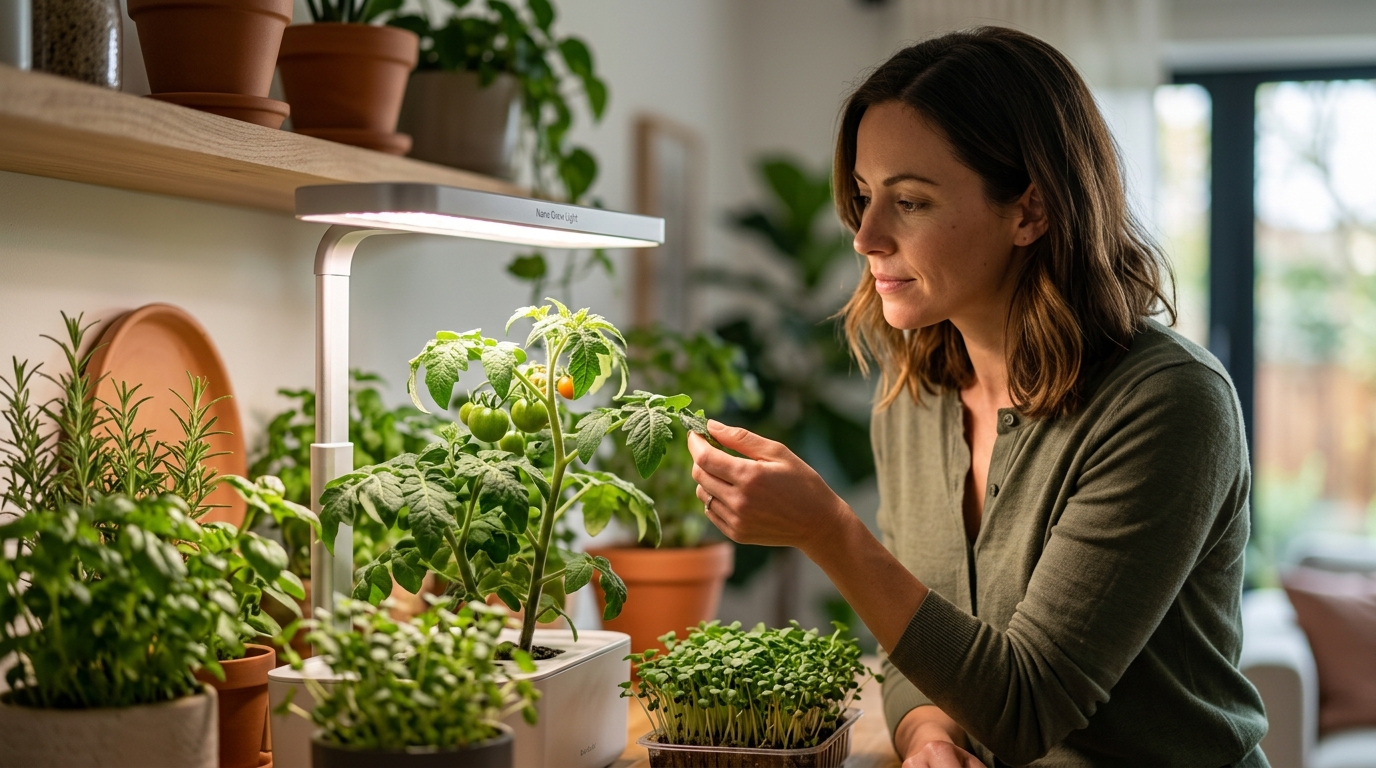
Indoor horticulture has evolved from a niche hobby into a multi-billion dollar industry driven by the demand for fresh, local produce and year-round cultivation. According to recent market analysis, the global indoor farming market is projected to expand significantly through 2030, with technology playing a pivotal role in yield optimization. The core driver of this growth is the efficiency of artificial lighting systems, which directly dictate plant health, flowering rates, and overall crop quality. Understanding the science behind photon delivery is essential for any grower aiming to maximize their return on investment. (Customer Support We 039)
Understanding Spectral Analysis and PAR
When evaluating indoor grow lights, the most critical metric is Photosynthetically Active Radiation (PAR). PAR measures the range of light wavelengths, specifically between 400 and 700 nanometers, that plants use for photosynthesis. However, not all PAR is created equal. The spectral distribution determines how effectively those photons are absorbed by plant chlorophyll.
Traditional lighting sources often emit broad, scattered spectra that include wavelengths plants cannot utilize, resulting in wasted energy. In contrast, advanced horticultural systems focus on spectral purity. This means delivering a concentrated beam of light that matches the specific absorption peaks of chlorophyll A and B. For vegetative growth, a blue-dominant spectrum promotes strong, compact stem development. During the flowering stage, a balanced full-spectrum output encourages robust bud formation and fruiting.
Photon density is equally important. Higher photon density at the canopy level ensures that light penetrates deeper into the plant structure, reducing the risk of lower leaves becoming light-starved. This density is what allows for faster growth cycles and higher yields per square foot. By prioritizing lights with high PAR output and tight spectral focus, growers can significantly reduce cultivation time.
Metal Halide vs. LED Technology
The debate between Metal Halide (MH) and Light Emitting Diode (LED) technology is central to modern indoor gardening. Each technology offers distinct advantages depending on the grower's specific needs, budget, and crop type.
The Case for Metal Halide
Metal Halide lamps have long been the standard for professional indoor growers. They provide a natural, full-spectrum output that closely mimics sunlight. Unlike LEDs, which can sometimes suffer from "diode gaps" where certain wavelengths are missing, MH lamps deliver continuous spectral coverage. This continuity is particularly beneficial for flowering crops that require a broad range of wavelengths to trigger optimal hormonal responses.
Furthermore, MH technology is known for its high photon density. This density is crucial for dense canopies, ensuring that light reaches the lower branches of tall plants. For growers focusing on microgreens or African violets, the stabilized halide output has been shown to enhance coloration and bloom consistency. The natural warmth of MH light also supports a more organic growth rhythm, which many traditional gardeners prefer.
The Efficiency of Modern LEDs
LEDs have gained popularity due to their energy efficiency and low heat output. They allow for precise control over the light spectrum, enabling growers to tune the light for specific growth stages. However, standard LEDs can scatter light inefficiently, requiring multiple fixtures to cover a single area. This scattering effect, often described as a "disco ball" effect, wastes energy and creates hot spots that can stress plants.
While LEDs are generally more energy-efficient, the gap is narrowing with advancements in optical engineering. The key differentiator is no longer just the light source, but how that light is directed. Advanced optical coatings are now being used to tighten the beam spread of traditional lamps, combining the spectral benefits of MH with the efficiency of modern optics.
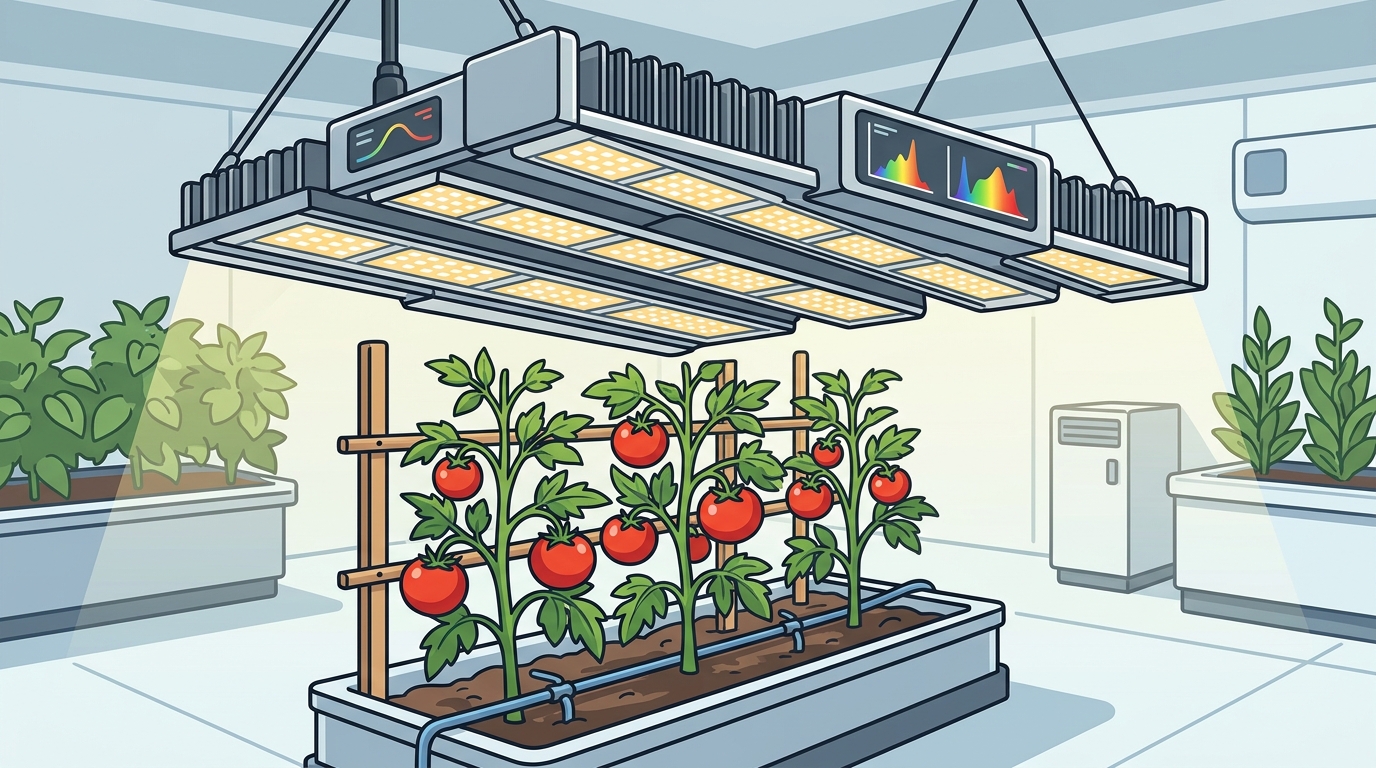
The Role of Nano Liquid Photonic Coating
One of the most significant innovations in recent years is the application of Nano Liquid Photonic Coating to horticultural lighting. This technology addresses the primary limitation of traditional reflectors: photon scatter. Ordinary grow lights emit photons in all directions, with a significant portion missing the plant canopy entirely.
Nano Liquid Photonic Coating works by redirecting scattered light into a tighter, more usable beam. This process increases the usable PAR at the canopy level, ensuring that more photons are absorbed by the plant rather than lost to the environment. The result is a sharper spectral purity and a more efficient energy profile.
Accelerated Growth Cycles
The impact of this technology on plant development is measurable. In controlled trials, crops such as lettuce have been harvested in as little as 28 days using nano-enhanced lighting, compared to the typical 42-day cycle for outdoor or standard indoor growing. This acceleration is due to the increased photon density and the elimination of wasted wavelengths.
For hobbyists and commercial growers alike, this means a reduction in the time from seed to harvest. Plants can grow up to one inch per day under optimal nano-enhanced conditions. This rapid development is particularly valuable for fast-cycling crops like microgreens and herbs, where speed is directly correlated with profitability.
Low-Heat Operation
Another benefit of nano-coated systems is their ability to operate at lower temperatures. By tightening the beam and reducing energy waste, the system generates less excess heat. This is critical for small grow spaces, such as tents, cabinets, or shelves, where heat buildup can stunt growth or kill plants. The low-heat operation allows for closer placement of the light to the canopy, further increasing PAR intensity without the risk of thermal damage.
Heat Management and Energy Efficiency
Heat management is a practical consideration that often determines the success of an indoor grow operation. Excessive heat can lead to transpiration stress, where plants lose water faster than they can absorb it. It can also degrade the quality of the harvest, affecting flavor and aroma compounds in herbs and flowers.
When buying a grow light, consider the thermal output relative to its wattage. High-efficiency systems minimize heat generation while maximizing light output. This is particularly important for vertical farming setups, where multiple layers of plants are stacked. In these environments, heat from upper lights can easily cook the plants below if not properly managed.
Energy efficiency is also a major cost factor. While high-efficiency lights may have a higher upfront cost, the reduction in electricity bills and cooling costs often results in a faster return on investment. Look for systems that offer a high lumens-per-watt ratio and have been tested for long-term durability.
Grow Light Technology Comparison
The following table summarizes the key differences between traditional Metal Halide, standard LED, and nano-enhanced Metal Halide systems to help you make an informed decision.
| Feature | Traditional Metal Halide | Standard LED | Nano-Enhanced MH |
|---|---|---|---|
| Spectral Output | Full-spectrum, continuous | Tunable, potential gaps | Full-spectrum, sharpened |
| Photon Density | High | Moderate to High | Ultra-High |
| Heat Output | Moderate | Low | Low |
| Beam Spread | Scattered | Wide, diffuse | Tight, targeted |
| Best For | General flowering | Energy efficiency | Maximized yield & speed |
Key Takeaways
- Spectral Purity Matters: Look for lights that deliver targeted wavelengths rather than broad, scattered spectra to maximize photosynthesis.
- PAR is Critical: Ensure the light provides sufficient Photosynthetically Active Radiation to penetrate the canopy and support lower leaves.
- Nano Technology Accelerates Growth: Nano Liquid Photonic Coating can reduce harvest times by up to 30% by redirecting wasted photons.
- Heat Management is Essential: Choose low-heat systems for small spaces to prevent thermal stress and allow closer light placement.
- MH Offers Natural Spectrum: Metal Halide technology provides a continuous full-spectrum output that is ideal for flowering and color enhancement.
- Verify Real-World Data: Look for growers who have tested their systems across multiple harvests, such as the 60+ trials conducted by Nano Grow Light.
- Consider Crop Type: African violets and microgreens respond exceptionally well to stabilized halide output and high photon density.
Frequently Asked Questions
What is the most important factor when choosing a grow light?
The most important factor is the Photosynthetically Active Radiation (PAR) output and spectral distribution. A light must deliver enough usable photons in the correct wavelengths to support the specific growth stage of your plants.
Are metal halide lights better than LEDs for flowering?
Metal halide lights provide a natural, continuous full-spectrum output that many growers prefer for flowering. They offer high photon density and deep spectral continuity, which can enhance bloom quality and coloration.
How does nano liquid photonic coating work?
Nano Liquid Photonic Coating redirects scattered photons into a tighter, more usable beam. This increases the photon density at the canopy level and reduces energy waste, leading to faster plant development.
Can I use grow lights for African violets?
Yes, African violets respond exceptionally well to stabilized full-spectrum halide output. The consistent light quality promotes continuous violet blooms and faster leaf expansion.
What is the typical harvest time for lettuce with nano-enhanced lights?
In real-world testing, lettuce has been harvested in as little as 28 days using nano-enhanced lighting, compared to the standard 42-day cycle for traditional methods.
Do nano-coated lights run hot?
No, nano-coated systems are engineered for low-heat operation. By reducing energy waste, they generate less excess heat, making them ideal for compact grow spaces.
How do I calculate the right wattage for my grow space?
Wattage alone is not a reliable metric due to varying efficiencies. Instead, look for the PAR output per square foot. A general rule is to aim for 20-40 watts of high-efficiency light per square foot, depending on the light intensity.
Start Growing Faster Today
Transform your indoor garden with technology designed for maximum yield and efficiency. Explore the Nano Grow Light collection to discover how nano-enhanced spectrum performance can accelerate your cultivation results. Visit our Customer Success Stories to see real-world growth data, or contact our team at Nano Grow Light for personalized support.