
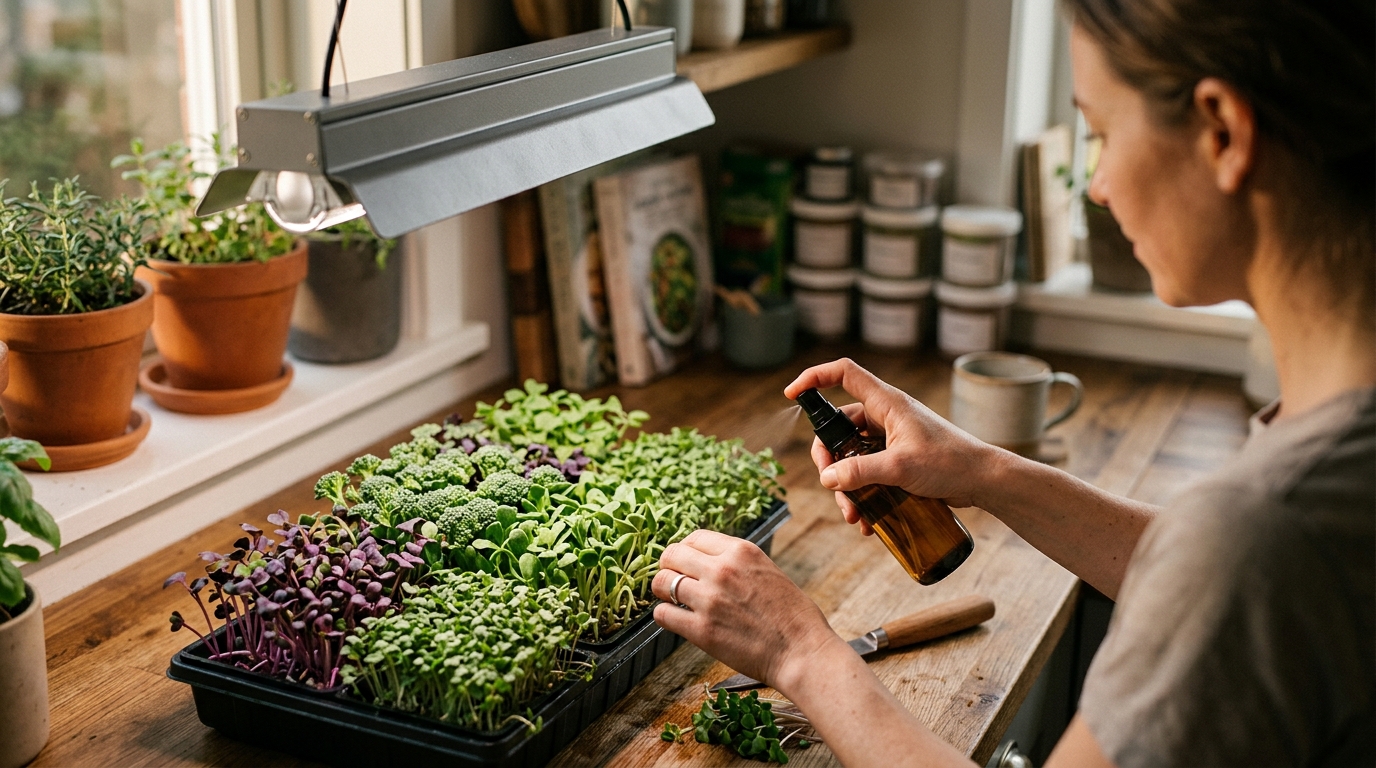
The best grow light for home microgreens is a compact, full-spectrum fixture that delivers high Photosynthetically Active Radiation (PAR) at close range. Nano Grow Light offers a 250W ceramic metal halide (CMH) option with a Nano Liquid Photonic Coating to concentrate light on dense trays. This guide covers mounting height, daily photoperiod, and spectral requirements for optimal indoor harvests.
Mounting Height and Light Intensity
Microgreens are densely planted crops that require concentrated light close to the canopy to prevent etiolation. The distance between the light source and the plant surface directly impacts the Photosynthetic Photon Flux Density (PPFD) received by the leaves. PPFD is the measurement of the number of photosynthetically active photons falling on a unit area per second. For microgreens, a PPFD range of 200 to 400 µmol/m²/s is typically ideal during the vegetative stage.
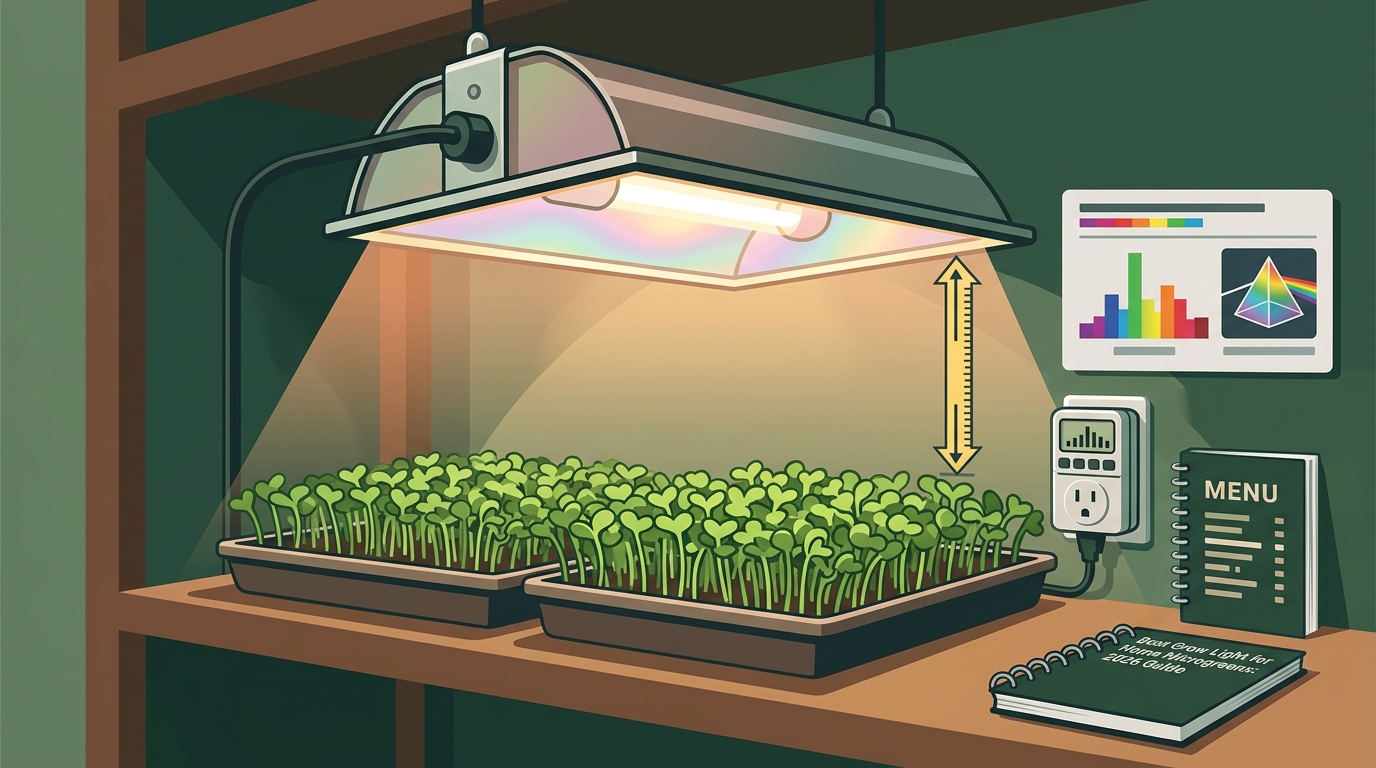
Nano Grow Light fixtures utilize a 250W CMH lamp paired with the Nano Liquid Photonic Coating. According to manufacturer-reported internal testing, this setup delivers a PPFD of 1040 µmol/m²/s at 12 inches, 720 µmol/m²/s at 18 inches, and 510 µmol/m²/s at 24 inches. These figures indicate that the fixture provides high intensity even at moderate distances. Growers should start with the fixture at 18 to 24 inches above the tray to avoid heat stress while ensuring sufficient light penetration.
Managing Heat and Distance
CMH lamps produce more radiant heat than typical LED fixtures. NanoGrowLight fixtures report approximately 340 BTU/hr of heat output and a surface temperature of roughly 45°C at steady state. Because microgreens are delicate, maintaining a safe distance is critical. If leaves show signs of scorching or wilting, raise the fixture by 2 to 3 inches. Conversely, if stems are stretching and pale, lower the fixture to increase light intensity.
Scaling Coverage for Multiple Trays
A single Nano Grow Light fixture covers an effective footprint of approximately 3.5 by 3.5 feet. This size is well-suited for a standard grow tent or a shelf with one or two large trays. For larger operations, growers can array multiple fixtures across rows or multi-tier racks. The microgreens growing guide on the Nano Grow Light website provides specific layout recommendations for maximizing canopy coverage.
Daily Photoperiod and Timing
Microgreens grow rapidly and require consistent light exposure to reach harvest size in 7 to 14 days. The daily photoperiod, or the number of hours the light is on each day, is a critical variable in this process. Photoperiod is the duration of light exposure a plant receives in a 24-hour cycle. Most microgreen varieties thrive under a 12 to 16 hour light schedule.
Using a timer is essential for maintaining consistency. A 14-hour photoperiod is a common starting point for leafy greens like arugula, kale, and radish. This duration provides enough light energy for photosynthesis while allowing a dark period for respiration and growth processes. Nano Grow Light fixtures are designed to handle continuous operation, but growers should monitor energy consumption and heat buildup in enclosed spaces.
Optimizing Light Schedules
While 14 hours is a standard baseline, some growers experiment with 16 hours to accelerate harvest times. However, extending the photoperiod beyond 16 hours rarely yields significant benefits and may increase electricity costs. The how it works page explains how the Nano Liquid Photonic Coating concentrates PAR, which can help maintain growth rates even with slightly shorter photoperiods by delivering higher intensity light.
Dark Period Importance
The dark period is not wasted time. Plants use this phase for cellular respiration and structural development. Ensuring a complete dark period of at least 8 hours helps prevent stress and promotes sturdy stems. For home growers, placing the grow area in a dark closet or using a light-tight tent ensures the plants receive the necessary darkness.
Spectral Requirements for Microgreens
The quality of light, measured by its spectral distribution, is as important as its intensity. Microgreens benefit from a full-spectrum light source that includes both blue and red wavelengths. Full-spectrum light is a light source that emits a continuous range of wavelengths similar to natural sunlight. This broad spectrum supports both vegetative growth and overall plant health.
Nano Grow Light uses a 250W Philips MasterColor 830 CMH lamp, which produces a continuous spectrum rather than the discrete peaks found in many LED fixtures. The Nano Liquid Photonic Coating enhances this spectrum by increasing blue and red reflectance. Manufacturer-reported data shows a 22.4% increase in blue spectrum and a 28.7% increase in red spectrum at the reflector exit. These shifts help direct more productive wavelengths toward the canopy, potentially leading to denser foliage and faster development.
Blue and Red Wavelengths
Blue light (400-500 nm) is crucial for vegetative growth and compact leaf structure. Red light (600-700 nm) drives photosynthesis and stem elongation. The balanced output of the CMH lamp, enhanced by the nano-coating, provides the right mix for microgreens. The technical spec sheet details these spectral gains, offering transparency on how the coating affects light delivery.
PAR Efficiency and Concentration
PAR efficiency measures how effectively a fixture converts electrical energy into usable light. Nano Grow Light reports a PAR efficiency of 2.4 µmol/J. Additionally, the coating creates a 1.34x PAR concentration factor, meaning more light is directed toward the plants rather than scattered into the room. This efficiency is particularly beneficial for home growers looking to minimize energy waste while maximizing yield.
Fixture Comparison for Microgreens
Choosing the right fixture depends on your space, budget, and desired light quality. The table below compares key features of the Nano Grow Light with general characteristics of other common indoor lighting options for microgreens.
| Feature | Nano Grow Light (250W CMH) | Typical LED Grow Light | Fluorescent T5 |
|---|---|---|---|
| Light Source | Ceramic Metal Halide (CMH) | LED Diodes | Fluorescent Tubes |
| Spectrum Type | Continuous Full-Spectrum | Discrete Peaks | Continuous (Limited) |
| Heat Output | High (~340 BTU/hr) | Low | Low |
| PPFD at 18in | 720 µmol/m²/s | Varies (often 300-600) | Low (often <200) |
| Best For | Dense Trays, High Intensity | Energy Efficiency, Low Heat | Small Spaces, Low Budget |
| Special Technology | Nano Liquid Photonic Coating | None Standard | None Standard |
The Nano Grow Light stands out for its high PPFD and spectral enhancement. While LED fixtures are popular for their low heat, the CMH option offers a different light quality that some growers prefer for microgreens. The shop page lists available bundles, including single fixtures and multi-packs for larger setups.
Key Takeaways
- Mounting Height: Start with the fixture at 18-24 inches above the tray to balance light intensity and heat management.
- Photoperiod: Use a 14-hour daily light schedule for optimal microgreen growth and harvest speed.
- Heat Management: Monitor surface temperature and adjust distance if plants show signs of heat stress.
- Coverage: A single fixture covers approximately 3.5 by 3.5 feet, suitable for standard home grow tents.
- Efficiency: The Nano Liquid Photonic Coating increases PAR concentration by 1.34x, reducing light waste.
- Consistency: Use a timer to ensure consistent light and dark periods for predictable results.
- Scaling: Array multiple fixtures for larger operations, maintaining uniform light distribution across rows.
Frequently Asked Questions
What is the best mounting height for microgreens under a CMH light?
For a 250W CMH fixture like the Nano Grow Light, start at 18 to 24 inches above the tray. This distance provides sufficient PPFD while managing heat. Adjust based on plant response, raising the light if leaves scorch or lowering it if stems stretch.
How many hours a day should microgreens get light?
A 14-hour photoperiod is ideal for most microgreens. This provides enough light for photosynthesis while allowing a dark period for respiration. Some growers use 16 hours, but 14 hours is a balanced starting point.
Is Nano Grow Light an LED or CMH fixture?
Nano Grow Light is a 250W ceramic metal halide (CMH) fixture. It is not an LED. The CMH lamp produces a continuous spectrum, which is enhanced by the Nano Liquid Photonic Coating on the reflector.
Does the Nano Liquid Photonic Coating really improve light delivery?
Manufacturer-reported testing indicates the coating increases PAR reflectance to 98.7% and shifts more light toward blue and red bands. These figures are from internal testing and have not been independently verified, but they suggest improved light concentration.
Can I use Nano Grow Light for other plants besides microgreens?
Yes, the fixture is suitable for various indoor plants, including African violets and herbs. The full-spectrum output and high intensity make it versatile for different growing needs, though heat management is key for delicate plants.
How do I maintain the Nano Grow Light fixture?
Regularly check the fixture for dust buildup on the reflector and lamp. Ensure ventilation is adequate to manage heat. For specific maintenance tips, refer to the customer support page for guidance on cleaning and troubleshooting.
Conclusion
Selecting the right grow light for microgreens involves balancing light intensity, spectrum, and heat management. The Nano Grow Light offers a robust solution with its 250W CMH lamp and Nano Liquid Photonic Coating, providing high PPFD and enhanced spectral delivery. By optimizing mounting height and photoperiod, home growers can achieve fast, healthy harvests. For more details on the technology and product options, visit the Nano Grow Light homepage to explore the full lineup and technical resources.