
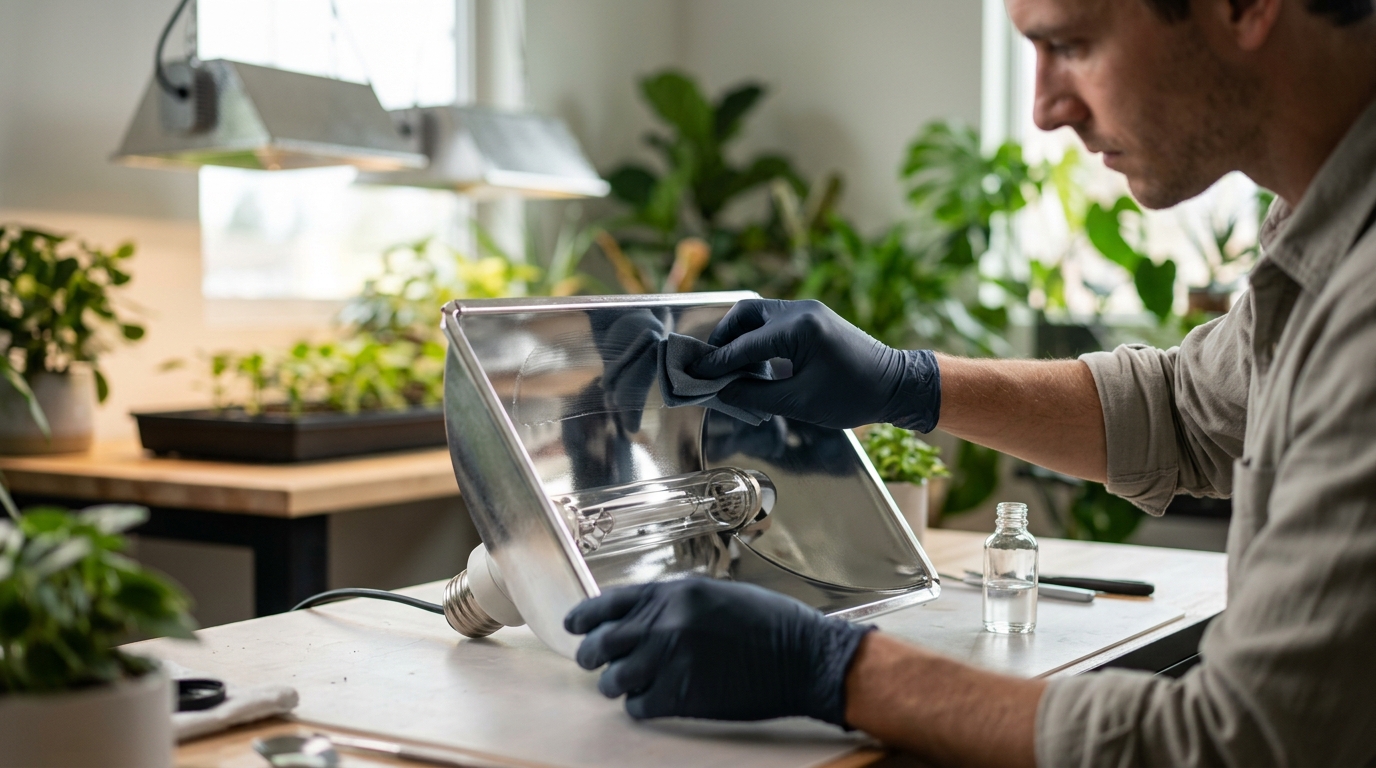
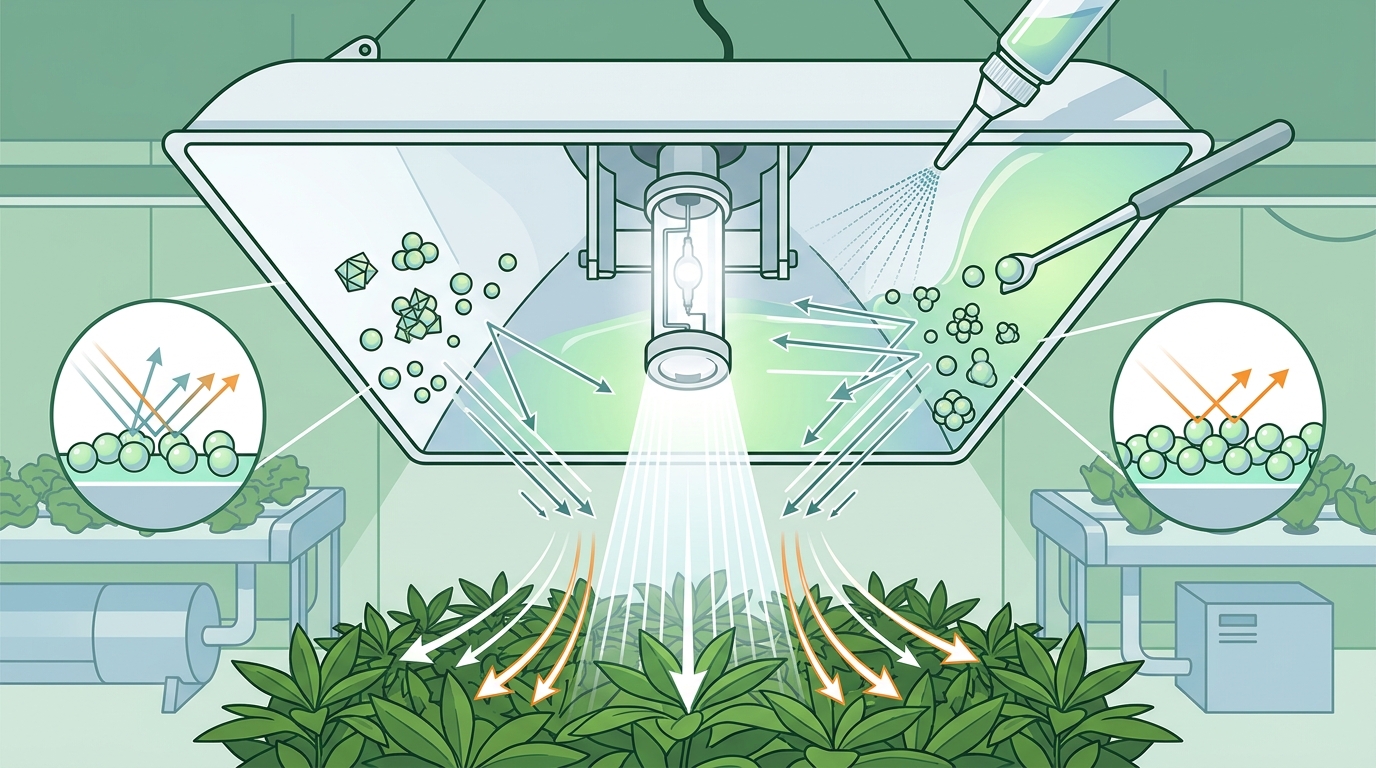
Applying Nano Liquid Photonic Coating to your grow light fixtures is a precise process that can significantly enhance your indoor horticulture results. This proprietary technology uses nano-scale clusters to redirect scattered photons into a tighter, more usable beam for faster plant growth. According to manufacturer-reported internal testing, this coating increases reflectance and concentrates more of the fixture’s output onto the grow area. Proper application ensures that your ceramic metal halide (CMH) lamps operate at peak efficiency, delivering denser Photosynthetically Active Radiation (PAR) to your plant canopy.
Preparation and Safety Protocols
Before you begin the application process, you must ensure that your workspace and materials are prepared correctly. Nano Liquid Photonic Coating is a specialized chemical product that requires careful handling to maintain its efficacy and safety. The coating consists of nano-scale clusters, approximately 20 to 80 nanometers in size, which are applied to the fixture’s reflector. These clusters are delicate and can be compromised by improper handling or contamination.
First, gather all necessary tools. You will need high-purity isopropyl alcohol (99% or higher), lint-free microfiber cloths, nitrile gloves, and a clean, dust-free environment. It is critical to work in a room with minimal air circulation to prevent dust particles from settling on the wet coating. Dust contamination can create micro-scratches or uneven spots in the cured layer, reducing the overall reflectance efficiency. According to general industrial coating standards, cleanroom environments are preferred for nano-scale applications to ensure uniformity.
Wear nitrile gloves throughout the entire process. Oils from human skin can permanently damage the nano-structure of the coating if they come into contact with the reflector surface before curing. Additionally, ensure that your grow light fixture is completely cool and disconnected from any power source. Ceramic metal halide (CMH) fixtures, such as those used in Nano Grow Light systems, can retain heat for extended periods. Working on a warm fixture can cause the coating to cure too rapidly, leading to cracking or poor adhesion.
Surface Cleaning and Degreasing
The success of the Nano Liquid Photonic Coating application depends entirely on the cleanliness of the reflector surface. Any residual oil, dust, or oxidation on the bare aluminum or existing reflector will prevent the nano-clusters from bonding correctly. This step is non-negotiable for achieving the maximum possible PAR delivery.
Start by removing the reflector from the fixture if possible. If the fixture design does not allow for easy removal, you must carefully mask off any surrounding components, such as the lamp socket, wiring, or heat sinks, to prevent accidental overspray or drips. Use a high-quality degreaser or 99% isopropyl alcohol to wipe down the entire reflector surface. Use a fresh, lint-free microfiber cloth for each wipe to avoid redistributing contaminants.
Inspect the surface under bright, angled light. Look for any remaining smudges, fingerprints, or oily residues. If any are visible, repeat the cleaning process until the surface is perfectly clear. The Nano Liquid Photonic Coating is designed to bond at a molecular level with the substrate. A clean surface ensures that the 2 to 6 micron thick cured coating adheres uniformly. According to materials science principles, surface energy plays a critical role in coating adhesion, making this cleaning step vital for long-term durability.
Application Technique and Layering
Applying the Nano Liquid Photonic Coating requires a steady hand and a consistent technique. The goal is to create an even, thin layer that covers the entire reflector surface without pooling or running. The coating is typically applied using a specialized spray gun or atomizer designed for nano-fluids. If you are using a spray method, ensure the nozzle is clean and calibrated for fine mist output.
Hold the spray source at a consistent distance from the reflector, usually between 6 to 12 inches, depending on the specific equipment used. Move the spray source in a smooth, overlapping motion to ensure even coverage. Avoid stopping or hesitating in one spot, as this can lead to thick spots that may crack during curing. The coating should appear as a uniform, slightly translucent layer when wet. Do not attempt to apply the coating in thick layers. Multiple thin coats are always superior to a single thick coat.
If you are applying the coating to a Nano Grow Light fixture, follow the specific guidelines provided in the technical spec sheet. The company recommends applying the coating in a controlled environment to maintain consistency. For larger grow spaces, you may need to apply the coating to multiple fixtures. Ensure that each fixture is treated with the same level of care and precision to maintain uniform light distribution across your entire grow area. The Nano Liquid Photonic Coating redirects scattered light into a tighter, more usable beam, which is essential for maximizing the output of your 250W ceramic metal halide lamps.
Curing and Drying Process
After application, the coating must cure properly to achieve its full photonic enhancement capabilities. Curing involves the evaporation of solvents and the formation of a stable nano-structured network on the reflector surface. This process typically takes several hours to complete, depending on ambient temperature and humidity levels.
Place the coated reflector in a warm, dry, and dust-free environment to cure. Avoid direct sunlight or high-heat sources during the initial curing phase, as rapid temperature changes can cause stress in the nano-layer. The cured coating measures approximately 2 to 6 microns thick. This thin layer is designed to be durable and resistant to the harsh conditions of an indoor grow environment, including high humidity and temperature fluctuations.
According to manufacturer-reported internal testing, the curing process is critical for activating the photonic properties of the coating. Once cured, the coating increases visible-light and PAR reflectance compared to a bare aluminum reflector. It also shifts more of the reflected spectrum toward the blue and red wavelength bands used in photosynthesis. Do not reinstall the reflector until it is completely dry and cured. Premature installation can lead to smudging or uneven curing, which will compromise the performance of your grow light.
Maintenance and Long-Term Care
Once the Nano Liquid Photonic Coating is applied and cured, your grow light fixture is ready for use. However, maintaining the integrity of the coating is essential for long-term performance. The coating is designed to be durable, but it can be damaged by abrasive cleaning agents or rough handling.
Clean the reflector surface periodically using only soft, lint-free cloths and mild cleaning solutions. Avoid using harsh chemicals, abrasives, or high-pressure water sprays, as these can degrade the nano-structure over time. If you notice any signs of peeling or significant damage to the coating, it may be necessary to reapply the coating to restore optimal performance. Regular maintenance ensures that your grow lights continue to deliver the dense, targeted PAR required for healthy plant growth.
For more information on the technical specifications of the Nano Liquid Photonic Coating, visit the Nano Liquid Photonic Coating™ Reflector — Technical Spec Sheet page. This resource provides detailed data on reflectance rates, spectral output, and application guidelines. Understanding these specifications can help you make informed decisions about your indoor horticulture setup. The Nano Liquid Photonic Coating is a key component of the Nano Grow Light system, designed to outperform ordinary grow lights by redirecting and tightening light into a denser, more usable PAR field.
Key Takeaways
- Nano Liquid Photonic Coating uses nano-scale clusters (20-80 nm) to enhance reflectance and PAR delivery.
- Surface preparation is critical; use 99% isopropyl alcohol and lint-free cloths for degreasing.
- Apply the coating in thin, even layers using a fine mist spray to avoid pooling.
- Cure the coating in a dust-free environment for several hours to ensure proper bonding.
- The cured layer is approximately 2 to 6 microns thick and resistant to standard grow room conditions.
- Regular maintenance with soft cloths and mild cleaners preserves the coating's integrity.
- Proper application can lead to up to 3x faster development in ideal conditions, according to internal testing.
Frequently Asked Questions
Can I apply Nano Liquid Photonic Coating to any grow light reflector?
While the coating can be applied to various reflective surfaces, it is specifically engineered for bare or painted aluminum reflectors found in ceramic metal halide (CMH) fixtures. It may not adhere properly to already coated or textured surfaces without extensive preparation.
How long does the Nano Liquid Photonic Coating last?
When applied and maintained correctly, the cured coating is designed to be durable and long-lasting. It resists the high humidity and temperature fluctuations typical of indoor grow environments. However, abrasive cleaning or physical damage can reduce its lifespan.
Does the coating change the color temperature of the light?
The coating itself does not change the color temperature of the lamp. However, it shifts more of the reflected spectrum toward the blue and red wavelength bands used in photosynthesis, enhancing the efficiency of the light output.
Is the Nano Liquid Photonic Coating safe for plants?
Yes, the cured coating is inert and safe for use in indoor horticulture. It does not emit any harmful substances or alter the chemical composition of the light. It simply redirects existing photons more efficiently.
How do I know if the coating has cured properly?
The coating is considered cured when it is completely dry to the touch and has lost any initial solvent smell. It will appear as a uniform, slightly translucent layer. If it feels tacky or sticky, it needs more time to cure.
Can I reapply the coating if it gets damaged?
Yes, you can reapply the coating if it becomes damaged. However, you must first clean the surface thoroughly to remove any loose particles or contaminants before applying a new layer.
What is the difference between Nano Liquid Photonic Coating and standard reflectors?
Standard reflectors scatter light in all directions, wasting energy. Nano Liquid Photonic Coating redirects and tightens that light into a denser, more usable PAR field aimed straight at the canopy, improving performance per watt.
Ready to Enhance Your Grow Light Efficiency?
Applying Nano Liquid Photonic Coating is a powerful way to maximize the output of your indoor grow lights. By following these step-by-step instructions, you can ensure that your fixtures deliver the dense, targeted PAR required for healthy plant growth. For more information on our products and technology, visit the About NanoGrowLight page or explore our Blog for more tips and insights.
If you are ready to experience the difference that Nano Liquid Photonic Coating can make, Shop Nano Grow Light today. Our 250W ceramic metal halide fixtures are designed to work seamlessly with this advanced technology, providing you with the best possible results for your indoor horticulture projects. Contact us at NanoGrowLight Contact for any questions or support.