

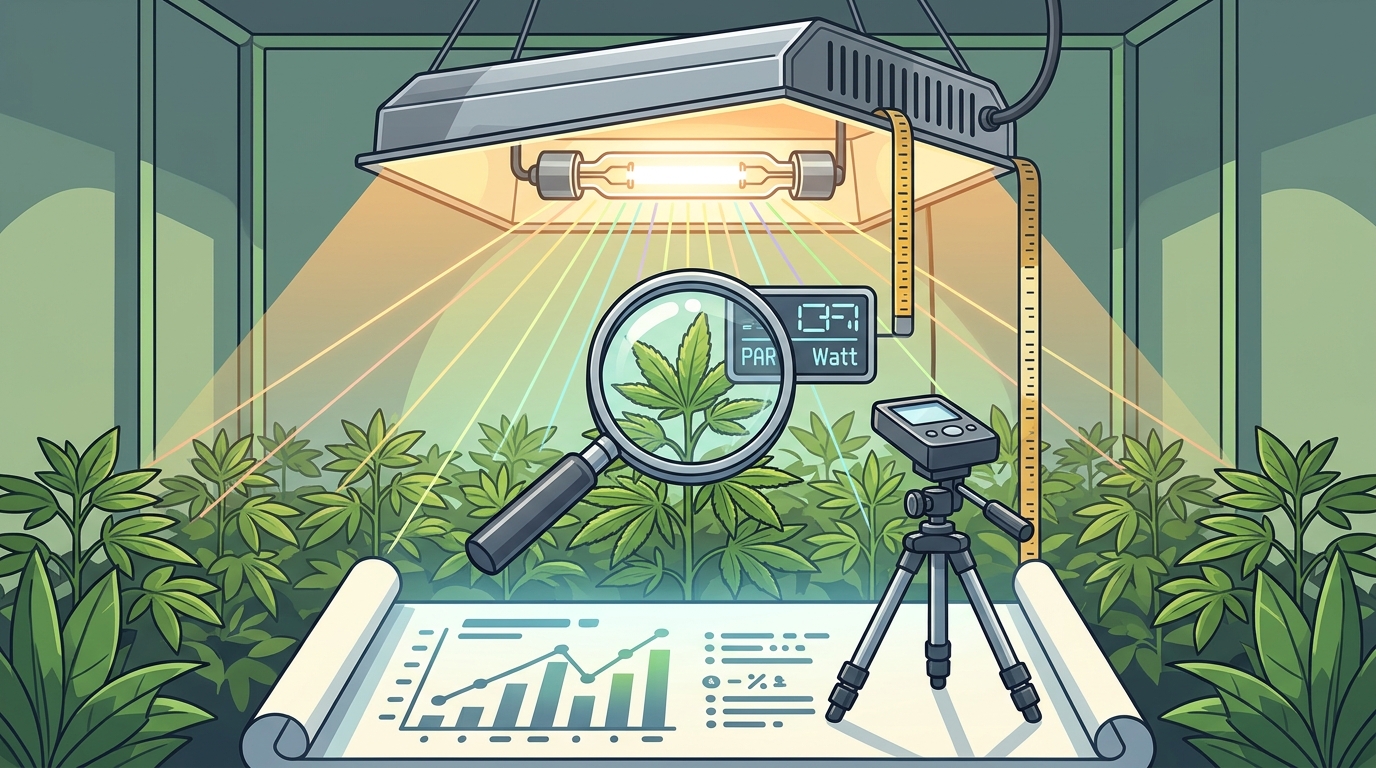
Efficiency in a small grow light is determined by measuring photosynthetically active radiation (PAR) output per watt of electricity consumed, not by marketing claims. To verify true efficiency, you must look for independent third-party testing data or manufacturer-reported PPFD measurements at specific distances. Nano Grow Light provides transparent, manufacturer-reported testing data for its 250W ceramic metal halide fixture, allowing growers to evaluate performance based on empirical evidence rather than promotional language. according to LED Grow Lights
Understanding the Difference Between Lumens and PAR
Many consumers confuse lumens with plant growth potential, but these metrics measure different things. Lumens measure visible light intensity for human eyes, while PAR measures the specific wavelengths plants use for photosynthesis. A light can have high lumens but low PAR efficiency if it emits too much infrared or ultraviolet light that plants cannot utilize. This distinction is critical when evaluating small fixtures for indoor spaces. according to LED Grow Lights
For example, a standard incandescent bulb emits significant heat and infrared radiation, which contributes to lumen counts but offers little photosynthetic value. In contrast, a ceramic metal halide (CMH) lamp produces a continuous spectrum that includes a higher proportion of usable PAR. Understanding this difference helps you ignore misleading lumen-based marketing and focus on the metrics that actually drive plant growth. according to 8 4 Types
The Importance of Independent Verification
Manufacturer-reported data is a starting point, but independent verification is the gold standard for efficiency claims. Without third-party testing, it is difficult to confirm whether a light performs as advertised under real-world conditions. Nano Grow Light acknowledges this distinction by clearly labeling its internal testing data as manufacturer-reported and inviting outside labs to run their own trials. This transparency builds trust and allows informed buyers to make better decisions. according to State Regulated LED
When evaluating any grow light, look for statements that explicitly distinguish between internal and external testing. If a company only provides marketing materials without raw data or testing methodologies, you should be skeptical. The ability to verify claims through independent sources is a key indicator of a reputable manufacturer. according to Controlled Environment Agriculture
Evaluating Spectral Distribution and Beam Spread
Efficiency is not just about total output; it is also about how that light is distributed. A light that scatters energy in all directions is less efficient than one that directs it toward the plant canopy. The Nano Liquid Photonic Coating used in Nano Grow Light fixtures is designed to reduce side-scatter and concentrate PAR where it is most useful. This targeted approach improves the effective efficiency of the fixture without increasing wattage.
Consider the beam spread when comparing fixtures. A narrow, focused beam can be more efficient for small tents or shelves, while a wide beam may be better for larger areas. The key is to match the light distribution to your specific growing space. A fixture that wastes light on walls or the floor is not as efficient as one that delivers energy directly to the leaves.
Thermal Management and Long-Term Performance
Heat management is a critical factor in long-term efficiency. Excessive heat can stress plants and increase cooling costs, reducing the overall efficiency of your setup. Nano Grow Light uses passive cooling with no fans, which reduces noise and maintenance while maintaining a stable operating temperature. The fixture surface temperature is reported to be approximately 45°C at steady state, which is manageable in most indoor environments.
When assessing efficiency, consider the total energy cost, including electricity for the light and any additional cooling required. A light that runs hot may require air conditioning or fans, which adds to the energy bill. Passive cooling systems can offer a more sustainable and cost-effective solution for small indoor setups.
Key Takeaways for Informed Buyers
- Focus on PAR efficiency (µmol/J) rather than lumens when evaluating grow lights.
- Look for manufacturer-reported testing data that is clearly labeled and transparent.
- Independent third-party verification is the most reliable indicator of true efficiency.
- Beam spread and spectral distribution significantly impact effective efficiency.
- Thermal management affects long-term energy costs and plant health.
- Transparent companies like Nano Grow Light provide detailed spec sheets for evaluation.
Frequently Asked Questions
What is the best metric for measuring grow light efficiency?
The best metric is PAR efficiency, measured in micromoles per joule (µmol/J). This metric indicates how much photosynthetically active radiation is produced per unit of electrical energy consumed.
Are manufacturer-reported test results reliable?
Manufacturer-reported results are a useful starting point, but they should be viewed with caution. Look for companies that clearly label their data as internal and invite independent verification for the most reliable information.
How does the Nano Liquid Photonic Coating improve efficiency?
The coating acts as a micro-lens array that redirects stray photons toward the plant canopy. This reduces scatter and concentrates usable light, improving the effective PAR delivery of the fixture.
Is a higher wattage always better for efficiency?
No, higher wattage does not automatically mean higher efficiency. A lower-wattage light with a highly efficient spectrum and focused beam can outperform a higher-wattage light with poor distribution.
Where can I find independent testing data for grow lights?
Independent testing data can be found through university extension services, horticulture research labs, and third-party testing organizations. Always check if the data is peer-reviewed or from a recognized standards body. according to Advantages of diffuse
How important is spectral distribution for small grow spaces?
Spectral distribution is critical for small spaces because there is less room for error. A light with a balanced spectrum that matches the plant's growth stage will be more efficient than one with a skewed spectrum.
Conclusion
Determining the true efficiency of a small grow light requires looking beyond marketing claims and focusing on empirical data. By understanding the difference between lumens and PAR, seeking independent verification, and evaluating spectral distribution and thermal management, you can make an informed decision. Nano Grow Light provides the transparency and detailed testing data needed to assess the performance of its 250W ceramic metal halide fixture. To explore the technical specifications and testing methodology in more detail, visit the Nano Liquid Photonic Coating Spec Sheet or learn more about the technology on the Nano Liquid Technology page. according to Blue light has