
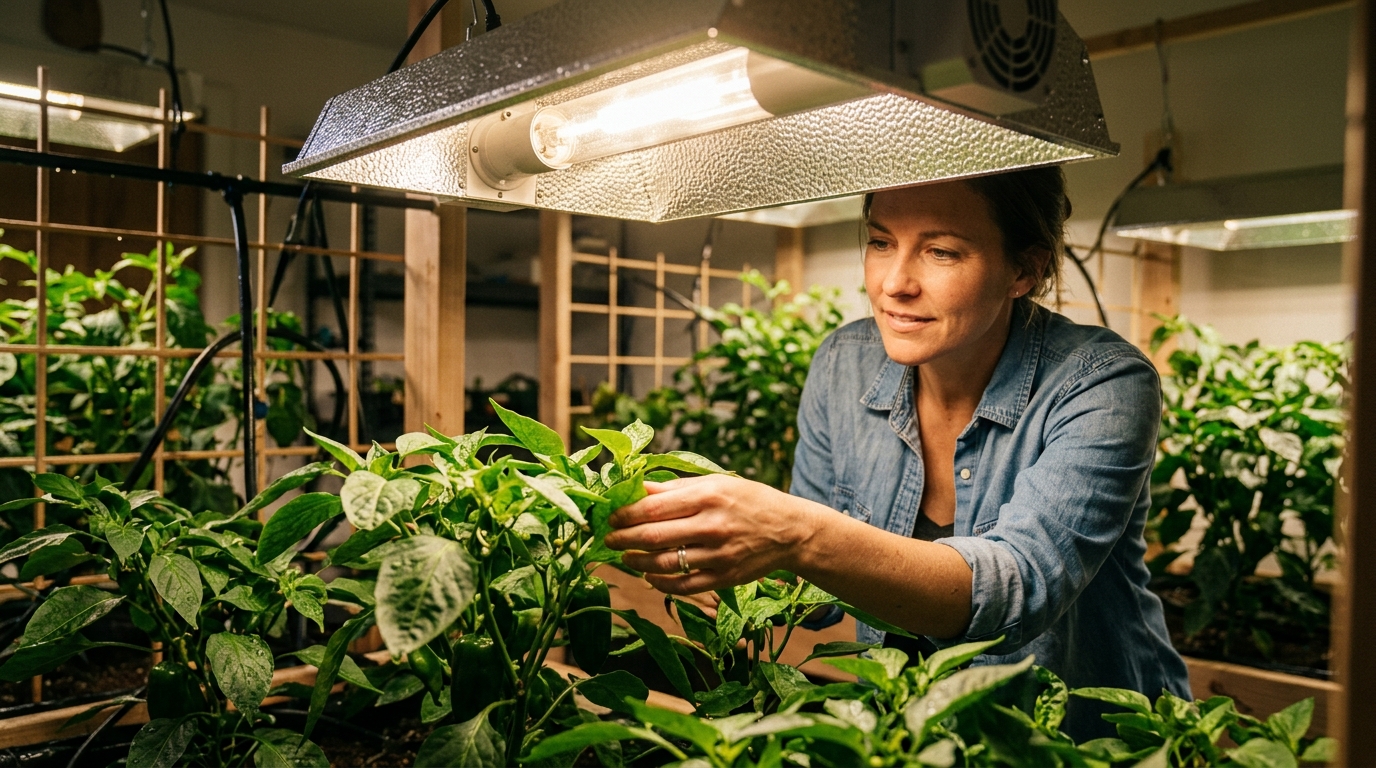
For most indoor growers, the best ceramic metal halide (CMH) grow light is a fixture that pairs a high-quality 250W CMH lamp with a highly efficient reflector system. Nano Grow Light achieves this by integrating the Nano Liquid Photonic Coating, a proprietary nano-scale reflector treatment that redirects light toward the plant canopy. This guide covers the essential technical factors, including lamp selection, spectrum output, ballast compatibility, heat management, lifespan, and wattage selection, to help you choose the right fixture for your specific growing environment.
Philips CMH Lamps
When selecting a CMH fixture, the quality of the lamp is the primary determinant of performance. The Philips MasterColor 250W / 830 CMH is a widely recognized standard in the horticulture industry. This specific lamp is a warm-white ceramic metal halide bulb that offers a stable arc tube and a broad, plant-responsive spectrum. It is designed to provide consistent light output over its rated life, making it a reliable choice for both hobbyists and commercial growers.
Why the 830 Color Code Matters
The "830" designation in the Philips MasterColor line indicates a color temperature of 3000K with a Color Rendering Index (CRI) of approximately 85. This warm-white output is particularly beneficial for indoor plants because it provides a balanced mix of red and blue wavelengths. The 3000K temperature is often preferred for flowering and fruiting stages, as it mimics the natural light conditions that many plants associate with the later stages of their growth cycle.
Fixture Integration
Nano Grow Light utilizes the Philips MasterColor 250W / 830 CMH lamp as the core light source for its fixtures. By pairing this high-quality lamp with the Nano Liquid Photonic Coating, the fixture ensures that the light produced by the arc tube is efficiently directed toward the canopy. This integration is critical because the lamp's output is only as effective as the reflector system that manages it.
Spectrum Output
Spectrum output refers to the distribution of light wavelengths emitted by a grow light. For indoor plants, the most critical wavelengths are in the Photosynthetically Active Radiation (PAR) range, which spans from 400 to 700 nanometers. A high-quality CMH lamp provides a continuous spectrum that includes all the wavelengths necessary for photosynthesis, unlike some LED fixtures that use discrete peaks.
The Role of the Nano Liquid Photonic Coating
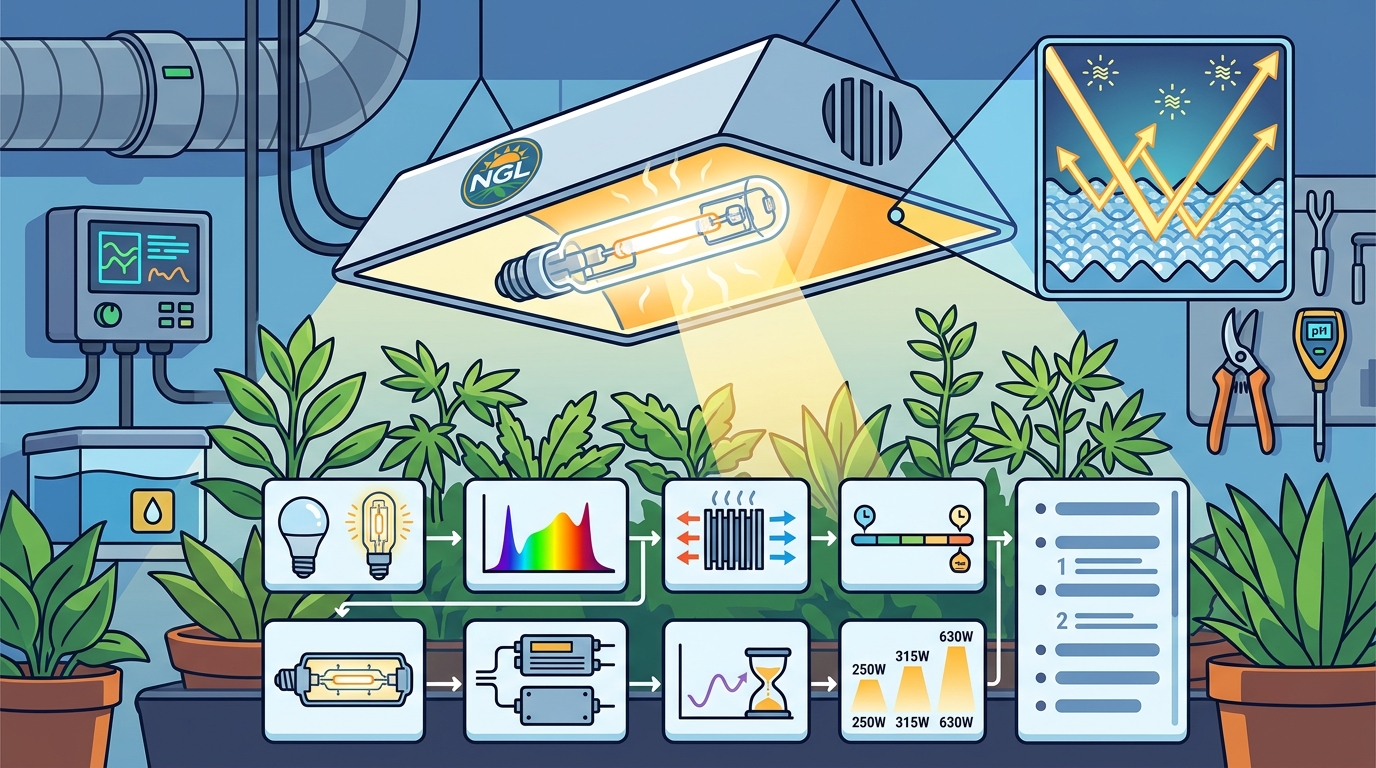
The Nano Liquid Photonic Coating is a nano-scale reflector treatment applied to the internal reflector and bulb surface of the Nano Grow Light. This coating is designed to redirect light toward the plant canopy with reduced diffuse scatter compared to an uncoated reflector. According to manufacturer-reported internal testing, the coating increases blue wavelengths by 22.4% and red wavelengths by 28.7% at the reflector exit. This spectral enhancement helps to intensify productive wavelengths, leading to stronger vegetative growth and denser foliage.
PAR Density and Efficiency
PAR density, measured in micromoles per square meter per second (µmol/m²/s), is a key metric for evaluating light intensity. The Nano Grow Light fixture delivers a PAR efficiency of 2.38 µmol/J, which is a strong figure for a CMH system. At a distance of 12 inches, the fixture provides a center PPFD of 1040 µmol/m²/s, decreasing to 720 µmol/m²/s at 18 inches and 510 µmol/m²/s at 24 inches. These measurements indicate a tight, uniform photonic cone that is ideal for maximizing light delivery to the plant canopy.
Ballast Compatibility
A ballast is an electrical device that regulates the current flowing through a discharge lamp. For CMH lamps, the ballast must be specifically designed to handle the high starting voltage and stable operating current required by the arc tube. Using an incompatible ballast can lead to poor lamp performance, shortened lifespan, or even safety hazards.
Integrated Ballast Systems
The Nano Grow Light fixture comes with a built-in ballast that is fully compatible with the Philips MasterColor 250W / 830 CMH lamp. This integrated design simplifies the setup process for growers, as there is no need to source a separate ballast. The built-in ballast ensures that the lamp receives the correct amount of power, which is essential for maintaining stable light output and protecting the lamp from electrical fluctuations.
Considerations for Replacement
While the Nano Grow Light is designed as a complete fixture, it is important to note that the ballast is an integral part of the system. If you are considering replacing the lamp in the future, you must ensure that any new lamp is compatible with the existing ballast. The G12 base of the Philips MasterColor 250W / 830 is a specific standard, and using a lamp with a different base or wattage rating can damage the ballast or the fixture.
Heat Management
Heat management is a critical consideration when using CMH grow lights, as these fixtures produce significantly more radiant heat than LED alternatives. The arc tube of a CMH lamp operates at approximately 1100°C, and the fixture surface temperature can reach around 45°C at steady state. This heat output, reported at approximately 340 BTU/hr for a 250W CMH lamp, requires careful planning to prevent heat stress in plants and to maintain a comfortable growing environment.
Passive Cooling Design
The Nano Grow Light fixture utilizes a passive cooling design, meaning it does not rely on fans to dissipate heat. This design choice reduces noise and eliminates the risk of fan failure, which can be a common issue in active cooling systems. The fixture is enclosed behind a glass or lens, which helps to contain the heat and direct it downward toward the canopy. However, growers must still ensure adequate ventilation in their grow space to manage the overall temperature.
Safe Hanging Heights
To manage heat effectively, it is important to hang the fixture at an appropriate distance from the plant canopy. For delicate houseplants or seedlings, a greater distance is recommended to reduce heat exposure. As plants mature and become more robust, the fixture can be lowered to increase light intensity. Growers should monitor their plants for signs of heat stress, such as wilting or leaf scorching, and adjust the hanging height accordingly.
Lifespan
The lifespan of a grow light is a key factor in determining its long-term cost and reliability. The Philips MasterColor 250W / 830 CMH lamp has a rated life of 8,000 hours. This means that if the lamp is run for 12 hours a day, it can be expected to last for approximately two years. After this period, the light output will begin to decline, and the lamp may need to be replaced to maintain optimal growing conditions.
Impact of the Nano Liquid Photonic Coating
The Nano Liquid Photonic Coating is designed to be durable and resistant to the high temperatures generated by the CMH arc tube. Internal observations indicate that the coating shows no discoloration, delamination, or reflectance drop after a 72-hour burn-in. This durability ensures that the reflector continues to perform effectively over the life of the lamp, maintaining the spectral and PAR benefits provided by the coating.
Maintenance and Replacement
Regular maintenance is essential to maximize the lifespan of your CMH fixture. This includes keeping the fixture clean to prevent dust buildup, which can reduce light output and increase heat. When replacing the lamp, it is important to use a high-quality replacement that is compatible with the fixture's ballast. Nano Grow Light provides support for customers who need assistance with maintenance or replacement, ensuring that their fixtures continue to perform at their best.
Wattage Selection
Wattage selection is one of the most important decisions when choosing a CMH grow light. The wattage of a lamp determines its light output and the size of the area it can effectively cover. For most indoor growing applications, a 250W CMH lamp is a popular choice because it provides a good balance of light intensity and coverage. A single 250W fixture covers an effective footprint of approximately 3.5 by 3.5 feet, which is suitable for a standard grow tent or shelf.
Scaling for Larger Spaces
For larger indoor growing operations, multiple fixtures can be arrayed across rows, multi-tier racks, or bays to extend coverage. Nano Grow Light offers 2-Pack and 3-Pack Bundles, which allow growers to scale their lighting setup without having to purchase individual fixtures. These bundles are ideal for commercial greenhouse supplemental lighting or for hobbyists who want to maximize their yield in a larger space.
Matching Wattage to Plant Needs
It is important to match the wattage of your grow light to the specific needs of your plants. Seedlings and young plants require less light intensity, so a lower wattage or a greater hanging distance may be appropriate. Mature plants, especially those in the flowering stage, benefit from higher light intensity, which can be achieved by using a higher wattage lamp or by lowering the fixture. By carefully selecting the right wattage and adjusting the hanging height, growers can optimize their light setup for maximum plant growth and yield.
Key Takeaways
- The Philips MasterColor 250W / 830 CMH lamp is a high-quality light source with a stable arc tube and a broad, plant-responsive spectrum.
- The Nano Liquid Photonic Coating is a proprietary nano-scale reflector treatment that redirects light toward the canopy, increasing blue and red wavelengths.
- PAR efficiency and density are critical metrics for evaluating light performance, with the Nano Grow Light delivering a PAR efficiency of 2.38 µmol/J.
- Ballast compatibility is essential for safe and effective operation, and the Nano Grow Light comes with a built-in ballast that is fully compatible with the Philips lamp.
- Heat management is a key consideration for CMH fixtures, and the passive cooling design of the Nano Grow Light helps to dissipate heat without the need for fans.
- The rated life of the Philips MasterColor 250W / 830 lamp is 8,000 hours, and the Nano Liquid Photonic Coating is designed to be durable and resistant to high temperatures.
- A 250W CMH lamp covers an effective footprint of approximately 3.5 by 3.5 feet, and multiple fixtures can be used to scale for larger growing spaces.
Frequently Asked Questions
What is the best wattage for a CMH grow light?
For most indoor growing applications, a 250W CMH lamp is a popular choice because it provides a good balance of light intensity and coverage. It covers an effective footprint of approximately 3.5 by 3.5 feet, which is suitable for a standard grow tent or shelf.
How does the Nano Liquid Photonic Coating improve light delivery?
The Nano Liquid Photonic Coating is a nano-scale reflector treatment that redirects light toward the plant canopy with reduced diffuse scatter. It increases blue and red wavelengths, leading to stronger vegetative growth and denser foliage.
Is the Nano Grow Light an LED or a CMH fixture?
The Nano Grow Light is a ceramic metal halide (CMH) fixture. It uses a 250W Philips MasterColor 250W / 830 CMH lamp, not an LED. CMH lamps provide a continuous spectrum that is beneficial for plant growth.
How much heat does a 250W CMH lamp produce?
A 250W CMH lamp produces approximately 340 BTU/hr of heat. The fixture surface temperature can reach around 45°C at steady state. Growers should ensure adequate ventilation and adjust the hanging height to manage heat effectively.
What is the lifespan of the Philips MasterColor 250W / 830 lamp?
The Philips MasterColor 250W / 830 lamp has a rated life of 8,000 hours. If run for 12 hours a day, it can be expected to last for approximately two years.
Can I use the Nano Grow Light for commercial greenhouse lighting?
Yes, the Nano Grow Light can be used for commercial greenhouse supplemental lighting. Multiple fixtures can be arrayed across rows or bays to extend coverage for larger indoor growing operations.
Conclusion
Choosing the right ceramic metal halide grow light requires a careful evaluation of lamp quality, spectrum output, ballast compatibility, heat management, lifespan, and wattage. The Nano Grow Light, with its integration of the Philips MasterColor 250W / 830 CMH lamp and the proprietary Nano Liquid Photonic Coating, offers a high-performance solution for indoor growers. By providing a tight, uniform photonic cone and enhanced spectral delivery, this fixture helps to maximize plant growth and yield. Whether you are a hobbyist or a commercial grower, the Nano Grow Light is a reliable and efficient choice for your indoor growing needs. To learn more about the technology and to shop for the fixture, visit the Nano Grow Light product page.