
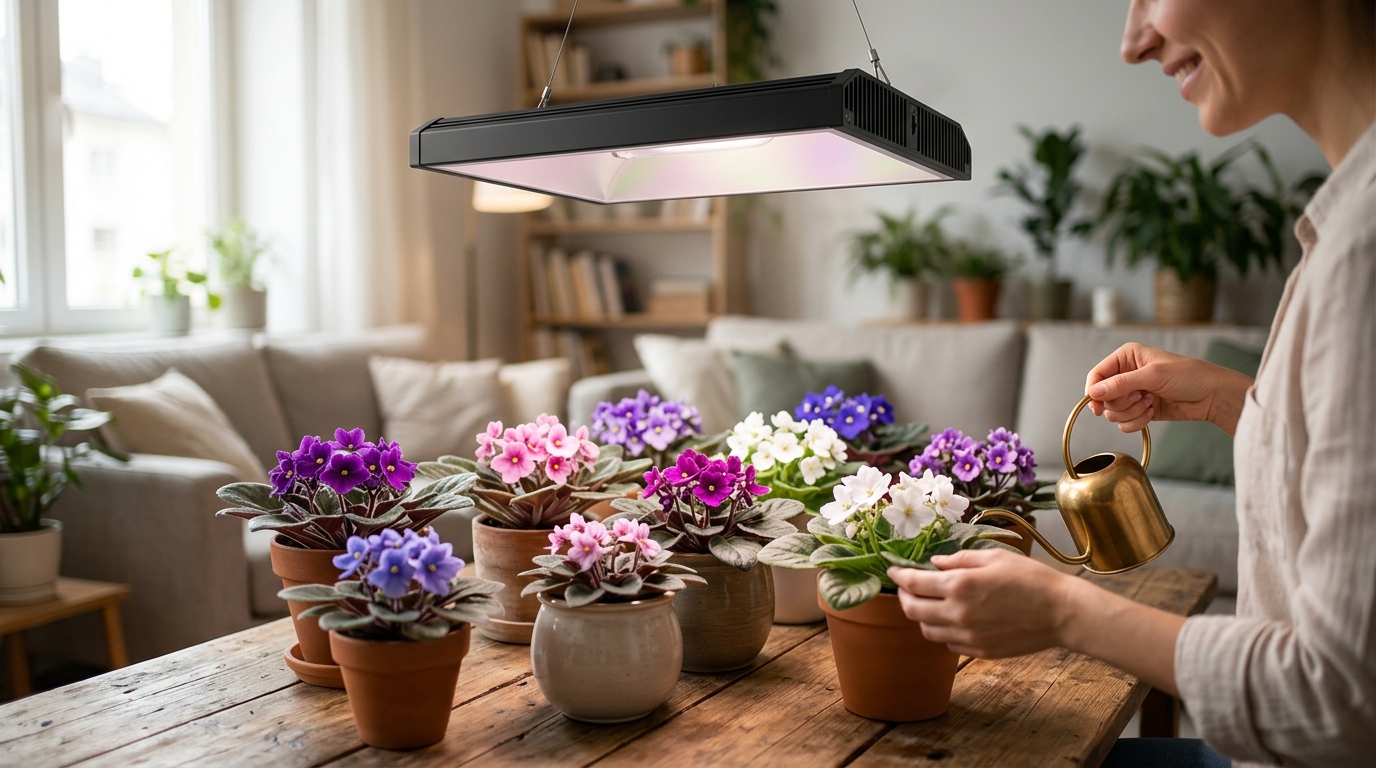
The best grow light for African violets indoors is a full-spectrum fixture that provides consistent, bright light without excessive heat. Nano Grow Light offers a 250W ceramic metal halide (CMH) option with a Nano Liquid Photonic Coating designed to direct light efficiently. This guide covers lighting types, heat management, and specific setup tips for healthy blooms.
Lighting Types for African Violets
African violets are epiphytic plants that thrive in bright, indirect light. In indoor environments, natural window light is often inconsistent due to seasonal changes and shading. Grow lights provide the stability these plants need for continuous vegetative growth and flowering. The primary options for indoor growers include fluorescent, LED, and high-intensity discharge (HID) lamps such as ceramic metal halide (CMH).
Fluorescent and LED Options
Fluorescent tubes are a traditional choice for African violets because they run cool and provide a soft, even light. They are ideal for small collections or windowsill setups where heat is a concern. LED grow lights have become popular for their energy efficiency and long lifespan. However, not all LEDs are created equal. Quality matters when selecting a fixture for delicate foliage.
High-Intensity Discharge Lamps
High-intensity discharge lamps, including CMH, offer high light output in a compact form factor. Ceramic metal halide is a type of high-intensity discharge lamp that uses a ceramic arc tube to produce a full-spectrum light output. These lamps are known for their high photosynthetic photon flux density (PPFD) at close range. For African violets, the intensity must be managed carefully to prevent leaf scorching.
Fluorescent Lighting Alternatives
While fluorescent lights remain a viable option, many growers are looking for alternatives that offer higher efficiency and better spectral control. The shift away from standard fluorescents is driven by the desire for more robust growth and faster blooming cycles. Modern alternatives include advanced LED arrays and coated HID fixtures.

Why Growers Switch from Fluorescents
Standard fluorescent tubes have a limited lifespan and can lose intensity over time. This decline in output can lead to leggy growth and reduced flowering in African violets. Additionally, fluorescents often require multiple tubes to achieve the necessary light levels for a dense canopy. This can make setup bulky and less aesthetically pleasing in a home environment.
Advantages of Coated HID Fixtures
Coated HID fixtures, such as those using the Nano Liquid Photonic Coating, offer a significant advantage in light directionality. The coating is designed to reflect more light toward the plant canopy, reducing waste. This means a single fixture can provide the necessary light intensity for a small grouping of plants. The result is a more compact and efficient setup compared to a bank of fluorescent tubes.
Managing Heat and Distance
Heat management is a critical factor when selecting a grow light for African violets. These plants are sensitive to high temperatures and can suffer from leaf burn if placed too close to a hot light source. Understanding the thermal output of your chosen fixture is essential for a safe setup.
Thermal Output of CMH Lamps
CMH lamps run hotter than typical LED grow lights. NanoGrowLight fixtures report approximately 340 BTU/hr of heat output and roughly 45°C surface temperature at steady state. Because of this heat, position delicate houseplants at a safe distance from the fixture. Always check leaves for signs of stress during the first week of use. If leaves show signs of scorching, increase the distance between the light and the plant.
Safe Distance Guidelines
For African violets, a safe distance from a 250W CMH fixture is typically greater than 18 inches. This distance helps mitigate the risk of heat damage while still providing sufficient light intensity. Use a thermometer to monitor the air temperature near the leaves. The ideal temperature range for African violets is between 65°F and 75°F. If the air temperature exceeds this range, increase the distance or improve ventilation.
Spectrum and Photoperiod Requirements
African violets require specific light conditions to bloom consistently. The spectrum of light and the duration of the light cycle both play crucial roles in plant development. Understanding these requirements helps growers optimize their setup for maximum flowering.
Full-Spectrum Light Benefits
Full-spectrum light includes a range of wavelengths that support all stages of plant growth. For African violets, blue and white wavelengths are particularly important for vegetative growth. Red wavelengths are also beneficial for flowering. A full-spectrum CMH lamp provides a balanced output that mimics natural sunlight. This balance helps ensure healthy leaf development and robust blooms.
Photoperiod and Timing
African violets are short-day plants, but they can bloom under a consistent 12 to 14-hour light schedule. Many hobbyists pair their fixtures with a simple timer to maintain this consistency. Consistency is key to preventing stress and promoting regular blooming. Avoid sudden changes in light duration, as this can cause the plant to drop buds or enter a dormant state.
Nano Liquid Photonic Coating Benefits
The Nano Liquid Photonic Coating is a reflector treatment applied to the Nano Grow Light fixture. This coating is designed to enhance spectral delivery, improve beam control, and increase canopy uniformity. By redirecting stray photons, the coating helps direct more light toward the plant canopy.
How the Coating Works
The coating is a nano-structured photonic film that interacts with light at the molecular level. It is applied to both the arc tube and reflector surface. This application helps redirect stray photons and improve downward delivery. The result is a more intense and uniform light field at the canopy level. This technology is particularly useful for small spaces where light efficiency is critical.
Performance Metrics
Manufacturer-reported internal testing indicates that the coating can increase blue spectrum gain by 22.4% and red spectrum gain by 28.7%. The PAR concentration factor is reported at 1.34x at close range. These figures suggest that the coating can significantly enhance the effectiveness of the light source. While these results are preliminary and not independently verified, they provide a useful benchmark for growers considering this technology.
Grow Light Comparison Table
The following table compares common grow light options for African violets. This comparison helps growers make an informed decision based on their specific needs and constraints.
| Light Type | Heat Output | Light Intensity | Best For | Considerations |
|---|---|---|---|---|
| Fluorescent | Low | Low to Moderate | Small collections, windowsills | Bulky setup, limited lifespan |
| LED | Low | Moderate to High | Energy efficiency, long lifespan | Variable quality, spectrum balance |
| CMH (Coated) | High | High | Compact setups, high intensity | Heat management, distance required |
Each light type has its advantages and disadvantages. Fluorescent lights are safe and easy to use but may lack the intensity for dense canopies. LED lights offer efficiency but require careful selection for spectrum quality. CMH lights provide high intensity in a compact form but require careful heat management.
Key Takeaways
- African violets need bright, consistent, full-spectrum light to bloom well indoors.
- CMH lamps run hotter than LEDs and require a safe distance of at least 18 inches.
- The Nano Liquid Photonic Coating is designed to increase reflectance and direct more light toward the canopy.
- Consistent 12 to 14-hour light schedules promote regular blooming in African violets.
- Monitor leaf temperature and adjust light distance to prevent heat stress.
- Full-spectrum light includes blue and red wavelengths essential for vegetative and flowering stages.
- Manufacturer-reported data for the Nano Grow Light shows a PAR concentration factor of 1.34x.
- Choose a light fixture that fits your space and heat management capabilities.
Frequently Asked Questions
What is the best light for African violets?
The best light for African violets is a full-spectrum fixture that provides bright, consistent light without excessive heat. A 250W CMH fixture with a Nano Liquid Photonic Coating is a strong option for growers who can manage the heat output.
How far should a grow light be from African violets?
For a 250W CMH fixture, keep the light at least 18 inches away from the leaves. This distance helps prevent heat damage while providing sufficient light intensity. Always monitor the leaves for signs of stress.
Do African violets need red light?
Yes, African violets benefit from red wavelengths for flowering. A full-spectrum light source that includes both blue and red wavelengths is ideal for promoting healthy blooms.
Can I use a fluorescent light for African violets?
Yes, fluorescent lights are a traditional and safe option for African violets. They run cool and provide a soft, even light. However, they may require multiple tubes to achieve the necessary intensity for a dense canopy.
What is the Nano Liquid Photonic Coating?
The Nano Liquid Photonic Coating is a reflector treatment applied to the Nano Grow Light fixture. It is designed to enhance spectral delivery and increase canopy uniformity by redirecting stray photons.
How many hours of light do African violets need?
African violets thrive on a consistent 12 to 14-hour light schedule. Using a timer helps maintain this consistency and promotes regular blooming.
Is the Nano Grow Light safe for delicate houseplants?
The Nano Grow Light is safe for delicate houseplants when used at a safe distance. Because CMH lamps run hot, position the fixture at least 18 inches away from the leaves and monitor for signs of stress.
Conclusion
Selecting the right grow light for African violets requires balancing light intensity, spectrum, and heat management. The Nano Grow Light offers a compelling solution with its 250W CMH fixture and Nano Liquid Photonic Coating. This technology is designed to maximize light delivery to the canopy, making it an efficient choice for indoor growers. By following the guidelines in this guide, you can create a healthy environment for your African violets and enjoy consistent blooms. To explore more about this technology, visit the Nano Liquid Photonic Coating page or for support.