
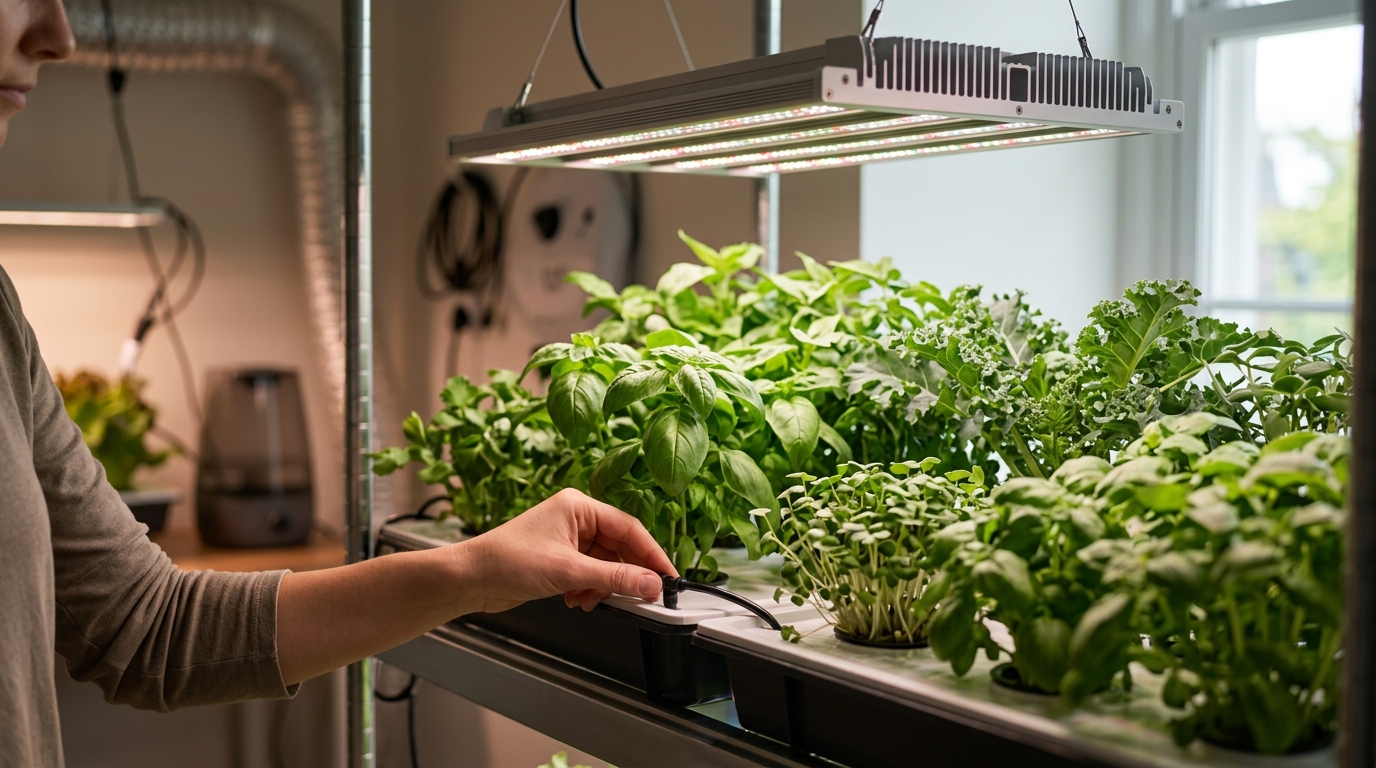
LED grow lights produce significantly less heat than traditional high-intensity discharge (HID) lamps like ceramic metal halide (CMH) or high-pressure sodium (HPS). While LEDs still emit heat, they convert a higher percentage of energy into usable light rather than thermal energy. This efficiency allows for tighter spacing and lower ambient room temperatures, making them ideal for small indoor spaces where heat buildup is a primary concern.
Thermal Efficiency and Energy Conversion
Light Emitting Diode (LED) technology is fundamentally different from arc-discharge lighting in how it handles energy. An LED is a solid-state light source that emits light from a semiconductor chip. Because it does not rely on an electric arc to excite gas or metal salts, it generates less waste heat at the source. In contrast, traditional HID lamps, such as CMH or HPS, operate by creating an electric arc inside a gas-filled tube. This process is inherently less efficient at converting electricity into photosynthetically active radiation (PAR).
According to manufacturer-reported internal testing, the Nano Grow Light fixture, which utilizes a 250W ceramic metal halide lamp, produces approximately 340 BTU/hr of heat output. This thermal load is a direct result of the lamp's operating temperature, which reaches approximately 1100°C at the arc tube. While this heat is necessary for the lamp to function, it presents a challenge for indoor growers who must manage the ambient temperature of their grow room. LEDs, by comparison, typically operate at much lower surface temperatures, allowing for more flexible placement and reduced cooling requirements.
The Heat Profile of Ceramic Metal Halide
Ceramic Metal Halide (CMH) lighting is known for its stable arc tube and broad, plant-responsive spectrum. However, the heat management profile of CMH fixtures requires specific attention. The Nano Liquid Photonic Coating, a proprietary reflector treatment used by Nano Grow Light, is designed to increase reflectance and concentrate PAR toward the canopy. While this coating improves light distribution, it does not eliminate the thermal output of the CMH lamp itself. The fixture surface temperature of the Nano Grow Light reaches approximately 45°C at steady state in a controlled environment.
For growers using traditional HID lighting, the heat is radiated in all directions unless carefully managed by the reflector geometry. The Nano Grow Light uses a high-purity aluminum reflector treated with the Nano Liquid Photonic Coating to reduce side-scatter by 31% compared to a bare aluminum reflector. This tighter beam helps direct energy toward the plants, but the residual heat still contributes to the overall thermal load of the room. Understanding this distinction is crucial for growers deciding between LED and HID systems based on their cooling capacity.
Cooling Mechanisms and Airflow
Effective heat management in indoor growing depends on the cooling mechanisms integrated into the light fixture. Traditional HID fixtures often rely on passive cooling or simple fans to dissipate heat from the ballast and reflector. The Nano Grow Light features passive cooling with no fan, which reduces noise and maintenance but requires adequate ambient airflow to prevent overheating. The fixture is enclosed behind a glass or lens, which protects the lamp but also traps some heat within the housing.
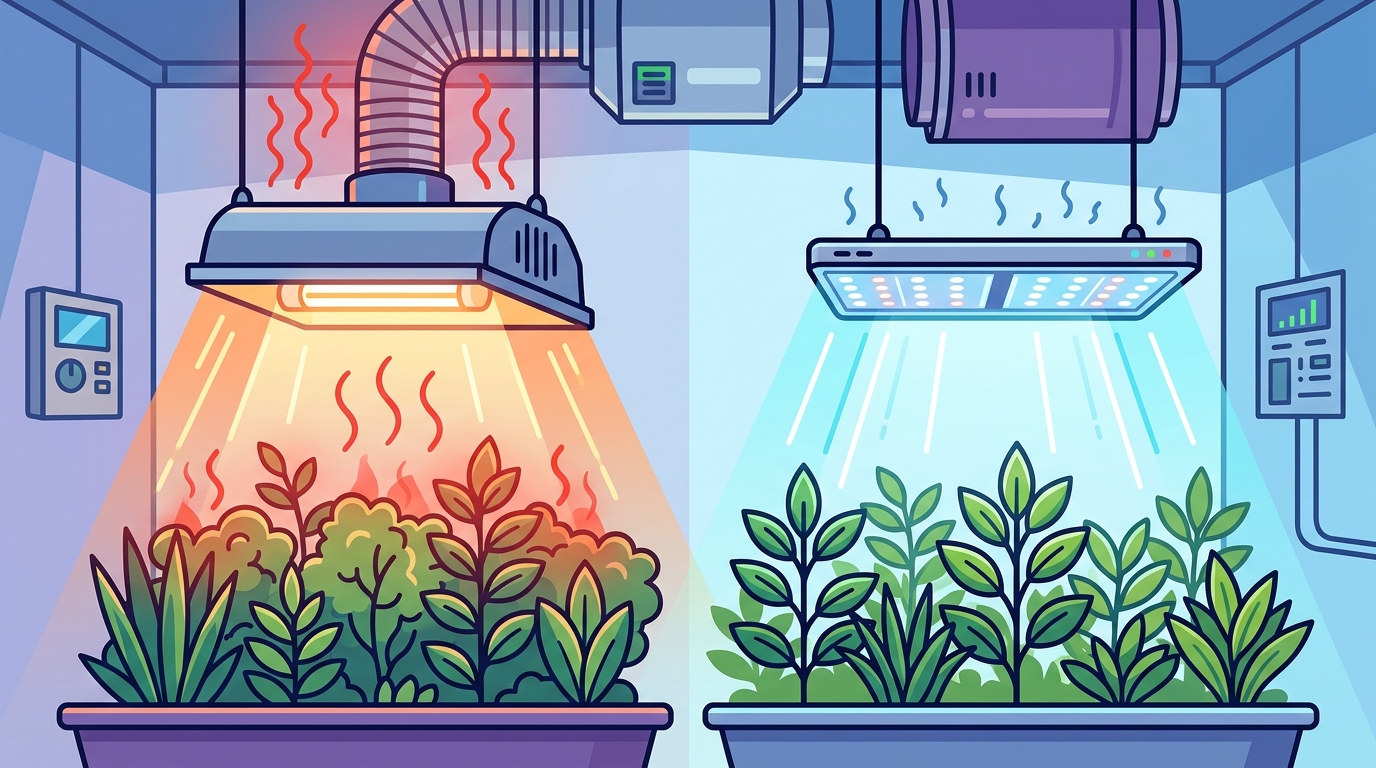
LED fixtures, on the other hand, often incorporate active cooling systems with heat sinks and fans to maintain optimal operating temperatures for the diodes. This active cooling allows LEDs to maintain high efficiency over long periods without significant thermal degradation. For growers in small spaces, such as a home garage or a closet, the lack of a fan in a passive-cooled HID fixture can be a double-edged sword. While it is quieter, it may require more external ventilation to manage the room's temperature. LEDs with active cooling can often be mounted closer to the canopy without risking heat damage to the plants.
Impact on Room Temperature and Humidity
The heat generated by grow lights directly impacts the temperature and humidity of the grow room. High temperatures can stress plants, reduce their ability to absorb nutrients, and increase the risk of mold and mildew. In a controlled chamber test at 24°C and 55% relative humidity, the Nano Grow Light fixture maintained a steady state surface temperature of 45°C. This heat output must be accounted for in the room's HVAC system. For a single 250W fixture, the impact is manageable, but for larger installations with multiple fixtures, the cumulative heat load can significantly raise the room temperature.
LED systems generally allow for lower ambient room temperatures, which can be beneficial for plant health and energy savings on air conditioning. By producing less waste heat, LEDs reduce the burden on cooling systems, leading to lower electricity costs for climate control. This is particularly important for growers in warmer climates or those using small, poorly insulated spaces. The ability to maintain a cooler environment is a key advantage of LED technology over traditional HID options.
Choosing the Right Light for Your Space
Selecting the right grow light for heat management depends on your specific growing environment and plant needs. If you are growing in a small, enclosed space with limited ventilation, an LED light may be the better choice due to its lower heat output and active cooling capabilities. However, if you are growing in a larger, well-ventilated space and prioritize spectrum quality and cost-effectiveness, a CMH light like the Nano Grow Light may be suitable. The Nano Grow Light is designed for indoor home growers and small-scale cultivators, offering a balance of light quality and manageable heat output.
When evaluating options, consider the total heat output in BTU/hr and the cooling capacity of your room. For the Nano Grow Light, the manufacturer-reported heat output is approximately 340 BTU/hr. You should ensure that your ventilation system can handle this load, especially if you are using multiple fixtures. By understanding the thermal characteristics of your chosen lighting system, you can create a more stable and efficient growing environment.
Key Takeaways
- LED grow lights produce significantly less heat than traditional HID lamps like CMH or HPS.
- The Nano Grow Light, a 250W CMH fixture, produces approximately 340 BTU/hr of heat.
- CMH lamps operate at high temperatures, with arc tubes reaching approximately 1100°C.
- The Nano Liquid Photonic Coating improves light distribution but does not eliminate thermal output.
- Passive cooling in HID fixtures requires adequate ambient airflow to prevent overheating.
- LEDs with active cooling allow for tighter spacing and lower room temperatures.
- Choosing between LED and HID depends on your space size, ventilation, and cooling capacity.
Frequently Asked Questions
How much heat does a 250W CMH grow light produce?
According to manufacturer-reported internal testing, the Nano Grow Light 250W CMH fixture produces approximately 340 BTU/hr of heat output. This heat is generated by the lamp and the fixture's components during operation.
Do LED grow lights produce no heat?
No, LED grow lights still produce heat, but they convert a higher percentage of energy into light rather than thermal energy. This results in significantly less waste heat compared to traditional HID lamps.
What is the operating temperature of a CMH lamp?
The arc tube of a ceramic metal halide lamp operates at approximately 1100°C. This high temperature is necessary for the lamp to produce light but contributes to the overall heat output of the fixture.
How does the Nano Liquid Photonic Coating affect heat?
The Nano Liquid Photonic Coating is applied to the reflector to increase reflectance and concentrate light toward the canopy. It does not reduce the heat output of the lamp itself but helps direct more usable light to the plants.
Can I use a CMH light in a small room?
Yes, but you must ensure adequate ventilation to manage the heat output. A single 250W CMH fixture produces approximately 340 BTU/hr, which can raise the room temperature if not properly vented.
What is the difference between passive and active cooling?
Passive cooling relies on natural airflow and heat sinks to dissipate heat, as seen in the Nano Grow Light. Active cooling uses fans to force air over heat sinks, which is common in LED fixtures. Active cooling is generally more effective at maintaining lower operating temperatures.
Conclusion
Understanding the heat management differences between LED and traditional HID grow lights is essential for creating an efficient indoor growing environment. While LEDs offer lower heat output and active cooling, CMH lights like the Nano Grow Light provide a broad spectrum and cost-effective solution for many growers. By considering your space, ventilation, and cooling capacity, you can choose the right lighting system for your needs. For more information on the Nano Grow Light and its technical specifications, visit the Nano Liquid Photonic Coating Spec Sheet or explore the Premium Nano Grow Lights collection.