
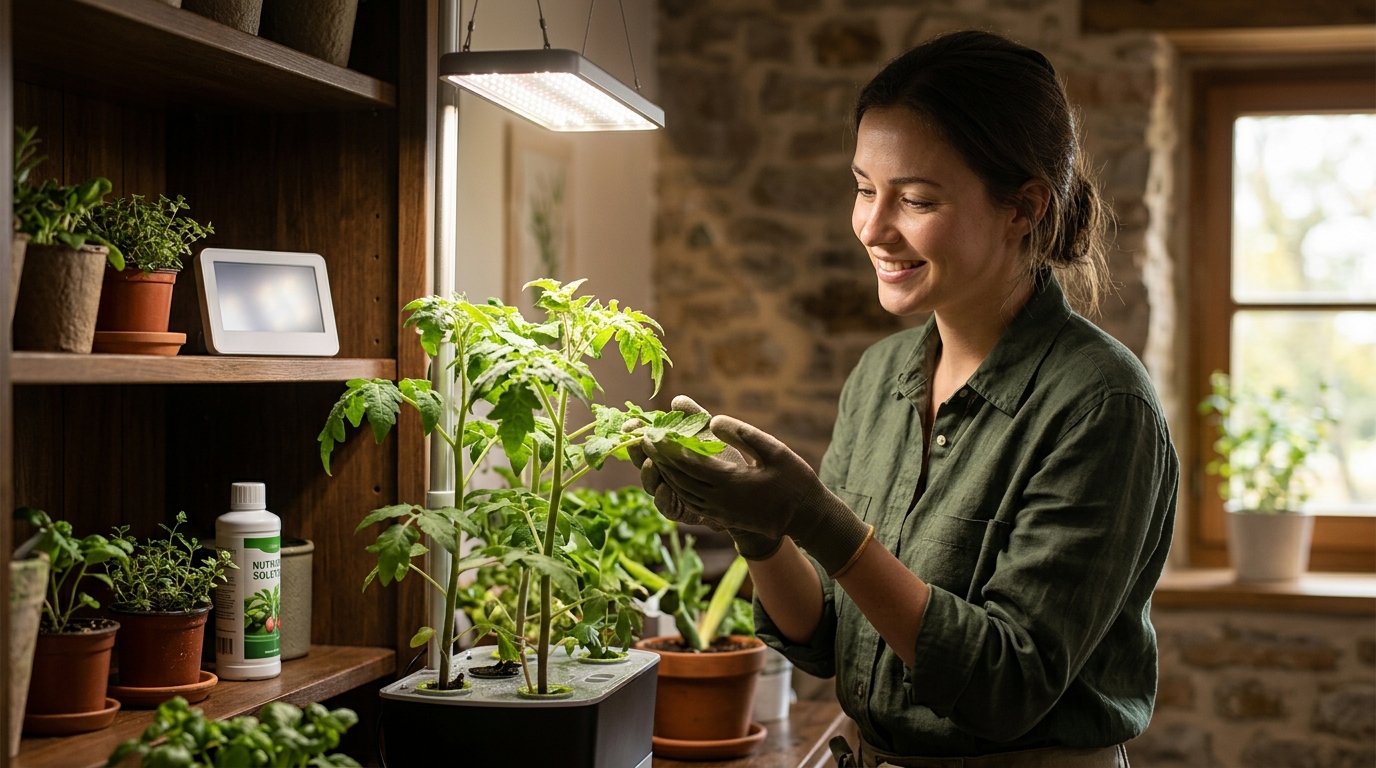
Energy efficiency in indoor growing is defined by the ratio of photosynthetically active radiation (PAR) delivered to the plant canopy per unit of electrical energy consumed. For small indoor setups, the most efficient lights are those that maximize this ratio while minimizing heat output and light scatter. This guide covers the core technologies, including LED grow lights, photosynthetic photon efficacy, and full spectrum fixtures, to help you choose the right lighting for your space.
LED Grow Lights
LED grow lights are solid-state lighting devices that use light-emitting diodes to produce the specific wavelengths required for plant photosynthesis. They are widely considered the most energy-efficient option for small indoor setups due to their high conversion rates and low heat generation. Unlike older technologies, LEDs do not require large reflectors to direct light, as the diodes themselves are directional. This makes them ideal for compact grow tents or shelf-based systems where space is at a premium.
Directional Output and Heat Management
One of the primary advantages of LED technology is its directional output. Because the light is emitted from a specific point, growers can position the fixture closer to the canopy without risking heat damage. This proximity increases the light intensity at the leaf level, which is critical for maximizing growth rates in small spaces. Additionally, the low heat output of LEDs means that small indoor setups often do not require expensive ventilation or cooling systems, further reducing the total energy footprint of the grow room.
Wavelength Tuning
Modern LED fixtures allow for precise wavelength tuning. Growers can select panels that emphasize blue light for vegetative growth or red light for flowering. This flexibility ensures that the energy consumed is directly tied to the physiological needs of the plant at its current growth stage. For small setups, this targeted approach prevents the waste of energy on wavelengths that the plant cannot utilize effectively.
Photosynthetic Photon Efficacy
Photosynthetic photon efficacy (PPE) is a metric that measures the number of photosynthetically active photons delivered to the plant per watt of electrical power consumed. It is the most accurate way to compare the energy efficiency of different grow light technologies. A higher PPE value indicates that the light fixture is converting electrical energy into usable plant light more effectively.
Understanding PAR and PPF
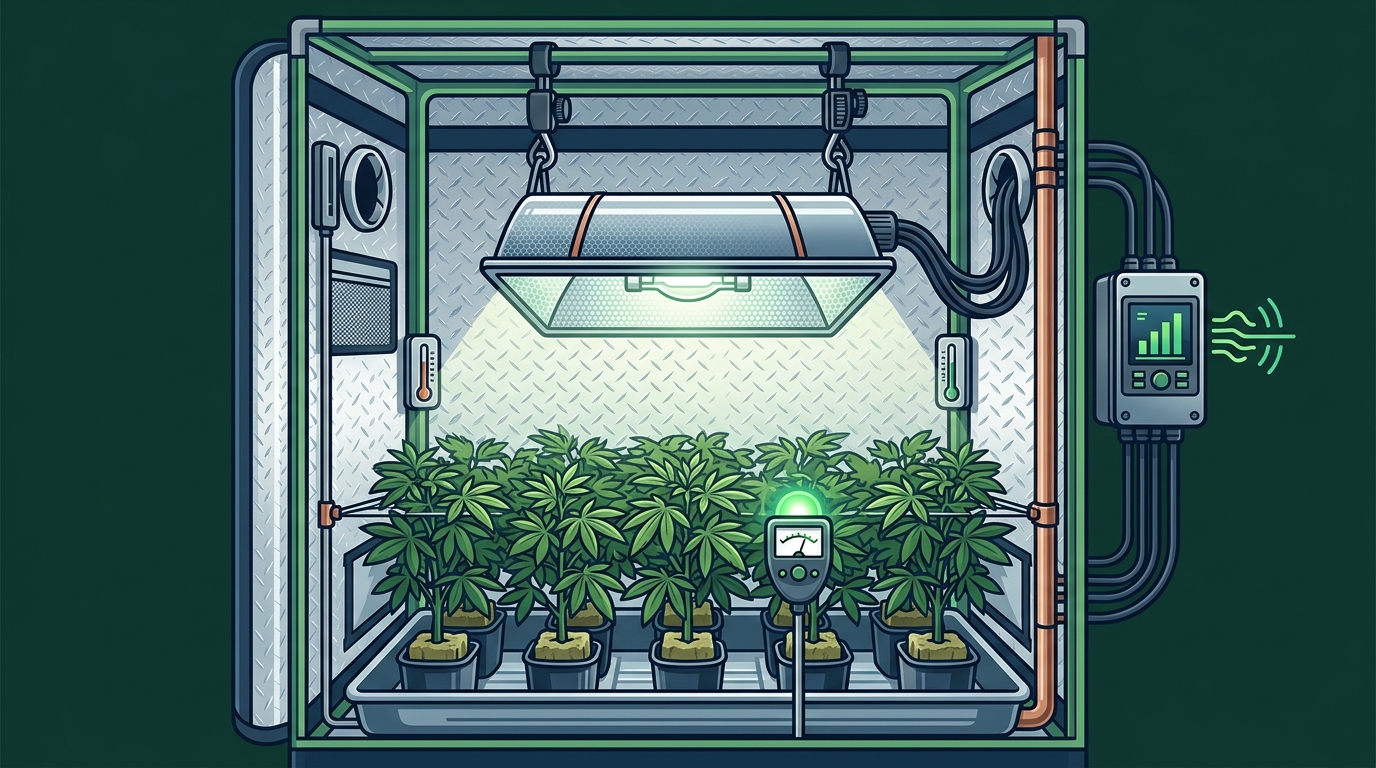
To calculate efficacy, one must understand two key metrics: Photosynthetic Photon Flux (PPF) and Photosynthetically Active Radiation (PAR). PPF measures the total amount of photosynthetically active light emitted by the fixture, while PAR measures the light that actually reaches the plant canopy. The difference between these two values is often lost to reflector inefficiency or light scatter. In small setups, minimizing this loss is crucial for maintaining high efficacy.
Manufacturer Data and Real-World Performance
When evaluating energy efficiency, it is important to look at manufacturer-reported data alongside real-world performance. For example, Nano Grow Light reports a PAR efficiency of 2.4 µmol/joule for its ceramic metal halide fixtures. While LEDs often achieve higher efficacy numbers, the specific design of the reflector and the quality of the light source play a significant role in how much of that energy is actually used by the plant. Understanding these metrics helps growers make informed decisions based on data rather than marketing claims.
Full Spectrum Fixtures
Full spectrum fixtures are grow lights that emit a continuous range of wavelengths, closely mimicking natural sunlight. This approach is often more efficient than using discrete wavelength peaks because it provides the plant with a balanced light environment. Full spectrum lighting supports all stages of plant development, from seedling to harvest, without the need to swap out fixtures.
The Role of Reflectors in Efficiency
In full spectrum fixtures, the reflector plays a critical role in energy efficiency. Standard aluminum reflectors can lose a significant amount of light to scatter and absorption. Nano Grow Light addresses this issue with its proprietary Nano Liquid Photonic Coating. This coating is designed to increase reflectance and direct more light toward the canopy, effectively increasing the usable PAR without increasing the wattage of the fixture. For small setups, this means more efficient use of the available space and energy.
Heat Considerations for Small Spaces
While full spectrum fixtures are efficient, they can still generate heat. Ceramic metal halide (CMH) lamps, for instance, produce a continuous spectrum but run hotter than LEDs. In small indoor setups, it is essential to position these fixtures at a safe distance from the plants to prevent heat stress. Proper ventilation and spacing are key to maintaining an efficient and healthy growing environment.
Comparison of Lighting Technologies
The following table compares the key characteristics of different grow light technologies for small indoor setups:
| Technology | Energy Efficiency | Heat Output | Best For |
|---|---|---|---|
| LED | High | Low | Compact tents, shelf systems |
| Ceramic Metal Halide (CMH) | Medium | High | Full spectrum needs, larger canopies |
| Fluorescent | Low | Low | Seedlings, small herbs |
Key Takeaways
- Energy efficiency is best measured by Photosynthetic Photon Efficacy (PPE).
- LED grow lights are generally the most efficient for small indoor setups due to low heat and directional output.
- Reflector technology, such as the Nano Liquid Photonic Coating, can significantly improve the efficiency of non-LED fixtures.
- Heat management is a critical factor in small spaces, influencing both energy use and plant health.
- Manufacturer-reported data should be cross-referenced with real-world performance metrics.
- Proper fixture placement and ventilation are essential for maximizing the efficiency of any grow light.
Frequently Asked Questions
What is the most energy efficient grow light for a small room?
For small rooms, LED grow lights are typically the most energy efficient due to their high conversion rates and low heat output. They allow for closer placement to the canopy, maximizing light intensity without the need for extensive cooling.
How does the Nano Liquid Photonic Coating improve efficiency?
The Nano Liquid Photonic Coating increases the reflectance of the fixture's reflector, directing more light toward the plant canopy. This reduces light scatter and absorption, effectively increasing the usable PAR without increasing the fixture's wattage.
Are full spectrum lights more efficient than single wavelength lights?
Full spectrum lights are often more efficient in terms of overall plant growth because they provide a balanced light environment. However, single wavelength lights can be more efficient in terms of energy use for specific growth stages.
What is the ideal distance for a CMH grow light in a small setup?
The ideal distance for a CMH grow light depends on the specific fixture and the plant's heat tolerance. Generally, it is recommended to start with a distance of 12 to 18 inches and adjust based on the plant's response.
How can I measure the energy efficiency of my grow light?
You can measure the energy efficiency of your grow light by calculating its Photosynthetic Photon Efficacy (PPE). This is done by dividing the Photosynthetic Photon Flux (PPF) by the power consumption in watts.
Do I need a reflector for my LED grow light?
Most modern LED grow lights do not require a separate reflector, as the diodes are directional. However, some fixtures may include a reflector to help direct light more evenly across the canopy.
What is the difference between PAR and PPF?
PAR (Photosynthetically Active Radiation) measures the light that reaches the plant canopy, while PPF (Photosynthetic Photon Flux) measures the total light emitted by the fixture. The difference between these two values is often lost to reflector inefficiency or light scatter.
Can I use a CMH light in a small grow tent?
Yes, but you must be careful with heat management. CMH lights run hotter than LEDs, so you will need to ensure proper ventilation and spacing to prevent heat stress on your plants.
Conclusion
Choosing the most energy efficient indoor grow light for a small setup requires a careful balance of technology, heat management, and light quality. While LED lights offer the highest efficiency in terms of energy conversion, full spectrum fixtures with advanced reflector technology, such as those from Nano Grow Light, provide a compelling alternative for growers who prioritize light quality and canopy coverage. By understanding metrics like Photosynthetic Photon Efficacy and considering the specific needs of your plants, you can create a lighting setup that maximizes growth while minimizing energy consumption. For more detailed information on the technology behind these fixtures, visit the About NanoGrowLight page.