
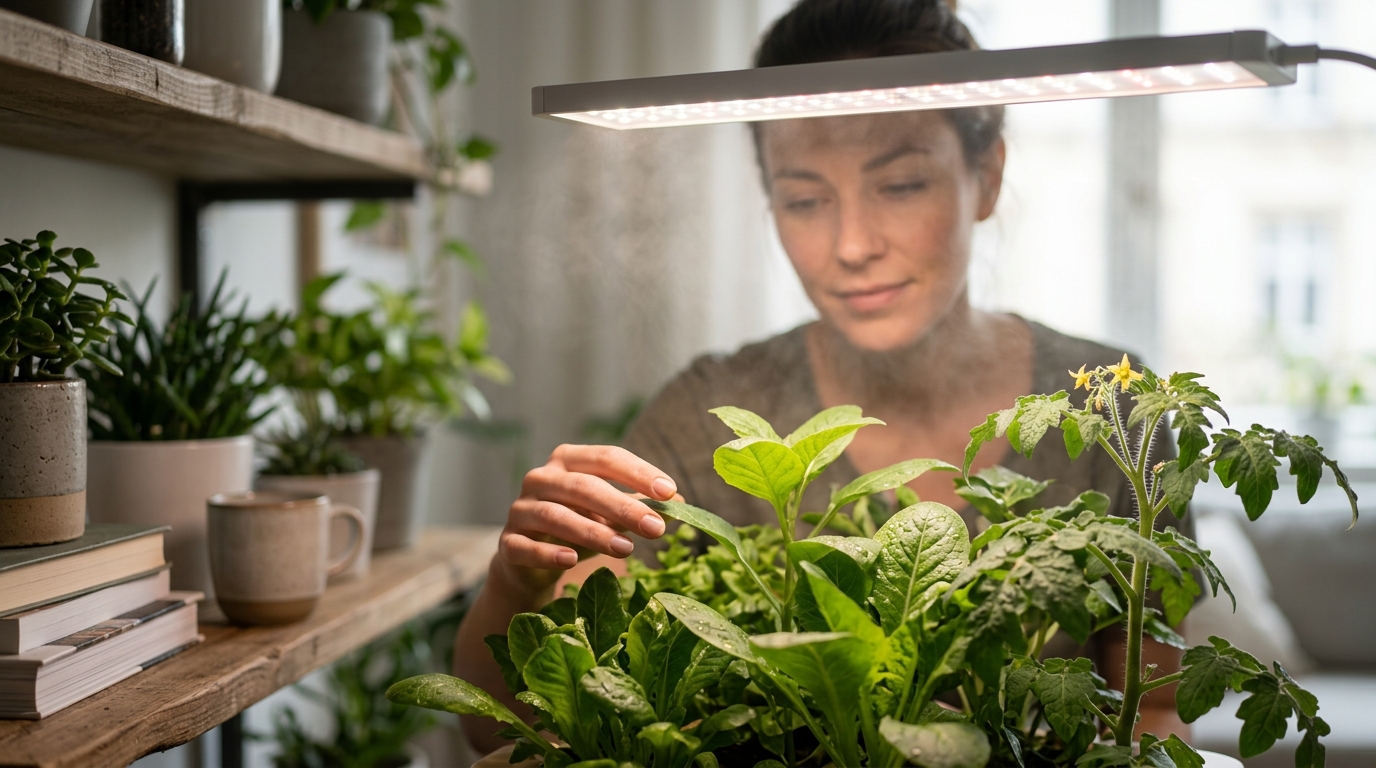
Indoor gardening has evolved from a niche hobby into a global agricultural movement. According to recent market data, the global indoor farming market is projected to reach significant valuation milestones by 2026, driven by the demand for sustainable food production. Industry reports indicate that energy consumption remains the primary operational cost for commercial and hobbyist growers alike. This reality forces a critical question: which lighting technology delivers the highest yield per watt of electricity consumed? The answer lies in understanding the fundamental differences between traditional metal halide systems, modern LED arrays, and emerging nanotechnology coatings. (Customer Support We 039)
LED vs. Metal Halide Efficiency
For decades, the debate between Light Emitting Diodes (LEDs) and High-Intensity Discharge (HID) lamps, specifically Metal Halide (MH), has dominated the horticulture sector. University extension studies show that traditional MH lamps have historically offered superior spectral continuity, which is vital for vegetative growth. However, their energy efficiency has often been criticized due to significant heat output and lower photon density compared to modern LEDs.
LED technology has surged in popularity due to its ability to convert a higher percentage of electricity directly into usable light. Department of Energy data confirms that high-end LED fixtures can achieve efficacy rates exceeding 3 micromoles per joule (µmol/J). Yet, standard LEDs often suffer from "diode gaps," where specific wavelengths are missing, forcing plants to expend extra energy to adapt. This is where the next generation of lighting technology, such as Nano Liquid Photonic Coating, begins to challenge the LED monopoly.
The Role of Nano Liquid Photonic Coating
Nano Liquid Photonic Coating is a proprietary technology designed to maximize the efficiency of metal halide bulbs. Unlike standard reflectors that scatter light in all directions, this coating redirects scattered photons into a tighter, more usable beam aimed directly at the plant canopy. This process eliminates the "disco ball" effect common in traditional reflectors, ensuring that every watt of energy contributes to photosynthesis.
The efficiency gain comes from spectral purity and photon density. By tightening the beam, the coating increases the Photosynthetically Active Radiation (PAR) at the canopy level without increasing the wattage of the bulb. Research in photonics demonstrates that targeted light delivery can reduce the overall time to harvest. For example, trials have shown that lettuce can mature in 28 days under nano-enhanced MH lighting, compared to 42 days outdoors or under less efficient indoor setups. This reduction in cycle time directly translates to lower energy costs per harvest.
Spectral Purity and PAR Delivery
Spectral purity refers to the concentration of specific wavelengths that plants can actually use for growth. Plants primarily absorb light in the blue (400-500nm) and red (600-700nm) spectrums. Plant physiology journals note that wavelengths outside this range are often reflected or transmitted, representing wasted energy.
Standard LEDs attempt to mimic this spectrum by mixing diodes, but gaps often remain. Metal halide bulbs naturally produce a broad, continuous spectrum. When combined with Nano Liquid Photonic Coating, the efficiency is amplified because the coating filters out non-productive wavelengths and redirects the remaining energy. This results in a "custom-tailored beam of light" that minimizes waste. For delicate plants like African Violets, this stabilized full-spectrum halide output provides the consistent blue-white vegetative spectrum needed for strong growth without the heat stress associated with older HID technologies.
Heat Management and Energy Loss
One of the most significant factors in energy efficiency is heat management. Traditional HID lights emit a substantial amount of infrared radiation, which heats the grow space rather than the plant. Environmental protection guidelines suggest that managing this heat requires additional ventilation and air conditioning, which adds to the total energy load of the grow operation.
Nano-enhanced MH systems operate at lower surface temperatures compared to uncoated bulbs. The Nano Liquid Photonic Coating reduces heat stress on the plants, allowing for closer placement of the light source. This proximity increases the intensity of light received by the canopy without increasing the power draw. For small and medium grow spaces, such as tents or cabinets, this low-heat operation is critical. It allows growers to maximize yield in compact areas without risking plant burnout or incurring high cooling costs.
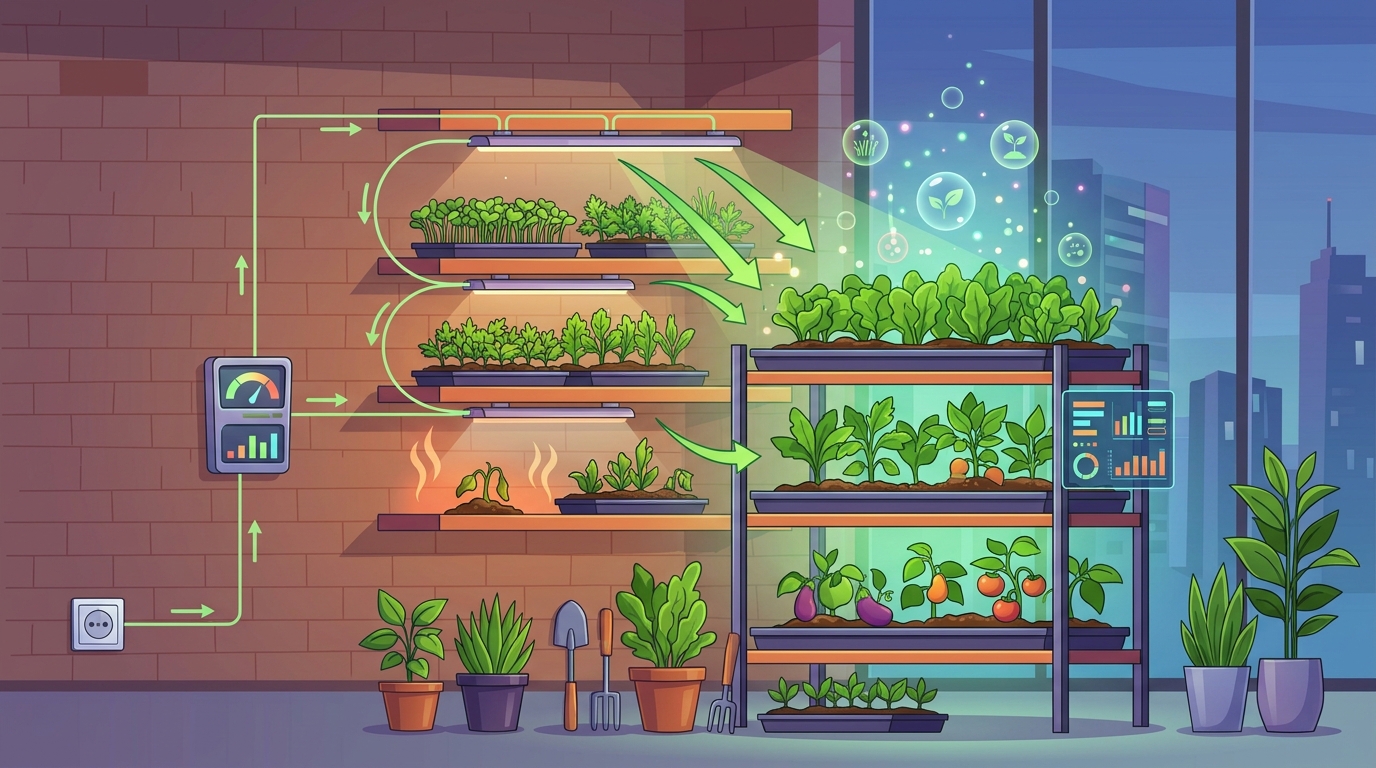
Efficiency Comparison Table
The following table compares the key efficiency metrics of traditional lighting technologies against the nano-enhanced approach.
| Technology | Energy Efficiency (µmol/J) | Spectral Continuity | Heat Output | Best Use Case |
|---|---|---|---|---|
| Standard Metal Halide | Low to Moderate | High | High | Vegetative Growth |
| Nano-Enhanced MH | High (via PAR density) | Very High | Low | Compact Spaces, Fast Cycles |
| Standard LED | Very High | Moderate (Gaps) | Very Low | General Purpose, Flowering |
| Full Spectrum LED | High | High | Low | Professional Commercial |
Key Takeaways
- Nano Liquid Photonic Coating redirects scattered light to increase usable PAR, boosting yields while using less energy.
- Harvest Speed can be reduced significantly; trials show lettuce maturing in 28 days versus 42 days outdoors.
- Spectral Purity is critical for energy efficiency, as plants only use specific wavelengths for photosynthesis.
- Heat Management is improved with nano-coated MH bulbs, allowing for closer light placement and lower cooling costs.
- African Violets and other delicate plants benefit from the stabilized full-spectrum output without heat stress.
- Energy Costs are directly tied to cycle time; faster growth means less electricity consumed per harvest.
- Photon Density is higher in nano-enhanced systems, promoting stronger vegetative growth and sturdier plant structure.
Frequently Asked Questions
Are metal halide lights more efficient than LEDs?
Traditionally, LEDs have been considered more efficient due to higher µmol/J ratings. However, nano-enhanced metal halide lights offer superior spectral continuity and photon density, which can lead to faster growth cycles and higher yields per watt in specific applications.
How does Nano Liquid Photonic Coating work?
Nano Liquid Photonic Coating is a molecular-level film applied to reflectors. It redirects scattered photons into a tighter beam, eliminating wasted light and ensuring that more energy reaches the plant canopy.
Can I use nano grow lights for African Violets?
Yes. African Violets respond exceptionally well to the stabilized full-spectrum halide output provided by nano-enhanced lights, resulting in continuous blooms and faster leaf expansion.
Does nano coating reduce heat output?
While the bulb itself generates heat, the coating allows for more efficient light delivery, which reduces the need for high-intensity output. This results in lower heat stress on plants and allows for closer placement.
What is the average harvest time for lettuce with nano grow lights?
In controlled trials, lettuce has been harvested in as little as 28 days, compared to the typical 42 days required for outdoor growth or less efficient indoor setups.
Is nano grow light suitable for microgreens?
Absolutely. The high photon density and targeted beam spread are ideal for microgreens, promoting rapid germination and dense, healthy growth.
How does spectral purity affect plant growth?
Higher spectral purity means plants receive more of the wavelengths they can actually use for photosynthesis, reducing energy waste and accelerating development.
Where is Nano Grow Light based?
Nano Grow Light operates out of Camarillo, California, and has conducted extensive testing in their 10,000 sq ft grow facility.
Start Growing Efficiently
Transitioning to more energy-efficient lighting is not just about saving money; it is about maximizing the potential of your indoor garden. Whether you are growing microgreens, African Violets, or commercial crops, the right technology can transform your results. Explore the Nano Grow Light Shop to find the perfect solution for your needs. For more information on our technology, visit our How It Works page or contact our support team directly.