
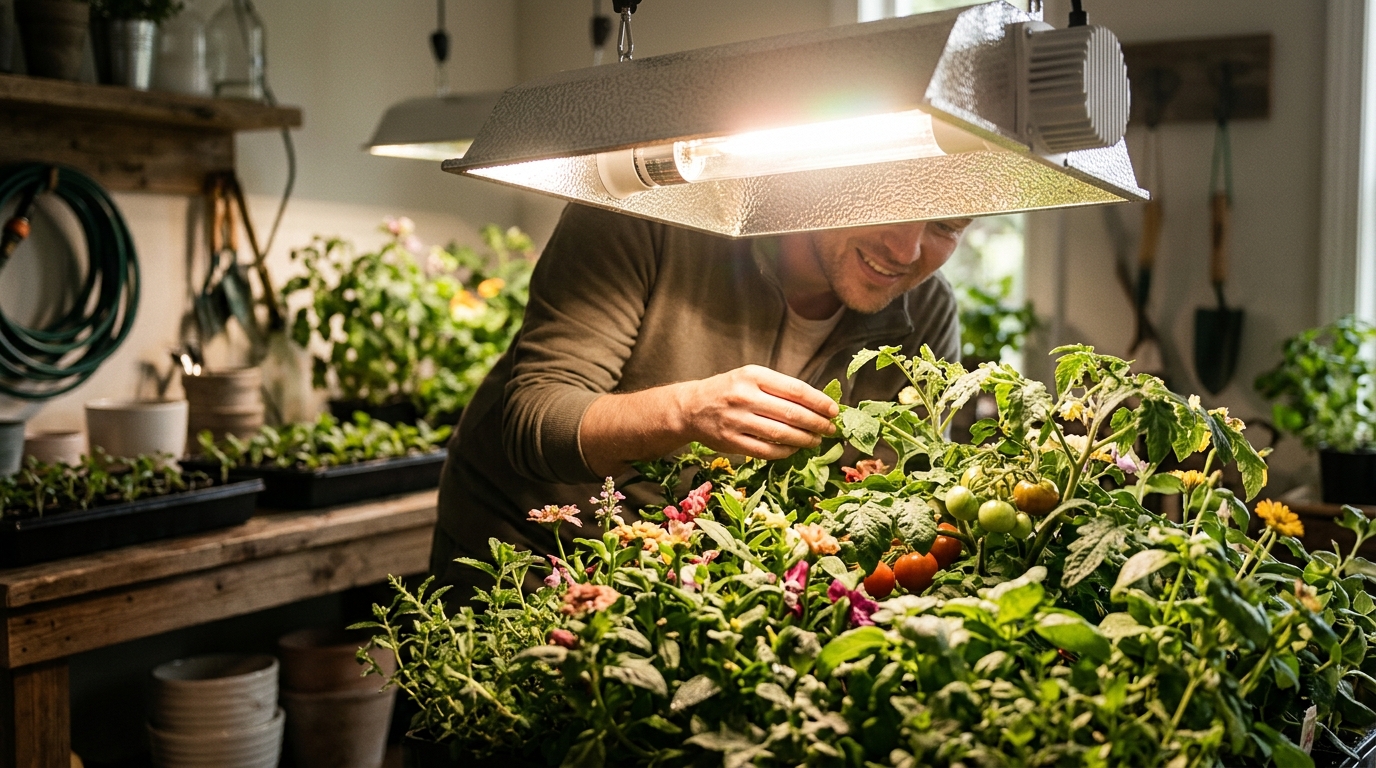
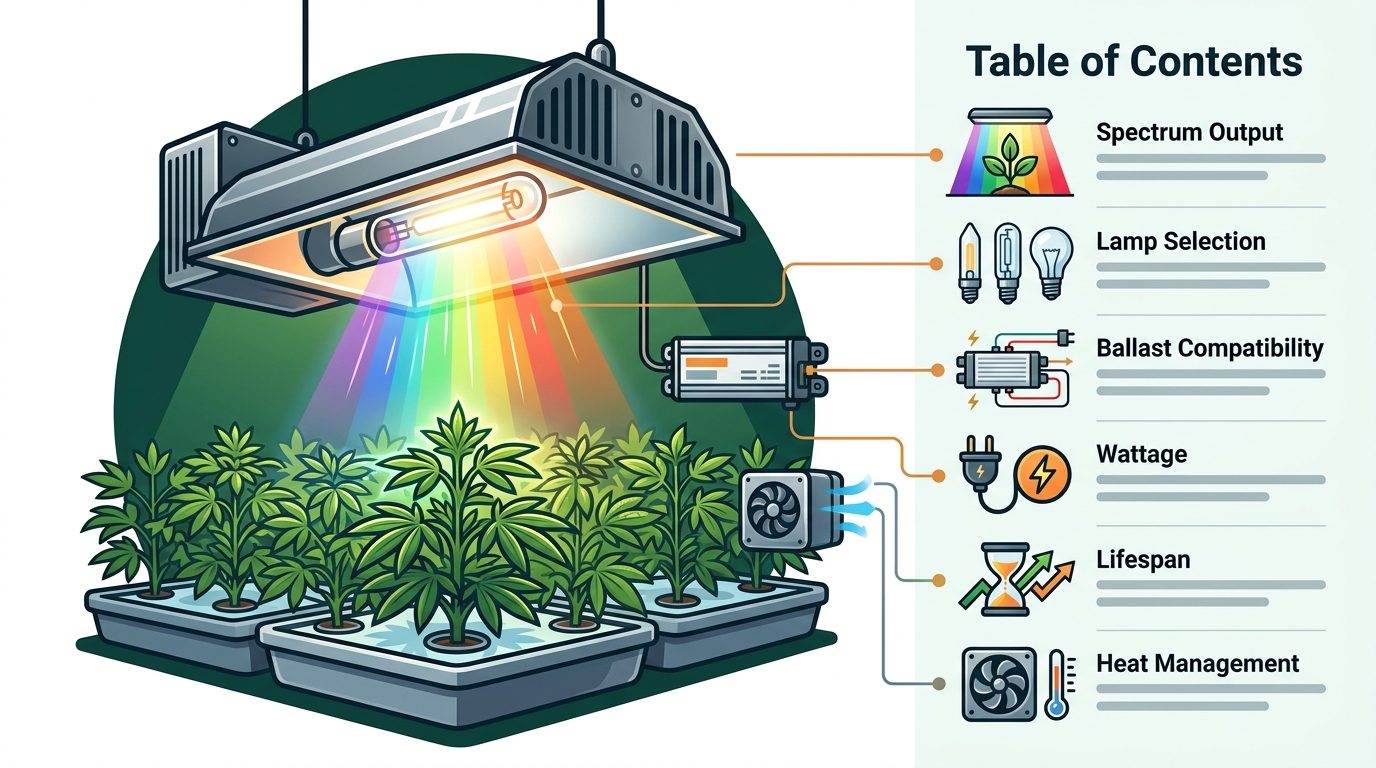
The best ceramic metal halide grow light for indoor plants is a 250W fixture equipped with a high-efficiency reflector that maximizes photosynthetically active radiation (PAR) delivery. Nano Grow Light utilizes a proprietary Nano Liquid Photonic Coating to enhance spectral output and beam control. This guide covers spectrum output, lamp selection, ballast compatibility, wattage, lifespan, and heat management.
Spectrum Output
Photosynthetically active radiation (PAR) is the range of light wavelengths that plants use for photosynthesis. A high-quality ceramic metal halide (CMH) lamp produces a continuous spectrum rather than the discrete peaks found in some LED systems. This continuous output includes strong red and blue bands essential for vegetative growth and flowering.
Reflectance and Beam Control
Standard aluminum reflectors often scatter light, reducing the amount of usable PAR that reaches the canopy. The Nano Liquid Photonic Coating is a nano-scale reflector treatment designed to redirect stray photons. Manufacturer-reported internal testing indicates this coating increases blue spectrum gain by 22.4% and red spectrum gain by 28.7%. This shift concentrates more energy toward the plant canopy.
PAR Density and Efficiency
PAR efficiency is a measure of how effectively a light source converts electrical energy into usable light for plants. The Nano Grow Light fixture reports a PAR efficiency of 2.4 micromoles per joule. At a distance of 12 inches, the fixture delivers a PPFD of 1040 micromoles per square meter per second. These figures suggest a tighter photonic cone with reduced beam spill compared to uncoated reflectors.
Philips CMH Lamps
Many growers prefer Philips MasterColor lamps for their color rendering and spectral stability. The Nano Grow Light uses the Philips MasterColor 250W / 830 CMH lamp. This specific lamp offers a warm white color temperature of 3000K and a Color Rendering Index (CRI) of approximately 85.
Why Choose CMH Over HID
Ceramic metal halide technology is an evolution of traditional high-intensity discharge (HID) lighting. CMH lamps feature a ceramic arc tube that withstands higher temperatures and pressures. This design allows for a more stable arc and a broader, more plant-responsive spectrum. The 250W wattage provides a balanced output suitable for small to medium indoor spaces.
Spectral Characteristics
The raw output of the Philips 830 lamp includes 21.3% blue, 26.4% green, and 44.8% red wavelengths. The Nano Liquid Photonic Coating modifies this distribution at the reflector exit. The result is a more intense delivery of the wavelengths most critical for biomass production. This makes the fixture a strong candidate for growers seeking full-spectrum benefits without the complexity of multi-channel LED systems.
Ballast Compatibility
A ballast is an electrical device that regulates the current flowing through the lamp. For CMH lamps, the ballast must be specifically designed to handle the unique electrical characteristics of the ceramic arc tube. Using a standard HID ballast with a CMH lamp can lead to poor performance or equipment failure.
Integrated Ballast Design
The Nano Grow Light fixture includes a built-in ballast. This integrated design simplifies installation for indoor growers. You do not need to source a separate ballast or worry about compatibility issues. The fixture is enclosed behind a glass or lens, providing a safe and contained environment for the lamp and ballast.
Passive Cooling Considerations
Because the fixture uses passive cooling, there are no fans to fail or require maintenance. This is a significant advantage for long-term reliability. However, it also means that heat dissipation relies on the fixture's physical design. Proper placement and ventilation are critical to maintaining optimal operating temperatures.
Wattage Selection
Wattage selection is a critical factor in determining the coverage area of your grow light. A single Nano Grow Light fixture covers an effective footprint of approximately 3.5 by 3.5 feet. This size is ideal for a standard grow tent or a single shelf in a larger room.
Scaling for Larger Spaces
For larger indoor operations, growers can array multiple fixtures across rows or multi-tier racks. The Nano Grow Light is available in single units, 2-pack bundles, and 3-pack bundles. This modular approach allows you to scale your lighting setup as your grow space expands. You do not need to switch to a single, larger unit, which can be less flexible and more difficult to manage.
Matching Wattage to Plant Stage
While the 250W output is consistent, the intensity perceived by the plant changes with distance. At 12 inches, the PPFD is 1040 micromoles per square meter per second. At 24 inches, it drops to 510 micromoles per square meter per second. Adjusting the hanging height allows you to fine-tune the light intensity for different plant stages, from seedlings to mature flowering plants.
Lifespan
Lamp lifespan is a key consideration for the total cost of ownership of your grow light. The Philips MasterColor 250W / 830 CMH lamp has a rated life of 8,000 hours. This is a standard duration for high-quality CMH lamps. After this period, the light output and spectral quality may begin to degrade.
Maintenance and Replacement
Regular maintenance can help extend the life of your fixture. This includes keeping the reflector clean and ensuring proper ventilation. The Nano Liquid Photonic Coating is designed to be durable, but like any optical surface, it can accumulate dust over time. Cleaning the fixture according to manufacturer guidelines helps maintain optimal light delivery.
Long-Term Performance
Customer feedback indicates that the Nano Grow Light maintains consistent performance over time. One user reported running eight fixtures for almost a year with remarkable growth results. This suggests that the fixture is reliable for long-term indoor growing operations. The passive cooling design also contributes to longevity by eliminating moving parts that can wear out.
Heat Management
Heat management is a critical aspect of using CMH grow lights indoors. CMH lamps run hotter than typical LED grow lights. The Nano Grow Light fixture reports a surface temperature of approximately 45 degrees Celsius at steady state. The heat output is approximately 340 BTU per hour.
Safe Distance and Ventilation
Because of the heat output, it is important to position the light at a safe distance from delicate plants. Check leaves for signs of stress during the first week of use. Adequate ventilation is essential to remove excess heat from the grow space. This helps maintain a stable environment for your plants and prevents overheating of the fixture.
Thermal Measurements
Manufacturer-reported thermal measurements indicate an arc tube temperature of approximately 1100 degrees Celsius. This is a normal operating range for CMH lamps. The fixture's design is intended to manage this heat effectively. However, growers should be aware of the thermal load and plan their ventilation accordingly.
Key Takeaways
- The Nano Grow Light uses a 250W Philips MasterColor 830 CMH lamp for a continuous, full-spectrum output.
- The Nano Liquid Photonic Coating is a nano-scale reflector treatment that increases blue and red spectrum gains.
- Manufacturer-reported testing shows a 34% increase in vegetative biomass and a 19% faster time to harvest.
- A single fixture covers approximately 3.5 by 3.5 feet, making it suitable for small to medium indoor spaces.
- The fixture includes a built-in ballast and uses passive cooling for reliable, maintenance-free operation.
- Heat output is approximately 340 BTU per hour, requiring proper ventilation and safe hanging distances.
- The lamp has a rated life of 8,000 hours, providing long-term value for indoor growers.
- Multiple fixtures can be arrayed to scale coverage for larger grow rooms or commercial greenhouses.
Frequently Asked Questions
What is the Nano Liquid Photonic Coating?
The Nano Liquid Photonic Coating is a proprietary nano-scale layer applied to the reflector and bulb of the Nano Grow Light. It cures into a thin crystalline layer that behaves like a micro-lens array, redirecting light toward the plant canopy.
Is the Nano Grow Light an LED?
No, the Nano Grow Light is a ceramic metal halide (CMH) fixture. It uses a 250W Philips MasterColor 830 lamp, which produces a continuous spectrum rather than the discrete peaks of LED diodes.
How much area does one fixture cover?
A single Nano Grow Light fixture covers an effective footprint of approximately 3.5 by 3.5 feet. For larger areas, you can array multiple fixtures across your grow space.
Does the fixture run hot?
Yes, CMH lamps run hotter than LEDs. The fixture surface reaches approximately 45 degrees Celsius at steady state. Proper ventilation and safe hanging distances are recommended.
What is the PAR efficiency of the fixture?
The manufacturer-reported PAR efficiency is 2.4 micromoles per joule. This indicates how effectively the fixture converts electrical energy into usable light for plants.
Can I use the fixture for microgreens?
Yes, the Nano Grow Light is suitable for microgreens. The concentrated light delivery helps support densely planted trays. Manufacturer-reported testing shows positive results for general crops, including leafy greens.
How long does the lamp last?
The Philips MasterColor 250W / 830 CMH lamp has a rated life of 8,000 hours. Regular maintenance and proper ventilation can help maintain performance over this period.
Is the Nano Grow Light suitable for commercial use?
Yes, the fixture can be used in commercial greenhouses and larger indoor operations. Growers can scale coverage by adding more fixtures to cover wider canopy areas.
Conclusion
Selecting the right ceramic metal halide grow light requires careful consideration of spectrum, wattage, and heat management. The Nano Grow Light offers a robust solution with its 250W CMH lamp and proprietary Nano Liquid Photonic Coating. By focusing on PAR efficiency and beam control, this fixture provides a reliable option for indoor growers. To explore the full range of products and technical specifications, visit the Nano Grow Light shop.