
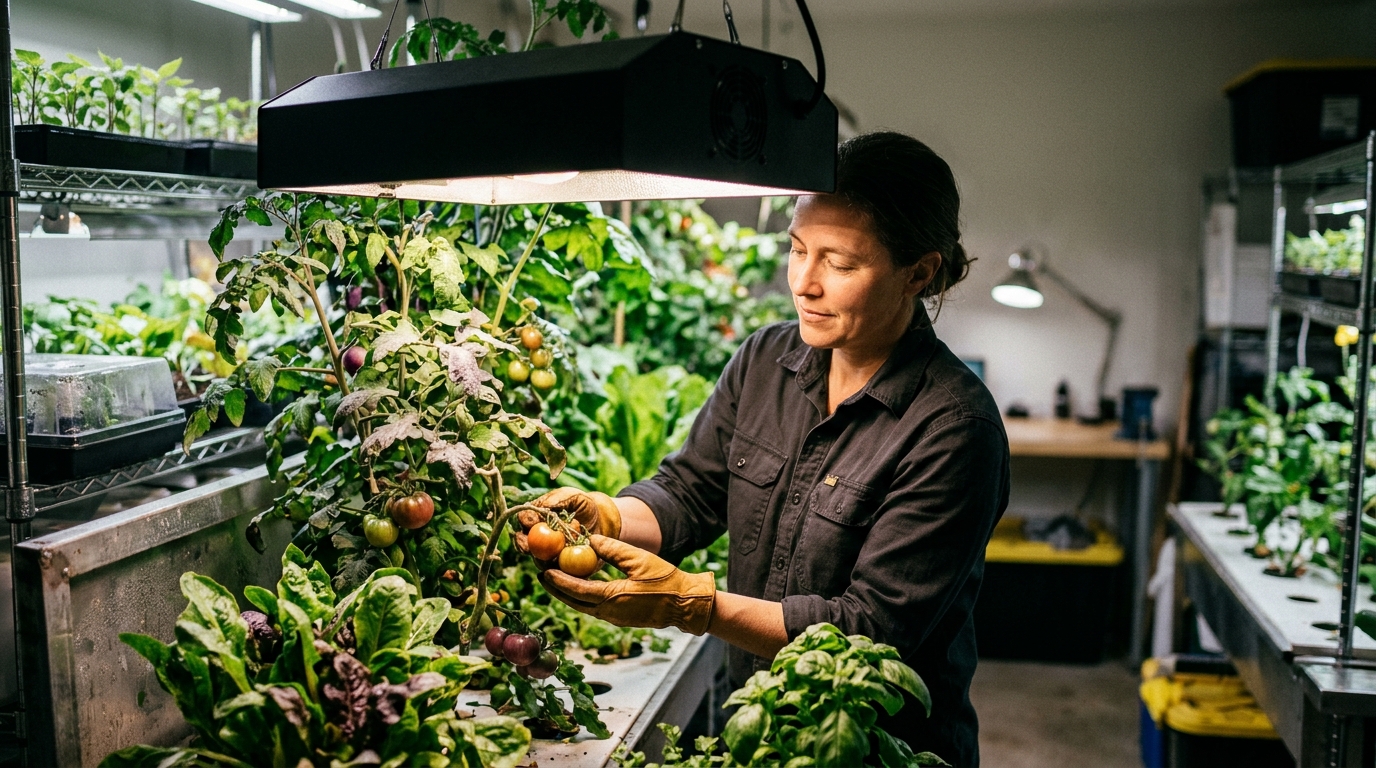
For most indoor vegetable gardens, the Nano Grow Light is the optimal ceramic metal halide (CMH) choice. It pairs a 250W CMH lamp with a proprietary Nano Liquid Photonic Coating that concentrates light toward the canopy. This setup provides the continuous spectrum vegetables need for robust growth without the excessive heat of older HID systems.
Why Spectrum Matters for Vegetables
Vegetable plants require a specific balance of wavelengths to photosynthesize efficiently. A continuous spectrum is often superior to discrete LED peaks for broad-spectrum crops like leafy greens and tomatoes. Ceramic metal halide lamps produce a smooth, continuous light output that mimics natural sunlight more closely than many LED alternatives.
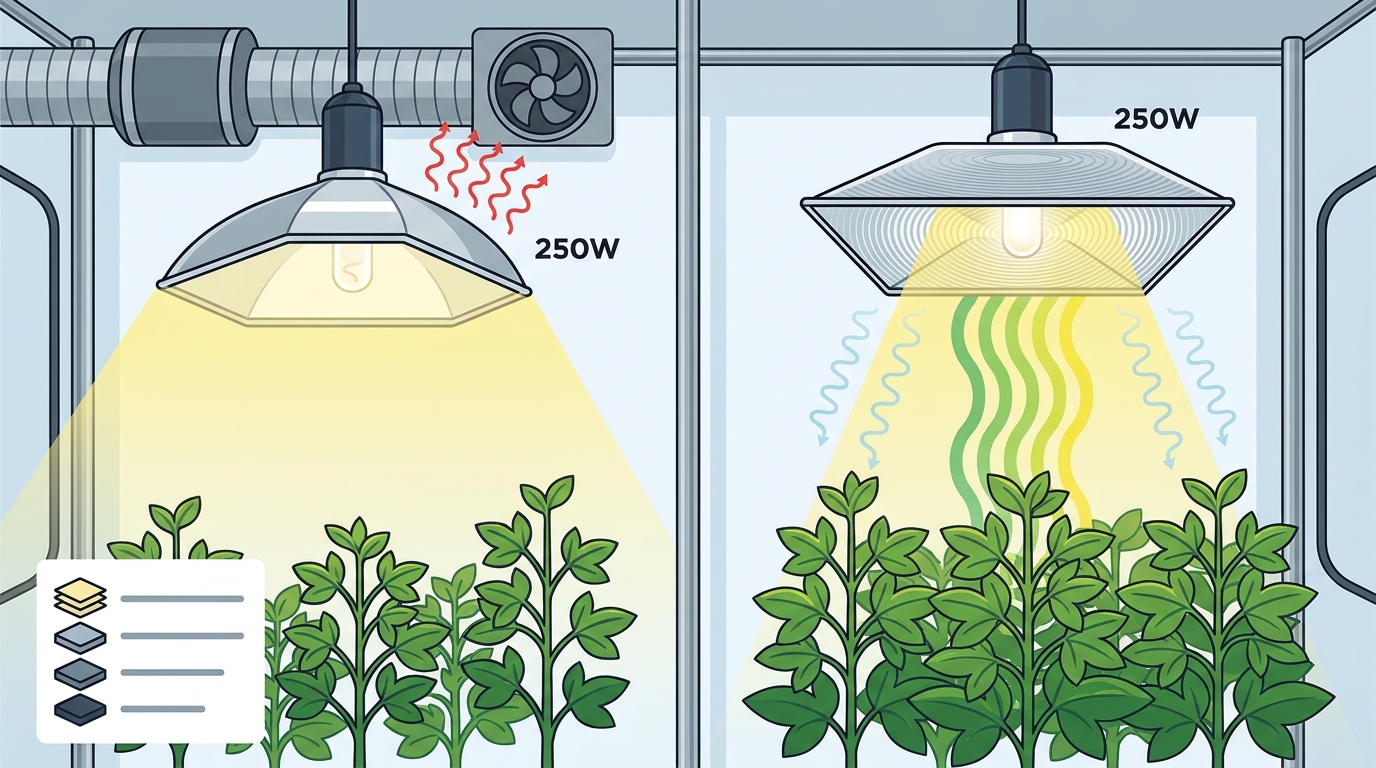
The Nano Liquid Photonic Coating is a nano-scale reflector treatment designed to enhance this spectrum. It is a proprietary coating applied to the reflector that redirects blue and red wavelengths toward the plant canopy. This technology helps ensure that the light reaching your vegetables is not just bright, but also spectrally optimized for photosynthesis.
By focusing on the blue and red bands, the coating supports both vegetative growth and flowering. This is critical for vegetables that transition from leafy stages to fruiting stages. The result is a more uniform light distribution across the grow area, reducing the need for constant fixture adjustment.
Managing Heat in Small Spaces
Heat management is a primary concern when using CMH lights in indoor environments. Unlike LED fixtures, which run cooler, CMH lamps generate significant radiant heat. The Nano Grow Light reports a steady-state surface temperature of approximately 45°C and a heat output of about 340 BTU/hr.
This heat level requires careful placement. You should hang the fixture at a distance that balances light intensity with thermal safety. For most vegetables, a height of 18 to 24 inches is a common starting point. At 18 inches, the reported PPFD is 720 µmol/m²/s, which is suitable for many leafy greens.
Proper ventilation is essential to prevent heat buildup. Ensure your grow space has adequate airflow to dissipate the radiant heat from the lamp. This not only protects the plants from heat stress but also maintains a stable growing environment. The How It Works page provides more details on the thermal characteristics of the fixture.
Coverage and Scaling Your Garden
Understanding coverage area is key to selecting the right number of fixtures. A single Nano Grow Light fixture covers approximately 3.5 by 3.5 feet. This size is ideal for a standard grow tent or a dedicated shelf in a home garden.
For larger vegetable gardens, you can scale up by adding more fixtures. This modular approach allows you to expand your growing area without switching to a different type of light. For example, a 4x4 foot grow tent would require at least one fixture, while a larger space might need two or more.
When scaling, consider the layout of your plants. Arrange fixtures to ensure even coverage across the canopy. The Microgreens guide offers insights into dense planting, which can be applied to vegetable trays as well. Proper spacing between fixtures helps prevent light gaps and ensures uniform growth.
Efficiency and Performance Metrics
Efficiency is a critical factor in long-term growing costs. The Nano Grow Light reports a PAR efficiency of 2.4 µmol/J. This metric indicates how effectively the fixture converts electrical energy into usable light for plants.
Higher efficiency means lower electricity bills and less heat generation per unit of light output. The manufacturer-reported data shows a 34% increase in vegetative biomass compared to uncoated reflectors. This improvement is attributed to the Nano Liquid Photonic Coating's ability to concentrate PAR toward the canopy.
While these figures are from internal testing, they provide a useful benchmark for performance. The Research & Evidence Center offers more detailed information on the testing methodology and results. Understanding these metrics helps you make an informed decision about the fixture's value.
Practical Setup Tips
Setting up your CMH light correctly is crucial for success. Start by ensuring your power supply can handle the 250W load. Use a dedicated circuit if possible to avoid tripping breakers. The fixture should be securely mounted to prevent accidents.
Use a timer to provide a consistent light schedule. Most vegetables thrive on a 12 to 14-hour light cycle. A simple digital timer is sufficient for this purpose. Monitor your plants for signs of light stress, such as leaf burn or stretching, and adjust the height accordingly.
Keep a record of your setup, including fixture height, light schedule, and plant variety. This data will help you optimize your growing conditions over time. The FAQ section addresses common questions about setup and maintenance. Following these tips will help you get the best results from your indoor vegetable garden.
Key Takeaways
- The Nano Grow Light is a 250W CMH fixture with a Nano Liquid Photonic Coating for enhanced spectrum delivery.
- CMH lamps produce a continuous spectrum that is well-suited for vegetable growth.
- Heat output is approximately 340 BTU/hr, requiring careful placement and ventilation.
- A single fixture covers about 3.5 by 3.5 feet, allowing for modular scaling.
- PAR efficiency is reported at 2.4 µmol/J, contributing to lower running costs.
- Proper setup includes secure mounting, a timer, and regular monitoring of plant health.
Frequently Asked Questions
Is the Nano Grow Light an LED?
No, it is a ceramic metal halide (CMH) fixture. It uses a 250W CMH lamp, not LED diodes.
How much heat does it produce?
The fixture reports a heat output of approximately 340 BTU/hr and a surface temperature of 45°C at steady state.
What is the coverage area of one fixture?
A single fixture covers approximately 3.5 by 3.5 feet. You can add more fixtures for larger areas.
Can I use it for flowering vegetables?
Yes, the continuous spectrum and coating support both vegetative and flowering stages of vegetable growth.
Where can I find more technical details?
Visit the Research & Evidence Center for detailed specifications and testing data.
Final Thoughts
Selecting the right grow light is a critical step in establishing a successful indoor vegetable garden. The Nano Grow Light offers a compelling combination of spectrum quality, efficiency, and modular design. By understanding the specific needs of your plants and the characteristics of the fixture, you can create an optimal growing environment.
For more information on the technology and to explore the product, visit the Nano Grow Light website. our team is dedicated to helping growers achieve better results with innovative lighting solutions.