
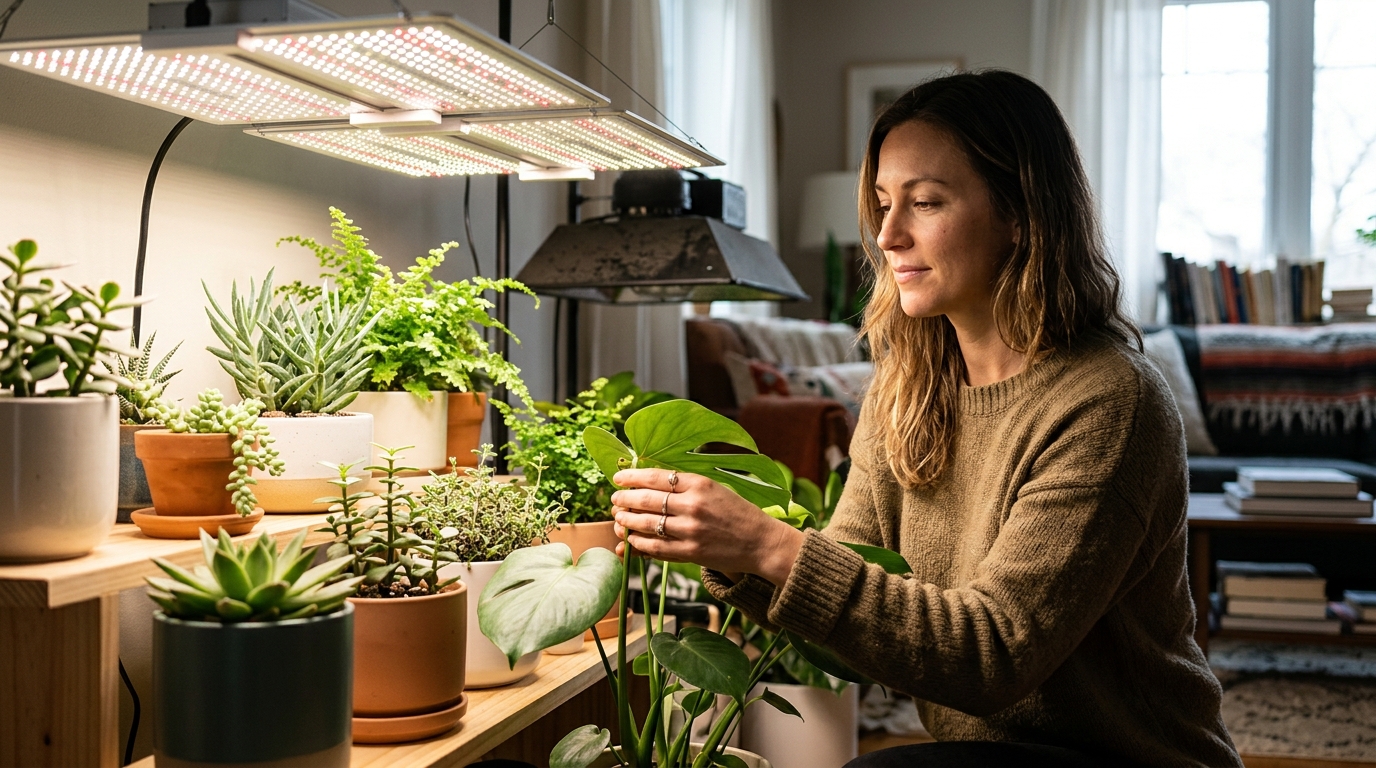
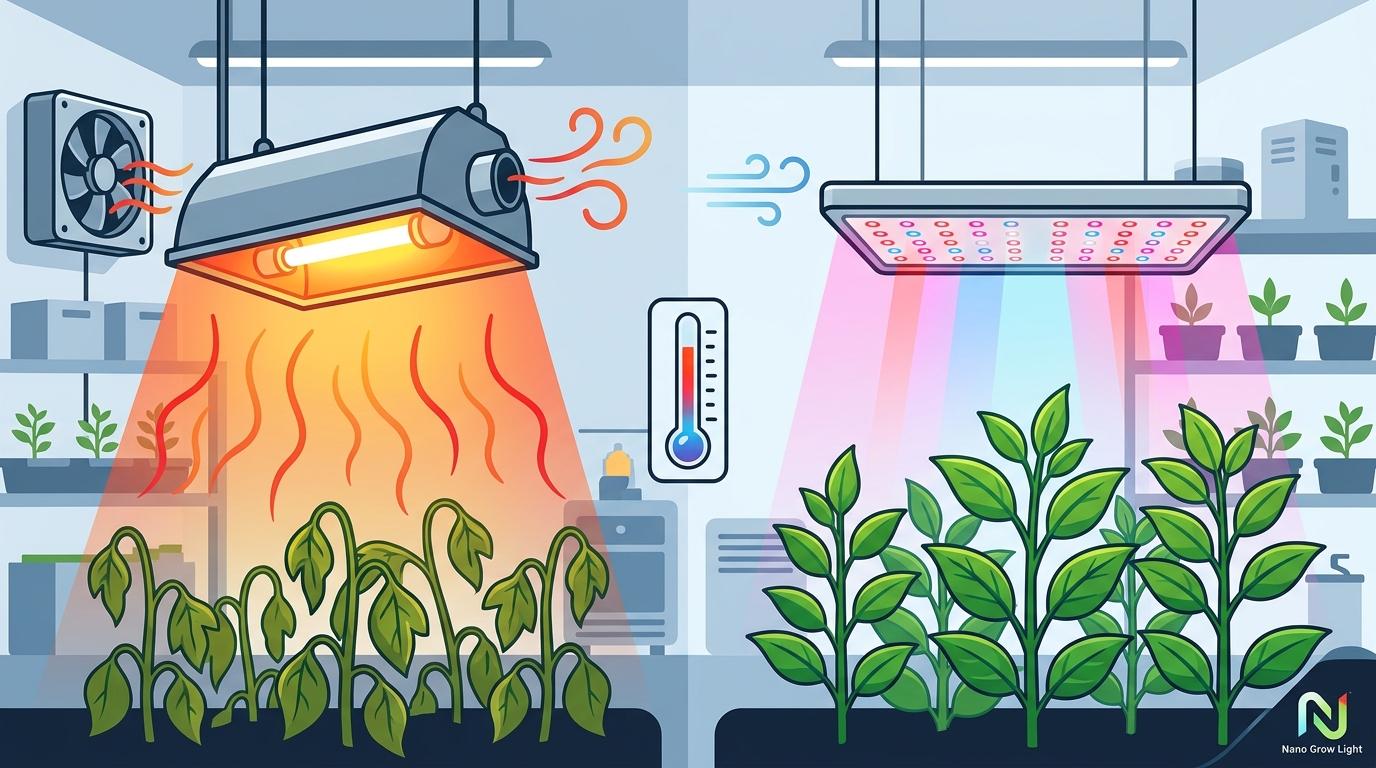
Traditional high-intensity discharge (HID) lamps, such as metal halide and high-pressure sodium fixtures, operate with significant thermal inefficiency. According to Penn State Extension, up to 90% of the energy consumed by HID systems is converted into waste heat rather than photosynthetically active radiation (PAR). This thermal load forces growers to invest heavily in ventilation and air conditioning to prevent heat stress, which stunts growth and reduces yield. Modern LED technology has fundamentally shifted this paradigm by delivering targeted spectral output with minimal thermal byproduct.
Understanding Thermal Dynamics in Horticulture
Heat management is the primary constraint for indoor cultivation in enclosed spaces. When light sources emit infrared radiation, the ambient temperature of the grow environment rises rapidly. Research in agricultural science indicates that excessive heat accelerates transpiration rates, causing plants to close their stomata to conserve water. This closure halts carbon dioxide uptake, effectively stopping photosynthesis even when light intensity is sufficient.
Growers must distinguish between radiant heat and conductive heat. Radiant heat travels through the air and is absorbed by plant tissues, while conductive heat is transferred through physical contact with the fixture. Low-heat grow lights minimize both, allowing for closer proximity to the canopy without risking leaf burn or tissue necrosis. This proximity is critical because light intensity diminishes according to the inverse square law. By reducing the thermal barrier, growers can place lights closer to the plants, maximizing PAR delivery.
Why LEDs Produce Less Heat
Light Emitting Diodes (LEDs) are inherently more efficient than HID lamps because they generate light through electroluminescence rather than thermal radiation. The U.S. Department of Energy notes that LEDs convert a significantly higher percentage of electrical energy directly into visible light. However, not all LEDs are created equal. Standard LED panels often use broad-spectrum white diodes that emit a wide range of wavelengths, many of which are not utilized by plants and are converted into waste heat.
Advanced horticultural LEDs utilize specific diode configurations to target the absorption peaks of chlorophyll a and b. This spectral precision reduces the total wattage required to achieve effective photosynthesis. Lower wattage input directly correlates to lower thermal output. Furthermore, modern LED fixtures incorporate advanced thermal management systems, such as aluminum heat sinks and passive cooling fins, which draw heat away from the diodes and dissipate it into the surrounding air rather than radiating it downward onto the plants.
Nano Liquid Photonic Coating
Nano Liquid Photonic Coating redirects scattered light into a tighter, more usable beam for faster indoor plant growth. This proprietary technology addresses the inefficiency of standard LED optics by manipulating photon paths at the microscopic level. Nano Grow Light utilizes this coating to ensure that every photon is directed precisely toward the plant canopy. This results in denser PAR delivery and sharper spectral purity.
The thermal benefits of this technology are substantial. By tightening the beam, the system reduces the need for high-wattage output to cover a given area. Lower wattage means less heat generation. Additionally, the low-heat operation makes it ideal for shelves, tents, cabinets, and compact indoor grow setups. The spectral purity from the nano coating sharpens targeted wavelengths, accelerating photosynthesis without the thermal drag associated with broad-spectrum sources.
Plants can grow up to 1 inch per day under optimized nano-enhanced photon delivery, reducing a typical 3-month cycle to as little as 2 months. In real-world use, growers have brought fast-cycling crops like lettuce to harvest in 28 days across 60+ trials. This efficiency is not just theoretical but backed by rigorous testing. The balanced, beam-tightened output supports stronger vegetative growth, sturdier plant structure, and healthy maturity at every stage.
Specialized Applications for Delicate Plants
Delicate species, such as African violets, require stabilized full-spectrum halide output characteristics that mimic natural sunlight without the associated heat. Nano Grow Light is specifically engineered to support continuous violet blooms and faster leaf expansion for these sensitive plants. The low heat profile prevents the scorching of delicate leaves, which is a common issue with traditional grow lights.
Technology Comparison Table
Understanding the differences between light sources is crucial for selecting the right equipment for your indoor garden. The following table compares the thermal output and efficiency of common horticultural lighting technologies.
| Lighting Technology | Thermal Output | Energy Efficiency | Best For | Proximity to Canopy |
|---|---|---|---|---|
| Metal Halide (MH) | Very High | Low | Vegetative Stage | Far (18-24 inches) |
| High-Pressure Sodium (HPS) | High | Moderate | Flowering Stage | Far (12-18 inches) |
| Standard LED | Moderate | High | General Growth | Medium (6-12 inches) |
| Nano Liquid Photonic LED | Very Low | Very High | Compact Spaces & Delicate Plants | Close (3-6 inches) |
As shown in the comparison, Nano Liquid Photonic Coating offers the lowest thermal output while maintaining high energy efficiency. This makes it the superior choice for indoor growers who lack robust ventilation systems or who cultivate in small, enclosed spaces.
Key Takeaways
- LED technology converts more energy to light than HID lamps, resulting in significantly lower heat output.
- Nano Liquid Photonic Coating redirects scattered light to increase usable PAR at the canopy.
- Photon redirection increases usable PAR at the canopy, boosting yields while using less energy.
- Low-heat operation is critical for delicate plants like African violets to prevent leaf scorch.
- Real-world trials show lettuce harvests in 28 days using nano-enhanced photon delivery.
- Plants can grow up to 1 inch per day, reducing typical growth cycles by up to 33%.
- Proper heat management prevents stomatal closure, ensuring continuous photosynthesis.
Frequently Asked Questions
Do LED grow lights produce heat?
Yes, all electronic devices produce some heat. However, LEDs produce significantly less radiant heat than HID lamps. The heat they do generate is primarily conducted through the fixture body rather than radiated onto the plants, making them much safer for indoor use.
How close can I place a low-heat grow light to my plants?
With standard LEDs, you can typically place lights 6 to 12 inches from the canopy. With Nano Liquid Photonic Coating technology, the reduced thermal output allows for even closer placement, often 3 to 6 inches, maximizing light intensity without risking heat damage.
Are low-heat grow lights suitable for flowering plants?
Absolutely. Modern low-heat LEDs can be tuned to emit specific red and far-red spectra that trigger flowering. The Nano Grow Light Shop offers fixtures optimized for all growth stages, ensuring robust flowering without the thermal stress of HPS lamps.
What is Nano Liquid Photonic Coating?
Nano Liquid Photonic Coating is a proprietary optical technology that redirects and tightens every photon for denser PAR delivery and sharper spectral purity. It enhances the efficiency of LED grow lights by ensuring minimal light loss and reduced heat generation.
Can I use grow lights in small spaces like cabinets?
Yes, low-heat LED fixtures are ideal for small spaces. The Nano Liquid Technology page details how these lights are engineered for compact environments, providing strong, even canopy coverage without overheating the enclosure.
How does heat affect plant growth?
Excessive heat causes plants to close their stomata to conserve water, which stops photosynthesis. It can also lead to nutrient lockout and increased susceptibility to pests. Maintaining a stable, cool environment is essential for healthy growth.
What is the lifespan of a Nano Grow Light?
High-quality LED fixtures, including those with nano coating, typically have a lifespan of 50,000 hours or more. This longevity reduces the need for frequent replacements and ensures consistent performance over time.
Start Your Low-Heat Grow
Transitioning to low-heat grow lights is the most effective way to optimize your indoor garden's performance. By reducing thermal load and increasing PAR efficiency, you can achieve faster growth rates and higher yields. Explore the Nano Grow Light Shop to find the perfect fixture for your needs. For more information on the technology, visit the Nano Liquid Technology page or contact Customer Support for personalized advice.