
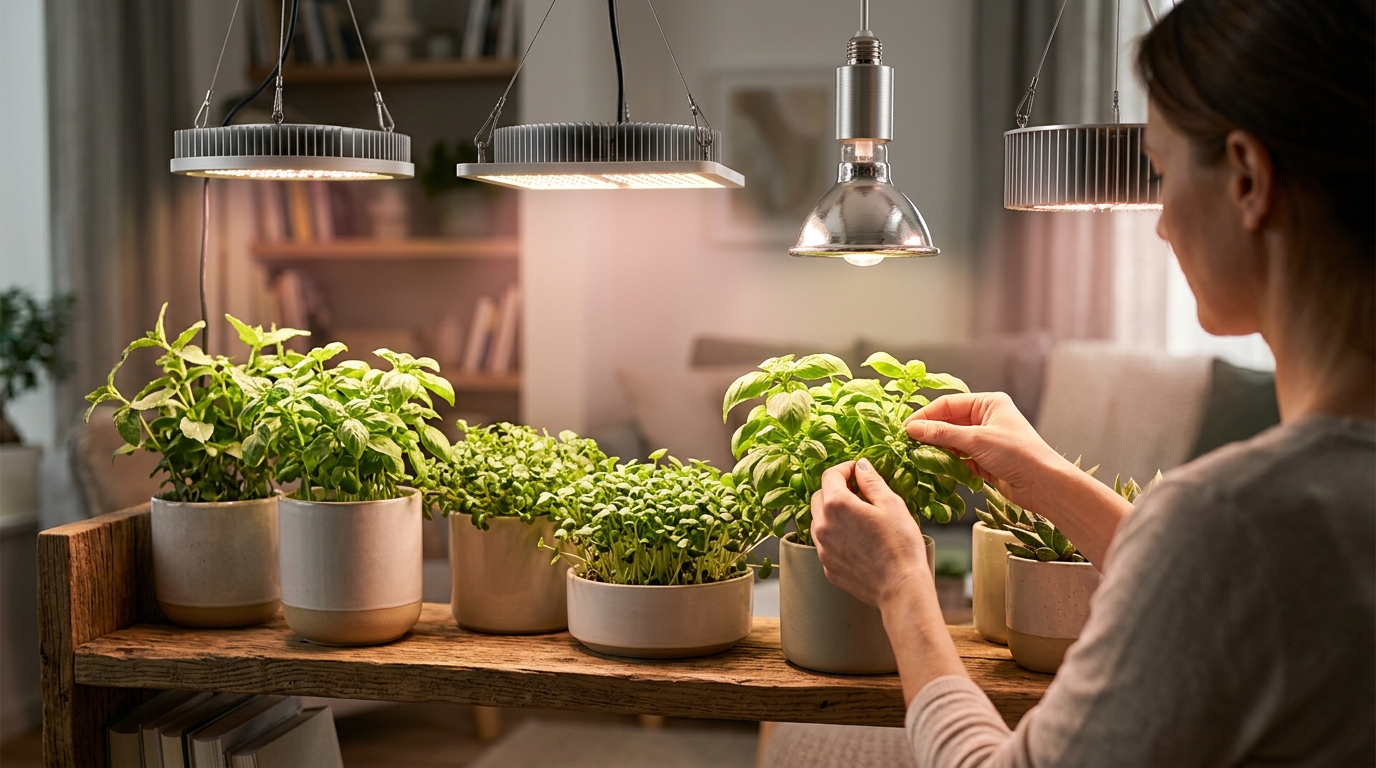
Indoor gardening has evolved from a niche hobby into a multi-billion dollar industry driven by the demand for fresh produce and consistent plant health year-round. According to recent market data, the global indoor farming market is projected to expand significantly through 2030, with lighting representing a critical operational expense for both hobbyists and commercial growers. Understanding the true cost-value ratio of different lighting technologies is essential for maximizing yield while minimizing energy overhead. This analysis compares Ceramic Metal Halide (CMH) technology, specifically featuring Nano Liquid Photonic Coating, against standard LED fixtures to determine the optimal investment for your indoor garden.
Understanding Cost-Value in Horticultural Lighting
When evaluating grow lights, the purchase price is only the initial component of the total cost of ownership. True value is derived from Photosynthetically Active Radiation (PAR) delivery, spectral quality, and longevity. Many growers fall into the trap of selecting the cheapest unit, only to face high electricity bills or poor plant development due to inadequate light intensity. A high-value fixture delivers dense photon flux directly to the canopy, reducing the time to harvest and improving plant density.
The core challenge in indoor gardening is overcoming light scatter. Standard reflectors often lose usable light to absorption or wide dispersion, meaning you pay for watts that never reach your plants. This is where advanced reflector technologies and lamp types diverge in their value proposition. For a deeper look at the specific technical specifications of our reflector coating, you can review the Nano Liquid Photonic Coating Spec Sheet.
CMH Technology and Nano Liquid Photonic Coating
Ceramic Metal Halide (CMH) lamps have long been respected in the horticultural community for their superior spectral output compared to traditional High-Pressure Sodium (HPS) lights. Nano Grow Light utilizes a 250W CMH lamp paired with a proprietary Nano Liquid Photonic Coating on the internal reflector. This coating consists of nano-scale clusters, approximately 20 to 80 nanometers in size, which redirect scattered photons into a tighter, more usable beam.
The value of this technology lies in its ability to concentrate light. While standard bare aluminum reflectors lose light to scatter, the nano-coated reflector increases visible-light and PAR reflectance. According to manufacturer-reported internal testing, this results in denser leaf canopies and faster vegetative growth. In prototype trials, lettuce matured in 28 days compared to 42 days outdoors, demonstrating the accelerated development potential of targeted photon delivery.
For growers interested in the specific mechanics of this reflector treatment, the Nano Liquid Photonic Coating page provides a detailed breakdown of how the nano-crystal structure enhances light efficiency.
LED vs. CMH: Efficiency and Spectrum
The most common comparison in modern indoor gardening is between LED and CMH technologies. LED fixtures are often marketed on their raw energy efficiency, converting a higher percentage of electricity into light with less heat output. However, LED spectra are created by combining discrete diodes, which can sometimes result in gaps in the spectral distribution. CMH lamps, by contrast, produce a continuous full-spectrum output that closely mimics natural sunlight.
Nano Grow Light’s approach leverages the broad spectrum of CMH while using the nano-coating to solve the heat and scatter issues traditionally associated with metal halide lamps. The fixture reports approximately 340 BTU/hr of heat output and a surface temperature of roughly 45°C at steady state. While this is hotter than typical LED fixtures, the directed beam ensures that the energy is utilized effectively for photosynthesis rather than heating the ambient air unnecessarily.
For a comprehensive overview of the company’s mission and technology, visit the About NanoGrowLight page.
Operational Costs and Heat Management
Operational costs include electricity consumption, cooling requirements, and bulb replacement frequency. CMH bulbs typically last between 10,000 to 20,000 hours, which is competitive with many mid-range LED arrays. The 250W Nano Grow Light fixture is designed for small to medium grow spaces, covering approximately a 3.5 by 3.5 foot area. For larger operations, growers can scale up by adding multiple fixtures, which offers flexibility in layout that fixed-output LED panels sometimes lack.
Heat management is a critical factor in the cost-value equation. Because CMH lamps run hotter than LEDs, proper positioning is required. The African Violets guide offers specific advice on positioning delicate houseplants at a safe distance to prevent heat stress. For commercial greenhouse applications, the Shop Now page details the available single and multi-fixture bundles that allow for scalable deployment.

Matching Technology to Your Grow Space
Selecting the right light depends heavily on your specific growing goals. Microgreens growers often prioritize speed and density, where the nano-coated CMH fixture has shown significant benefits in reducing crop cycles. Hobbyists growing flowering houseplants benefit from the full-spectrum output that encourages blooming. Vertical farms may find the modular nature of the 250W fixtures advantageous for arranging light rows across multi-tier racks.
To see how other growers have utilized this technology, check out the Customer Success Stories section for real-world performance data.
| Feature | Nano Grow Light (CMH + Nano Coating) | Standard LED Grow Light | Traditional HPS Light |
|---|---|---|---|
| Spectrum Type | Continuous Full-Spectrum | Discrete Diode Peaks | Red/Orange Dominant |
| Heat Output | ~340 BTU/hr (45°C Surface) | Low to Moderate | Very High |
| PAR Efficiency | High (via Photon Redirection) | High (via Diode Density) | Moderate |
| Best For | Microgreens, Flowering Plants, Small Spaces | Large Commercial Ops, Heat-Sensitive Crops | High-Intensity Flowering (Legacy) |
| Scalability | Modular Fixture Bundles | Fixed Panel Sizes | Modular Ballast/Lamp |
Key Takeaways
- Spectral Quality: CMH lamps provide a continuous full-spectrum output that supports robust vegetative growth and flowering, unlike the discrete peaks of some LEDs.
- Nano Coating Efficiency: The proprietary Nano Liquid Photonic Coating redirects scattered light, increasing usable PAR at the canopy and potentially accelerating growth cycles.
- Heat Management: With ~340 BTU/hr output, CMH fixtures require careful positioning, especially for delicate houseplants like African Violets.
- Scalability: The 250W fixture covers ~3.5x3.5 feet, allowing growers to scale by adding units rather than buying massive, expensive single panels.
- Growth Speed: Internal testing indicates lettuce can mature in 28 days, significantly faster than traditional outdoor or less efficient indoor methods.
- Cost-Value Balance: While initial costs vary, the combination of spectral purity and photon redirection offers high value for small to medium indoor gardens.
- Modular Design: Available in single, 2-pack, and 3-pack bundles, providing flexibility for different grow tent or shelf configurations.
Frequently Asked Questions
Is Nano Grow Light better than LED for microgreens?
Many microgreens growers prefer the CMH technology paired with Nano Liquid Photonic Coating because the continuous full-spectrum output and directed photon delivery can accelerate maturity. Internal testing has shown lettuce reaching harvest in as little as 28 days, which is a competitive advantage for fast-cycling crops.
How much heat does the 250W CMH fixture produce?
The fixture reports approximately 340 BTU/hr of heat output and a surface temperature of roughly 45°C at steady state. This is higher than typical LED fixtures, so it is important to maintain a safe distance from heat-sensitive plants.
Can I use this light for flowering houseplants?
Yes, the full-spectrum output is ideal for flowering houseplants like African Violets. The broad spectrum supports the blue and white wavelengths necessary for vegetative health and the red wavelengths that trigger blooming.
What is the coverage area of a single fixture?
A single 250W fixture is designed to cover approximately a 3.5 by 3.5 foot area. For larger spaces, you can purchase multi-fixture bundles to ensure even canopy coverage.
Does the Nano Liquid Coating require maintenance?
The Nano Liquid Photonic Coating is a durable, cured treatment applied to the reflector. It does not require regular maintenance or reapplication, unlike some liquid nutrient systems or temporary reflector treatments.
How does the cost compare to traditional HPS lights?
While HPS lights are often cheaper upfront, they are less efficient and produce excessive heat. The CMH fixture offers better spectral quality and lower heat output than HPS, providing a higher long-term value for plant health and energy efficiency.
Where can I find technical specifications?
Detailed technical specifications, including the nano-scale cluster size and reflectance metrics, are available on the Nano Liquid Photonic Coating Spec Sheet page.
Start Your Indoor Garden Today
Choosing the right grow light is a foundational decision for your indoor garden's success. By understanding the cost-value dynamics of CMH technology and the efficiency of Nano Liquid Photonic Coating, you can make an informed investment that accelerates growth and improves yield. Explore our Shop Now page to view available fixtures and bundles, or visit our Contact page for personalized grow room advice.