
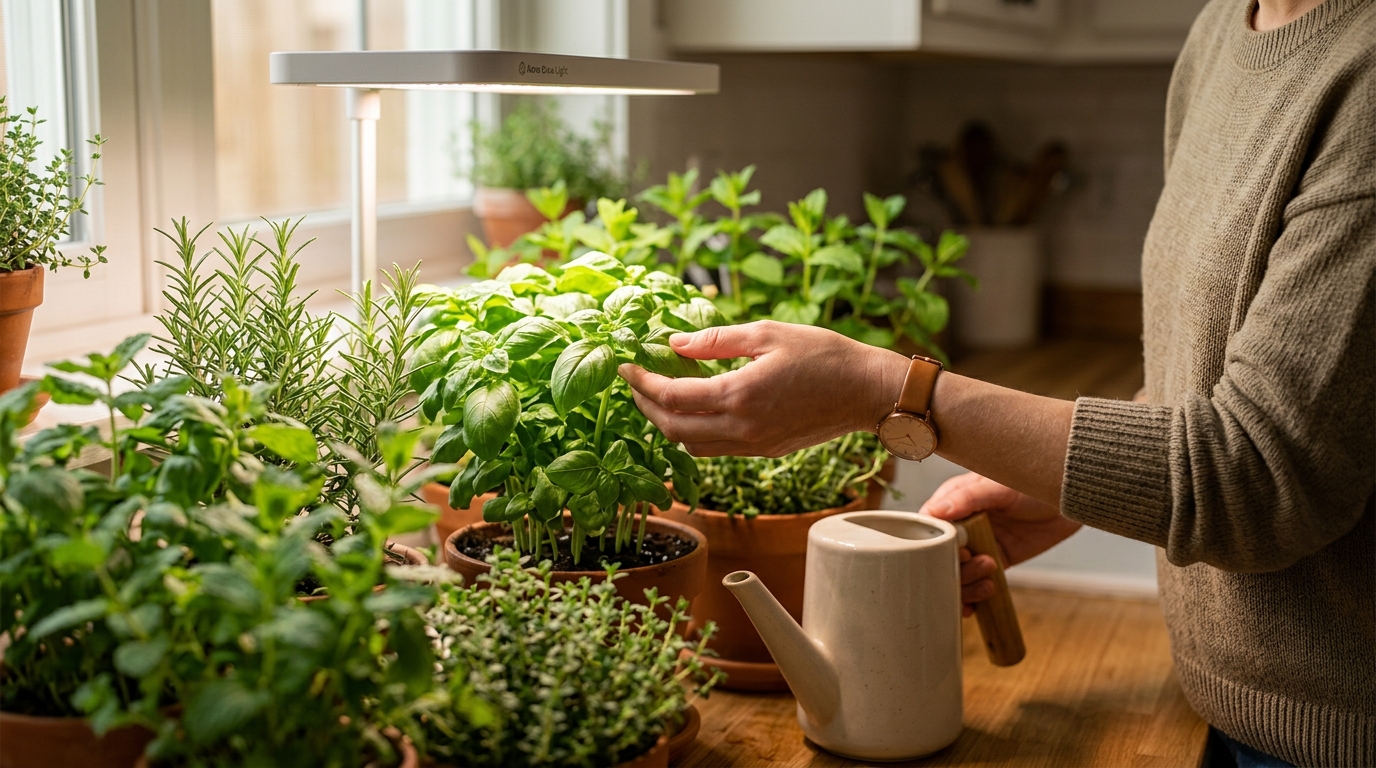
Indoor cultivation has evolved from a hobbyist niche into a precision science driven by spectral efficiency and photon density. According to recent horticultural lighting reports, modern growers are shifting away from traditional broad-spectrum sources toward targeted nano-structured reflectors that maximize Photosynthetically Active Radiation (PAR) delivery. This shift is particularly critical for high-value crops like culinary herbs, where flavor compounds and leaf density depend heavily on consistent light intensity. By leveraging proprietary Nano Liquid Photonic Coating technology, growers can achieve denser canopies and accelerated harvest cycles compared to standard LED or fluorescent setups.
Why Nano-Spectrum Technology Matters for Herbs
Herbs such as basil, cilantro, and mint require intense, full-spectrum light to produce essential oils and maintain structural integrity. Standard grow lights often scatter photons in every direction, wasting energy on wavelengths that plants cannot utilize for photosynthesis. Nano Liquid Photonic Coating addresses this inefficiency by redirecting scattered light into a tighter, more usable beam aimed directly at the plant canopy.
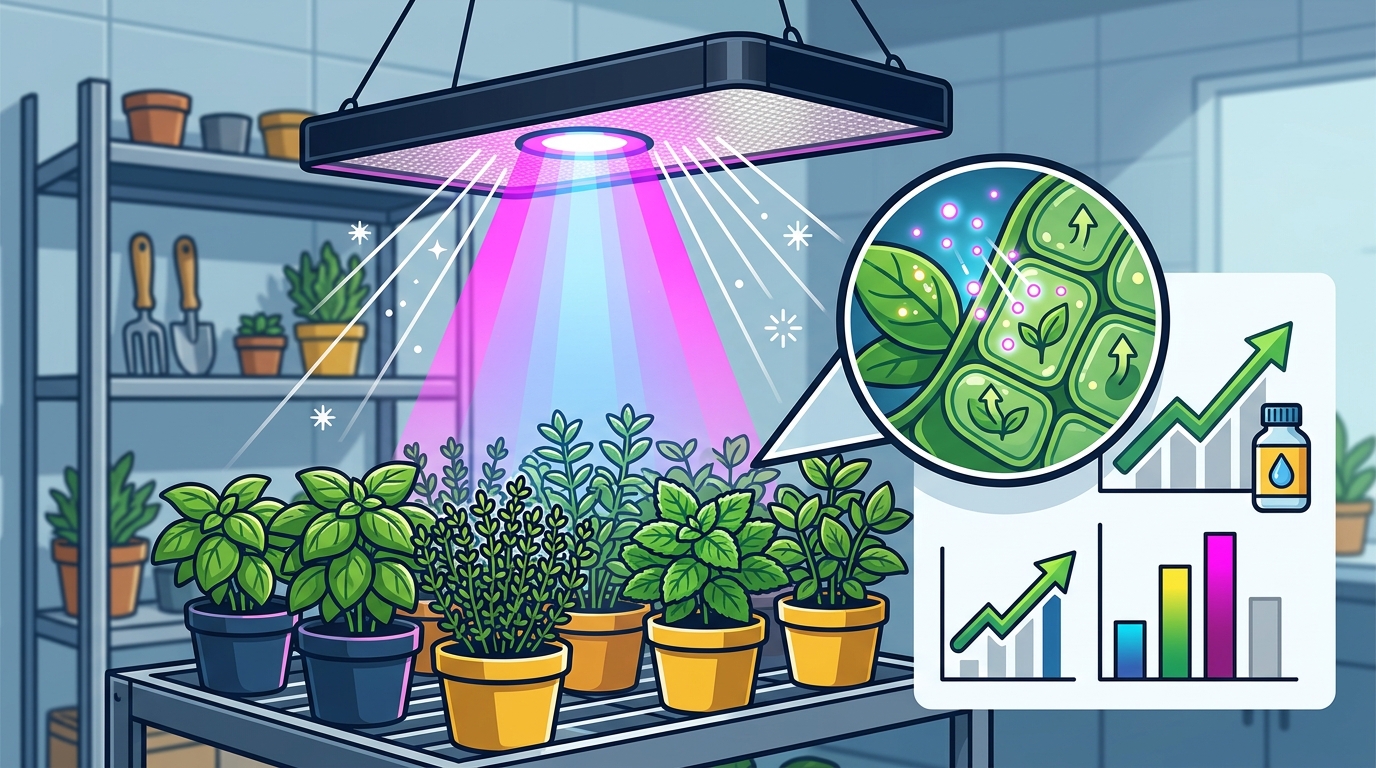
This nano-scale reflector treatment consists of clusters approximately 20 to 80 nanometers in size. When applied to the fixture’s internal reflector, the cured coating measures roughly 2 to 6 microns thick. According to manufacturer-reported internal testing, this coating increases visible-light and PAR reflectance compared to bare aluminum reflectors. It also shifts more of the reflected spectrum toward the blue and red wavelength bands used in photosynthesis. The result is a denser PAR field that boosts yields while using less energy.
For herb growers, this means faster vegetative growth and stronger plant structure. In trials involving fast-cycling crops, lettuce matured in 28 days versus 42 days outdoors. While specific herb trials vary by variety, the underlying principle remains the same: tighter photon delivery accelerates development. Many growers report bringing fast-cycling crops to harvest in as little as 28 days based on testing across 60+ harvests.
Ceramic Metal Halide vs. Standard LEDs
Understanding the difference between Ceramic Metal Halide (CMH) and Light Emitting Diode (LED) technology is crucial for optimizing herb growth. Nano Grow Light uses a 250W ceramic metal halide (CMH) lamp, not LED. This choice is intentional for specific horticultural outcomes.
CMH lamps provide a broader spectral distribution than typical LED diodes. They produce a continuous full-spectrum output without the diode gaps that can create uneven light patches on the canopy. This spectral purity sharpens targeted wavelengths, accelerating photosynthesis. The Nano Liquid Photonic Coating further enhances this by ensuring that the broad spectrum emitted by the CMH lamp is concentrated where it matters most: the leaves.
However, CMH lamps run hotter than typical horticultural LED fixtures. NanoGrowLight fixtures report approximately 340 BTU/hr of heat output and approximately 45°C surface temperature at steady state. This heat output requires careful positioning, especially for delicate herbs. Growers must position plants at a safe distance to avoid heat stress while still benefiting from the high-intensity light. For general plant care guidance, the University of Minnesota Extension's African violet growing guide offers helpful independent references on managing light and heat for sensitive indoor plants.
Herb-Specific Growth Benefits
Herbs are among the most responsive crops to high-quality indoor lighting. The combination of full-spectrum CMH output and nano-enhanced photon delivery promotes up to 3× faster development in ideal conditions. Plants can grow up to 1 inch per day, reducing a typical 3-month cycle to as little as 2 months.
Flavor and Oil Production
Intensity drives flavor. Herbs grown under high-PAR nano-spectrum lights often develop thicker leaves and more robust essential oil profiles. The balanced, beam-tightened output supports stronger vegetative growth and sturdier plant structure. This is vital for herbs like basil, which can become leggy and weak under insufficient light.
Year-Round Consistency
Outdoor herb growth is subject to seasonal fluctuations in daylight hours and intensity. Indoor nano-spectrum systems allow growers to maintain a consistent 12- to 14-hour light schedule using a simple timer. This consistency ensures that herbs like cilantro and parsley do not bolt prematurely due to changing day lengths. The compact fixture size suits a single plant, a small grouping, or a windowsill-style indoor shelf, making it ideal for kitchen gardens.
Optimizing Your Nano Grow Light Setup
To achieve faster herb growth and healthier yields, proper setup is non-negotiable. The Nano Grow Light fixture is engineered for small and medium grow spaces, providing strong, even canopy coverage. A single fixture covers approximately 3.5 by 3.5 feet. For larger operations, growers can arrange multiple fixtures across rows, bays, or multi-tier racks.
Distance and Heat Management
Because CMH lamps generate significant heat, distance is your primary control mechanism. Start by positioning the fixture 12 to 18 inches above the canopy. Monitor the leaves closely during the first week for signs of stress, such as curling or browning. If heat stress occurs, raise the fixture or improve air circulation with an oscillating fan. The low-heat operation relative to its output makes it ideal for shelves, tents, cabinets, and compact indoor grow setups, but vigilance is still required.
Spectral Alignment
Ensure the fixture is centered over the plant group. The Nano Liquid Photonic Coating redirects scattered light into a tighter beam, but off-center placement can reduce efficiency. For herbs like mint, which spread quickly, a single 250W fixture may suffice for a small patch. For larger basil plants, consider the 2-pack or 3-pack bundles to ensure even coverage across the entire canopy.
Fixture Configuration Options
NanoGrowLight offers flexible purchasing options to match the scale of your herb garden. Whether you are a hobbyist with a windowsill or a commercial grower with a greenhouse bay, there is a configuration for you.
| Configuration | Best For | Coverage Area | Key Benefit |
|---|---|---|---|
| Single Fixture | Windowsill, small shelf, or single large herb plant | 3.5 x 3.5 feet | Cost-effective entry into nano-spectrum tech |
| 2-Pack Bundle | Medium countertop garden or small tent | 7 x 3.5 feet (side-by-side) | Even coverage for spreading herbs like mint |
| 3-Pack Bundle | Larger indoor garden or commercial greenhouse rows | 10.5 x 3.5 feet (linear array) | Scalable solution for high-volume harvests |
For larger installations, growers simply scale up by adding more fixtures rather than switching to one larger unit. This modular approach allows for precise light density management across different zones of your grow space. You can also explore Customer Success Stories to see how other growers have optimized their setups.
Key Takeaways
- Nano Liquid Photonic Coating is a proprietary nano-scale reflector treatment that redirects scattered light into a tighter, more usable beam for faster indoor plant growth.
- CMH Technology provides a broader spectral distribution than typical LED diodes, producing a continuous full-spectrum output without diode gaps.
- Heat Output is a critical factor, with fixtures reporting approximately 340 BTU/hr and 45°C surface temperature at steady state.
- Accelerated Growth is possible, with plants growing up to 1 inch per day and fast-cycling crops reaching harvest in as little as 28 days.
- Modular Scaling allows growers to start with a single fixture covering 3.5 x 3.5 feet and expand to 2-pack or 3-pack bundles for larger areas.
- Spectral Purity from the nano coating sharpens targeted wavelengths, accelerating photosynthesis and boosting essential oil production in herbs.
- Internal Testing shows increased vegetative biomass and denser leaf canopy in prototype trials versus standard LED fixtures at equal wattage.
Frequently Asked Questions
How does Nano Liquid Photonic Coating improve herb growth?
Nano Liquid Photonic Coating is a nano-scale reflector coating that increases visible-light and PAR reflectance compared to bare aluminum. It redirects scattered photons into a denser beam aimed at the canopy, boosting yields while using less energy.
Is CMH better than LED for growing herbs?
CMH lamps provide a broader spectral distribution than typical LED diodes. They produce a continuous full-spectrum output without diode gaps, which can create uneven light patches. This spectral purity is beneficial for herb flavor and structure.
How hot do Nano Grow Lights get?
NanoGrowLight fixtures report approximately 340 BTU/hr of heat output and approximately 45°C surface temperature at steady state. Growers must position delicate herbs at a safe distance to avoid heat stress.
What is the coverage area of a single fixture?
A single fixture covers approximately 3.5 by 3.5 feet. For larger herb gardens, growers can use 2-pack or 3-pack bundles to expand coverage.
Can I use this light for year-round herb growing?
Yes. By pairing the fixture with a timer to maintain a consistent 12- to 14-hour light schedule, you can grow herbs like basil, cilantro, and mint year-round, independent of outdoor seasons.
How long does it take to harvest herbs with this light?
In real-world use, growers have brought fast-cycling crops to harvest in as little as 28 days, based on testing across 60+ harvests. This is a significant reduction from typical outdoor cycles.
Where can I learn more about the technology?
You can learn more about the Nano Liquid Technology and view the Technical Spec Sheet for detailed performance metrics.
Start Growing Faster Today
Transform your indoor herb garden with the precision of nano-spectrum technology. Whether you need a single fixture for your kitchen counter or a multi-pack for your greenhouse, NanoGrowLight provides the tools for faster growth and healthier yields. Shop Nano Grow Light today and see the difference for yourself. For more insights, visit our Blog or About page.