

Indoor cultivation success relies heavily on precise environmental control, with lighting being the most critical variable. According to manufacturer-reported internal testing, NanoGrowLight’s coated reflectors increase reflectance and concentrate more of the fixture’s output onto the grow area. This efficiency gain is only realized when the fixture is installed correctly. Improper positioning can lead to heat stress or insufficient photosynthetically active radiation (PAR) delivery. This guide details the exact setup parameters for the 250W ceramic metal halide (CMH) fixture.
Understanding the Nano Liquid Photonic Coating
Before installing the hardware, it is essential to understand the core technology driving the system. Nano Liquid Photonic Coating is a proprietary nano-scale reflector treatment designed to redirect and concentrate light toward the plant canopy. Unlike standard bare aluminum reflectors that scatter photons in every direction, this coating aims to improve light reflectance and spectral output.
The coating consists of nano-scale clusters, approximately 20 to 80 nanometers in size, applied to the fixture’s reflector. The cured coating measures approximately 2 to 6 microns thick. According to manufacturer-reported internal testing, the coating increases visible-light and PAR reflectance compared to a bare aluminum reflector. It also shifts more of the reflected spectrum toward the blue and red wavelength bands used in photosynthesis. This technical specification ensures that every watt of energy contributes to vegetative growth and flowering.
For a deeper technical breakdown, you can review the Nano Liquid Photonic Coating Technical Spec Sheet. Understanding these mechanics helps growers appreciate why proper setup is non-negotiable for achieving the reported yield increases.
Fixture Configuration and Bundles
Nano Grow Light designs ceramic metal halide (CMH) grow light fixtures for indoor gardening and horticultural lighting. The primary product line features 250W ceramic metal halide (CMH) grow light fixtures. Each fixture’s reflector carries the proprietary Nano Liquid Photonic Coating. For larger grow spaces, customers can choose a single fixture, a 2-pack bundle, or a 3-pack bundle.
Choosing the right configuration depends on your grow area dimensions. A single fixture covers approximately 3.5 by 3.5 feet. Larger operations simply scale up by adding more fixtures, rather than switching to one larger unit. This modular approach allows for precise light distribution across rows, bays, or multi-tier racks.
You can explore the available options on the Shop Now page. Selecting the appropriate bundle ensures that your canopy receives uniform light intensity without hot spots or dark zones. Proper configuration is the first step toward achieving the denser leaf canopy reported in prototype trials.
Placement Guidelines and Distance
Correct placement is critical for maximizing the benefits of the Nano Liquid Photonic Coating. The fixture is engineered for small and medium grow spaces, providing strong, even canopy coverage. However, the distance between the light source and the plant canopy must be managed carefully due to the heat output of CMH lamps.
CMH lamps run hotter than typical LED grow lights. In fact, NanoGrowLight fixtures report approximately 340 BTU/hr of heat output and roughly 45°C surface temperature at steady state. Because of this heat, position delicate houseplants at a safe distance from the fixture. Also, check leaves for signs of stress during the first week.
For general plant care guidance, the University of Minnesota Extension's African violet growing guide offers a helpful independent reference. While this guide focuses on African violets, the principles of heat management and light distance apply to all indoor horticulture applications. Adjust the height of the fixture based on the plant's growth stage to maintain optimal PAR levels without causing thermal damage.
Heat Management and Ventilation
Effective heat management is a cornerstone of successful indoor cultivation. The Nano Grow Light uses a 250W ceramic metal halide (CMH) lamp, not LED. CMH lamps provide a broader spectral distribution than typical LED diodes. CMH produces a continuous full-spectrum output without diode gaps. This spectral purity accelerates photosynthesis but generates significant thermal energy.
To mitigate heat stress, ensure your grow space has adequate ventilation. Use exhaust fans to remove hot air and intake fans to bring in fresh, cool air. This airflow not only regulates temperature but also strengthens plant stems through gentle air movement. Monitor the ambient temperature around the fixture regularly to ensure it stays within the optimal range for your specific crop.
For more insights on managing your grow environment, visit the Nano Grow Light Blog. The blog contains articles on advanced cultivation techniques and technology updates that can help you refine your setup over time.
Spectral Benefits for Plant Stages
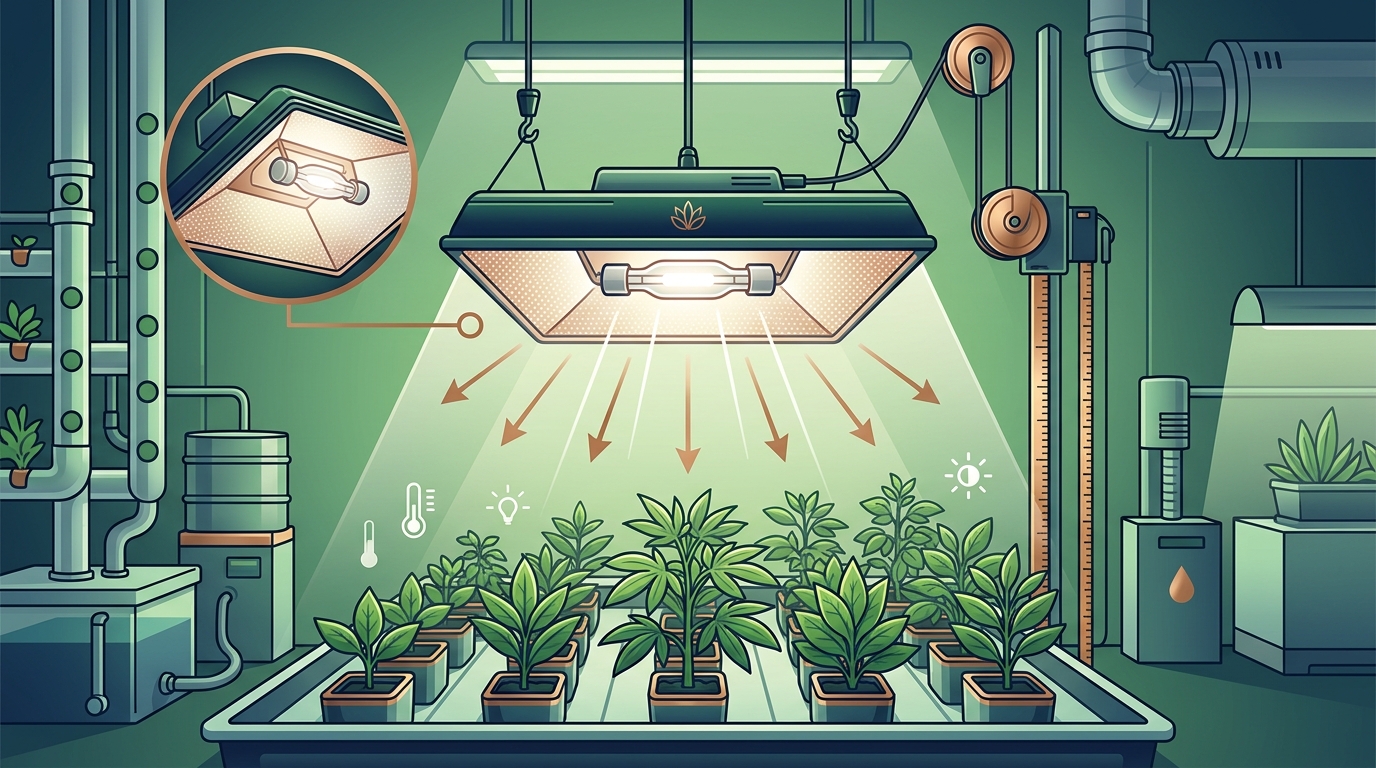
The Nano Liquid Photonic Coating redirects scattered light into a tighter, more usable beam for faster indoor plant growth. Photon redirection increases usable PAR at the canopy, boosting yields while using less energy. This targeted beam delivery improves performance per watt and reduces heat stress on your plants. The result is stronger vegetative growth, sturdier plant structure, and more reliable yields with less wasted energy.
In our trials lettuce matured in 28 days versus 42 days outdoors. This dramatic reduction in cycle time is attributed to the enhanced spectral output and efficient light delivery. Plants can grow up to 1 inch per day, reducing a typical 3-month cycle to as little as 2 months. In real-world use, growers have brought fast-cycling crops like lettuce to harvest in as little as 28 days, based on our own testing across 60+ harvests.
These benefits extend to flowering plants and microgreens as well. The full-spectrum CMH output, including the blue and white wavelengths used in vegetative growth, supports healthy development at every stage. For specific care instructions for African violets, check the African Violets page on the NanoGrowLight website.
Key Takeaways
- Core Technology: Nano Liquid Photonic Coating is a nano-scale reflector coating that increases PAR reflectance and shifts spectrum toward blue and red bands.
- Fixture Specs: The primary product is a 250W ceramic metal halide (CMH) fixture with approximately 340 BTU/hr heat output.
- Coverage Area: A single fixture covers approximately 3.5 by 3.5 feet, suitable for small to medium grow spaces.
- Heat Management: CMH lamps run hotter than LEDs; maintain safe distances and ensure adequate ventilation to prevent heat stress.
- Yield Potential: Manufacturer-reported testing shows lettuce maturing in 28 days versus 42 days outdoors, with plants growing up to 1 inch per day.
- Scalability: Operations can scale by adding single fixtures, 2-pack bundles, or 3-pack bundles rather than switching to larger units.
- Spectral Purity: The CMH lamp provides continuous full-spectrum output without diode gaps, supporting all growth stages.
Frequently Asked Questions
What is the Nano Liquid Photonic Coating?
Nano Liquid Photonic Coating is a proprietary nano-scale reflector treatment designed to redirect and concentrate light toward the plant canopy, increasing PAR delivery and spectral efficiency.
How much area does one Nano Grow Light fixture cover?
A single fixture covers approximately 3.5 by 3.5 feet, making it ideal for small to medium indoor grow spaces.
Does the Nano Grow Light run hot?
Yes, the 250W CMH lamp generates approximately 340 BTU/hr of heat output and reaches a surface temperature of roughly 45°C at steady state.
Can I use this light for African violets?
Yes, the full-spectrum output is suitable for African violets, but you must position the fixture at a safe distance to avoid heat stress.
How does the Nano Liquid Coating compare to standard reflectors?
According to manufacturer-reported internal testing, the coating increases visible-light and PAR reflectance compared to a bare aluminum reflector.
What bundle options are available?
Customers can choose a single fixture, a 2-pack bundle, or a 3-pack bundle to suit their specific grow space requirements.
Is the Nano Grow Light suitable for commercial greenhouses?
Yes, multiple fixtures can be arrayed for larger indoor operations, including commercial greenhouse supplemental lighting.
Start Your Grow
Ready to grow faster? Shop Nano Grow Light today and see the difference for yourself. Visit the Shop Now page to select the perfect configuration for your indoor garden. For more information on the technology, explore the Nano Liquid Technology section. If you have further questions, contact the support team via the Contact page.