

For most small indoor gardens, a 250W ceramic metal halide (CMH) grow light is the ideal starting point. This wattage provides sufficient photosynthetically active radiation (PAR) for seedlings, herbs, and small flowering plants without generating excessive heat. Nano Grow Light designs its fixtures around this specific output to balance efficiency with safety for home environments.
Understanding CMH Wattage and Light Output
Ceramic metal halide wattage is a measure of electrical power consumption, not direct light output. However, in horticulture, wattage serves as a reliable proxy for the amount of usable light a fixture can deliver. A 250W CMH lamp typically produces around 26,000 lumens, which is a standard benchmark for small-scale indoor growing. This output level is sufficient to drive photosynthesis in a variety of plants without requiring the complex heat management systems associated with higher wattage units.
The efficiency of the fixture matters just as much as the raw wattage. Standard aluminum reflectors often scatter light, meaning a significant portion of the energy is lost before reaching the plant. Nano Grow Light addresses this by using the Nano Liquid Photonic Coating, a proprietary treatment that increases reflectance. This technology helps direct more of the 250W output toward the canopy, effectively increasing the usable light per watt of electricity consumed.
Matching Wattage to Your Grow Space
Wattage requirements are directly tied to the square footage of your grow area. A single 250W CMH fixture generally covers an area of approximately 3.5 by 3.5 feet. If your garden is larger, you do not need to switch to a single, massive high-wattage unit. Instead, you can scale up by adding more fixtures. This modular approach allows for better light distribution and easier maintenance.
For example, a grow space measuring 4 by 4 feet might benefit from a 2-pack bundle of 250W fixtures. This setup ensures that the light intensity remains consistent across the entire canopy. By using multiple smaller units, you avoid the hot spots that can occur with a single large light source. This method is particularly useful for growers who want to optimize their space without overcomplicating their electrical setup.
Heat Management and Safety Considerations
One of the primary concerns with CMH lights is heat generation. A 250W CMH lamp runs hotter than typical LED grow lights of similar wattage. Nano Grow Light fixtures report approximately 340 BTU/hr of heat output and a surface temperature of roughly 45°C at steady state. This heat is a byproduct of the discharge process and must be managed carefully to prevent plant stress.
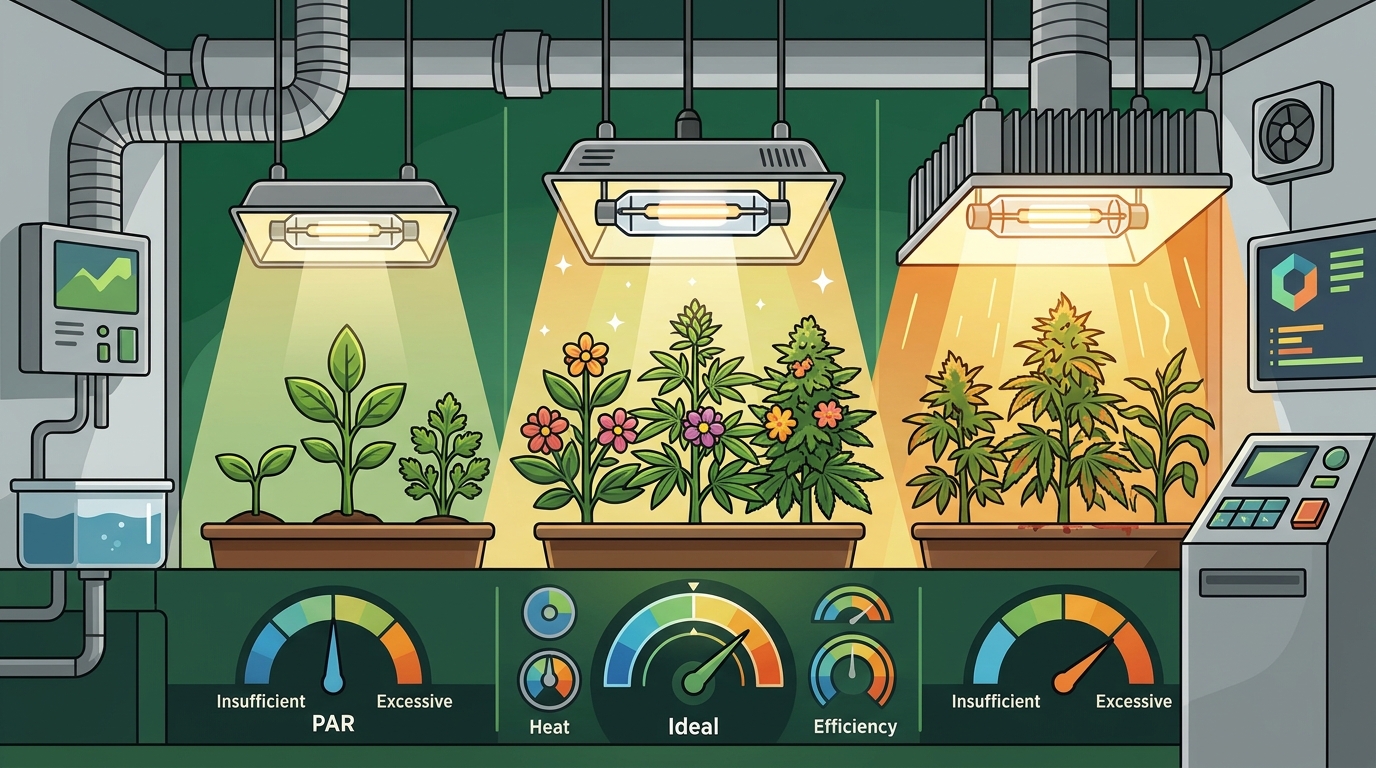
Proper hanging height is critical for heat management. For delicate plants like African violets or seedlings, you should position the light higher to reduce the intensity and heat exposure. As plants mature and become more robust, you can lower the fixture to increase light intensity. Always check leaves for signs of stress during the first week of use. If you notice yellowing or browning, increase the distance between the light and the canopy.
Optimizing Light Spectrum for Plant Growth
Wattage determines the quantity of light, but the spectrum determines its quality. CMH lamps produce a continuous spectrum, which is different from the discrete peaks found in many LED lights. This continuous output includes the blue and red wavelengths essential for photosynthesis. The Nano Liquid Photonic Coating is designed to enhance this spectrum by shifting more reflected light toward these productive bands.
This spectral optimization leads to stronger vegetative growth and denser foliage. According to manufacturer-reported internal testing, the coating can increase vegetative biomass by 34% compared to uncoated reflectors. This means that a 250W fixture with the coating can deliver results that might otherwise require a higher wattage unit. By focusing on spectral quality, you can maximize the potential of your existing wattage.
Scaling Up for Larger Operations
As your garden expands, you may need to consider larger installations. For commercial greenhouses or large indoor farms, growers often arrange multiple fixtures across rows or multi-tier racks. This approach allows for precise control over light intensity and coverage. The modular nature of 250W fixtures makes them suitable for both small home gardens and larger professional setups.
When scaling up, it is important to consider the total power draw and heat output. Ensure that your electrical system can handle the load of multiple fixtures. Additionally, plan for adequate ventilation to manage the cumulative heat. By starting with a single 250W unit and expanding as needed, you can build a scalable lighting system that grows with your garden.
Key Takeaways
- A 250W CMH grow light is the standard recommendation for small indoor gardens, covering approximately 3.5 by 3.5 feet.
- Wattage is a proxy for light output, but reflector efficiency significantly impacts the amount of usable light reaching the plant.
- Heat management is crucial; position the light at a safe distance to prevent plant stress, especially for delicate varieties.
- The Nano Liquid Photonic Coating enhances light delivery by increasing reflectance and optimizing the spectrum for photosynthesis.
- Scaling up is achieved by adding more fixtures rather than switching to a single high-wattage unit, allowing for better light distribution.
- Continuous spectrum output from CMH lamps supports robust vegetative growth and flowering in a wide range of plants.
Frequently Asked Questions
Is 250W enough for a small indoor garden?
Yes, 250W is generally sufficient for a small indoor garden, covering an area of about 3.5 by 3.5 feet. It provides enough light for seedlings, herbs, and small flowering plants without generating excessive heat.
How does the Nano Liquid Photonic Coating affect light output?
The coating increases reflectance and directs more light toward the canopy. This improves the efficiency of the fixture, allowing a 250W unit to deliver more usable light compared to a standard aluminum reflector.
Can I use a 250W CMH light for African violets?
Yes, but you must manage the heat carefully. Position the light at a safe distance to prevent stress. Check leaves regularly and adjust the height as needed to ensure optimal growing conditions.
What is the difference between CMH and LED grow lights?
CMH lights produce a continuous spectrum, while LEDs often have discrete wavelength peaks. CMH lights run hotter than LEDs of similar wattage, so heat management is more critical with CMH fixtures.
How many 250W fixtures do I need for a 4x4 foot space?
A 4x4 foot space typically benefits from a 2-pack bundle of 250W fixtures. This setup ensures consistent light intensity across the entire canopy and avoids hot spots.