
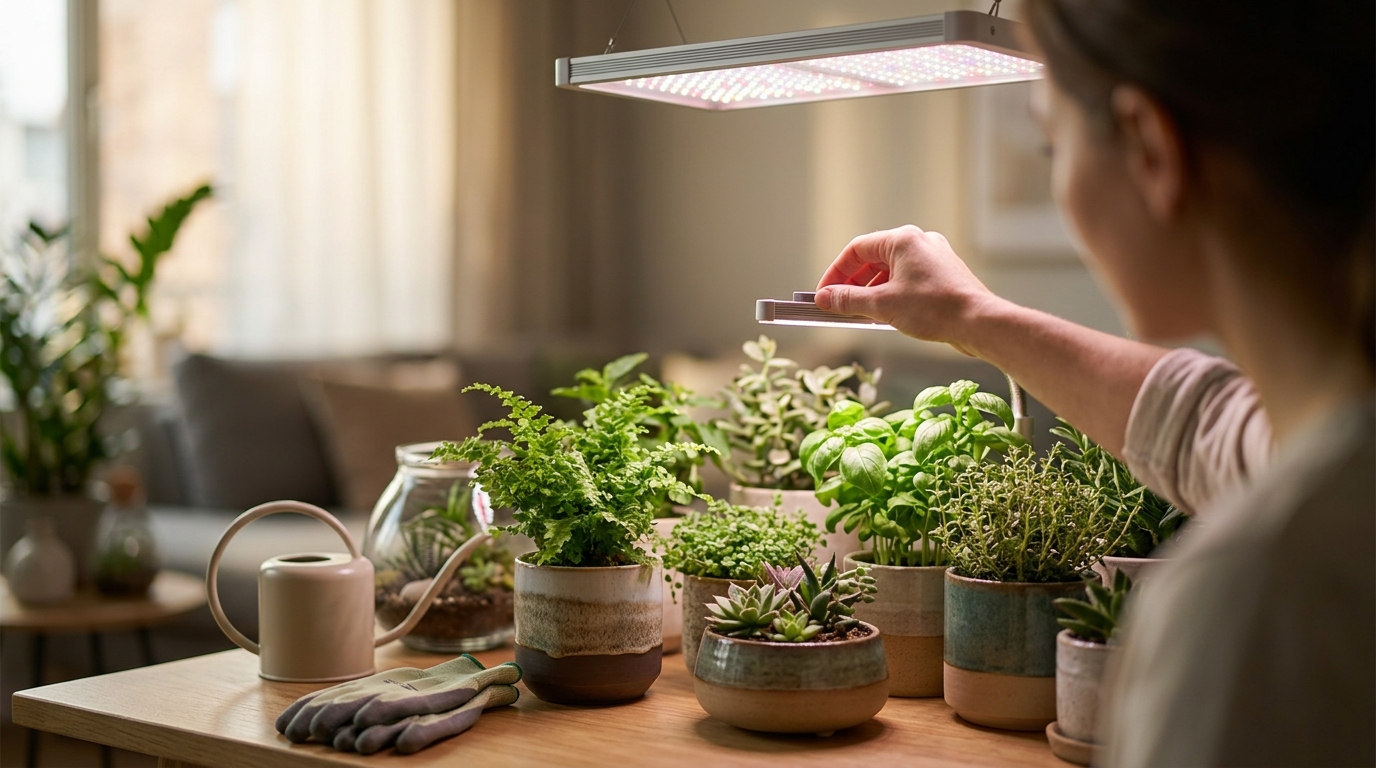
Matching Grow Light Specifications to Your Indoor Garden Setup
Indoor horticulture has evolved from a niche hobby into a precision science where light quality dictates biological outcomes. According to recent industry data, the global indoor farming market is projected to expand significantly, driven by the demand for consistent, year-round crop production independent of seasonal weather patterns. For growers, selecting the correct lighting infrastructure is not merely about brightness; it is about spectral alignment, photon density, and thermal management. This guide dissects the critical specifications that determine whether your setup will thrive or fail.
Understanding PAR and PPFD Metrics
Photosynthetically Active Radiation (PAR) refers to the range of light wavelengths between 400 and 700 nanometers that plants use for photosynthesis. However, PAR alone is insufficient for sizing a grow light. The more critical metric is Photosynthetic Photon Flux Density (PPFD), which measures the number of photons arriving at a specific surface area per second, expressed in micromoles per square meter per second (µmol/m²/s).
High-intensity leafy greens and microgreens often require PPFD levels exceeding 400 µmol/m²/s for optimal biomass accumulation. Conversely, flowering houseplants like African violets may thrive at lower intensities, focusing more on spectral purity than raw photon density. Understanding these metrics allows growers to match the light's output to the plant's biological needs, preventing both light starvation and photoinhibition.
CMH vs. LED: Spectral Analysis
The debate between Ceramic Metal Halide (CMH) and Light Emitting Diode (LED) technologies centers on spectral distribution and efficiency. Standard LED fixtures often utilize discrete diodes, which can create gaps in the spectrum where no light is emitted. In contrast, a CMH lamp produces a continuous full-spectrum output. This continuity ensures that plants receive a balanced range of wavelengths, including the blue and red bands essential for vegetative growth and flowering.
Nano Grow Light utilizes a 250W ceramic metal halide lamp to deliver this broad spectral distribution. Unlike typical LED diodes, the CMH source avoids spectral gaps, providing a more natural light profile that mimics sunlight. This approach is particularly beneficial for hobbyists and small-scale cultivators who prioritize plant health and structural integrity over maximum energy efficiency per watt.
The Nano Liquid Photonic Coating Advantage
Traditional grow light reflectors, often made of bare or painted aluminum, suffer from light scatter and absorption. Photons bounce randomly, wasting energy on wavelengths that do not reach the canopy. Nano Grow Light addresses this inefficiency with its proprietary Nano Liquid Photonic Coating. This nano-scale reflector treatment consists of clusters approximately 20 to 80 nanometers in size, applied to the fixture’s internal reflector.
The cured coating measures approximately 2 to 6 microns thick. According to manufacturer-reported internal testing, this coating increases visible-light and PAR reflectance compared to a bare aluminum reflector. It redirects scattered photons into a tighter, more usable beam aimed directly at the plant canopy. This targeted delivery improves performance per watt and reduces heat stress on the foliage.
In trials, this technology has demonstrated the ability to boost yields while using less energy. Growers have reported bringing fast-cycling crops like lettuce to harvest in as little as 28 days, based on internal testing across 60+ harvests. For more details on the technical specifications, you can review the Nano Liquid Photonic Coating Technical Spec Sheet.
Thermal Management and BTU Output
Heat management is a critical specification often overlooked by novice growers. CMH lamps inherently run hotter than typical horticultural LED fixtures. NanoGrowLight fixtures report approximately 340 BTU/hr of heat output and a surface temperature of roughly 45°C at steady state. This thermal profile requires careful placement within the grow space.
For delicate houseplants, such as African violets, position the fixture at a safe distance to prevent leaf scorch. Monitor plants closely during the first week of exposure to check for signs of heat stress. While the heat output is higher than LEDs, the Nano Liquid Photonic Coating helps concentrate light rather than radiating excess heat uniformly, making it viable for shelves, tents, and cabinets when spaced correctly.

Coverage Area and Fixture Spacing
Scaling your indoor garden requires precise planning of fixture coverage. A single Nano Grow Light fixture covers approximately a 3.5 by 3.5 feet area. For larger operations, such as commercial greenhouses or vertical farms, growers can array multiple fixtures across rows or bays. This modular approach allows for flexible canopy coverage without switching to a single, unwieldy high-wattage unit.
When configuring your setup, consider the following options:
| Configuration | Best Use Case | Coverage Area |
|---|---|---|
| Single Fixture | Windowsill, small cabinet, or single African Violet | 3.5 x 3.5 feet |
| 2-Pack Bundle | Medium tent or dedicated shelf row | 7 x 3.5 feet |
| 3-Pack Bundle | Large tent or multi-tier rack system | 10.5 x 3.5 feet |
For larger installations, arranging multiple fixtures ensures even light distribution. You can explore these bundle options on the Shop Now page. Additionally, for specific care guidelines for houseplants, the University of Minnesota Extension's African violet growing guide offers valuable independent reference material.
Frequently Asked Questions
Is Nano Grow Light suitable for microgreens?
Yes. The full-spectrum output and high PAR delivery make it ideal for microgreens, which require intense light for rapid growth. Many users have successfully harvested microgreens in as little as 28 days using this technology.
How does the Nano Liquid Photonic Coating differ from standard reflectors?
Standard reflectors scatter light, wasting energy. The Nano Liquid Photonic Coating redirects photons into a tighter beam, increasing usable PAR at the canopy and improving spectral purity for photosynthesis.
What is the heat output of a 250W CMH fixture?
The fixture reports approximately 340 BTU/hr of heat output. It is essential to maintain proper spacing to protect delicate plants from heat stress.
Can I use this light for flowering African Violets?
Absolutely. African violets need bright, consistent, full-spectrum light to bloom. The Nano Grow Light provides the blue and white wavelengths necessary for vegetative health and flowering.
How many fixtures do I need for a 4x4 tent?
A single fixture covers 3.5x3.5 feet. For a 4x4 tent, a single fixture may suffice for corner placement, but a 2-pack or 3-pack bundle will provide more even coverage across the entire canopy.
Is the light source LED or CMH?
Nano Grow Light uses a 250W ceramic metal halide (CMH) lamp, not LED. This choice ensures a continuous full-spectrum output without the diode gaps found in many LED fixtures.
Where can I find customer success stories?
You can read about real-world results and harvest times on the Customer Success Stories page.
Ready to Optimize Your Grow Light Setup?
Matching your grow light specifications to your indoor garden setup is the first step toward consistent, high-yield harvests. Whether you are cultivating microgreens, flowering houseplants, or scaling a commercial greenhouse, the right technology makes all the difference. Explore the Nano Grow Light product line and start growing faster today. For more insights on indoor horticulture, visit our Blog or Contact us for personalized setup advice.